

17 Country Kitchen Design Trends We Can't Get Enough Of
We may receive a commission on purchases made from links.
There's something timeless about a country kitchen. It sets a scene, one with warm, buttermilk biscuits and sausage gravy still hot, sunlight streaming in and dappling the countertop decorated with the right mix of old and new design touches. And while trends come and go, there's a reason that the country kitchen aesthetic keeps making a return. Blending coziness and function, it's a design style that feels both timeless and personal.
While most modern kitchens lean toward sleek lines and minimalism, country kitchens embrace quirks and character: layered textures, thoughtful details, and colors that make it feel like a lived in space. And believe it or not, but you don't have to live on a farm or rural area to bring that same rustic charm into your own kitchen. With a few simple updates, your kitchen can be transformed without sacrificing any modern conveniences. Join us as we explore country kitchen design ideas to pair warmth and style in your kitchen.
1. Opt for a farmhouse sink
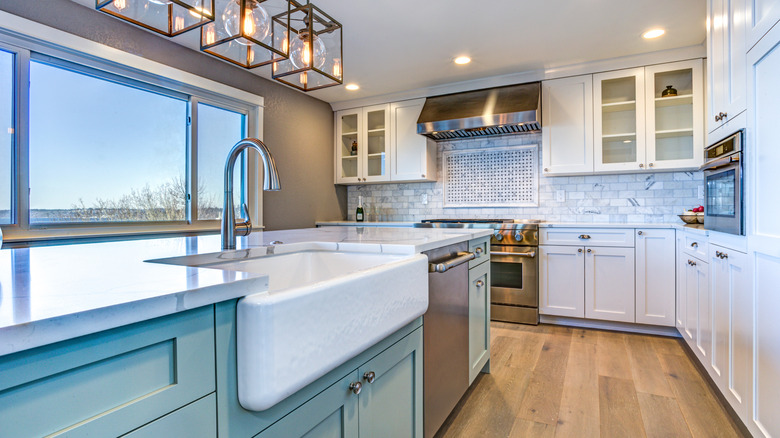
A farmhouse sink can't be overdone and is a true staple for any country kitchen. With a deep basin and signature apron front, these sinks add instant charm while also being useful. The large basin is perfect for washing big pots and pans, as well as being a great place to clean vegetables and fruit (to deep clean raspberries, for example, you only need vinegar and water). People are probably most familiar with white porcelain farmhouse sinks, but there are even more options like copper, stone, or stainless steel.
Beyond the looks, farmhouse sinks make sense from a practical perspective. Its design eliminates the likelihood of splashing while also giving plenty of space to work, not to mention these sinks pair so well with rustic woods and colorful cabinets. Whether you're aiming for vintage charm or a modern farmhouse vibe, a farmhouse sink grounds the whole space in warmth and utility, proving some design trends truly never go out of style.
2. Install butcher block countertops
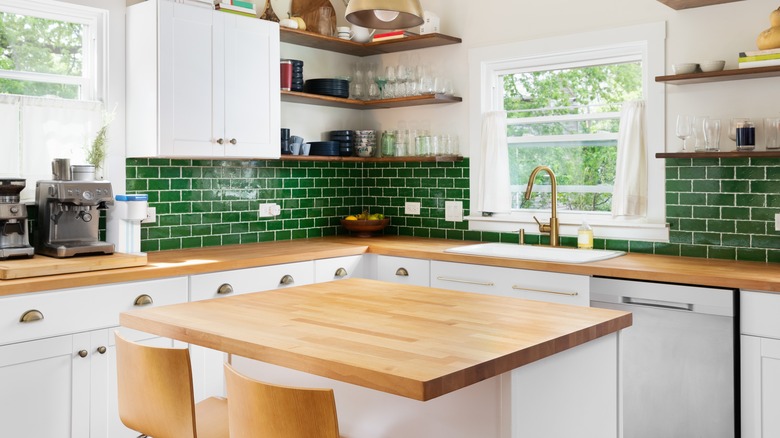
Butcher block countertops bring character to a kitchen in a way few materials can match. The natural grain of the wood often softens the look of a kitchen, creating a space that feels lived-in and welcoming rather than sterile or formal like some modern kitchens might look. A light maple countertop can lend a bright, almost airy quality, while a richer walnut or cherry adds depth and drama. Depending on personal approaches to style, each variety can tell those stories through unique patterns and tones.
Practicality is also a big part of the appeal. Butcher block provides a forgiving surface for meal prep and can be sanded and refinished if scratches appear, making it ideal for kitchens where regular cooking actually happens. Over time, the wood develops a sort of visual diary from use. In essence, it's a photo album of all the holiday cookie baking, Sunday buttermilk pancake breakfasts, and daily dinners. Instead of looking worn out, the countertop gains character over the years, much like a favorite cutting board passed down through generations. Choosing a butcher block countertop means embracing beauty and the kind of charm only natural materials deliver.
3. Add a bold backsplash
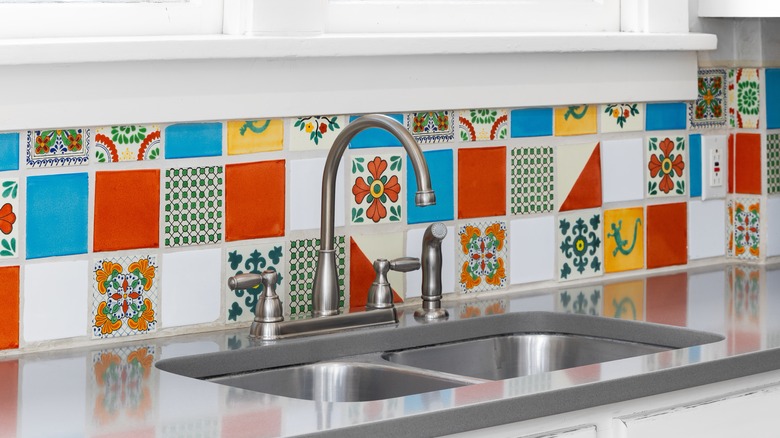
Whether it's colorful mosaic tiles, hand-painted ceramics, or classic subway tile in an unexpected hue, the right backsplash instantly injects energy and personality into a kitchen. Acting as both art and décor, a backsplash frames your cooking space, turning an often-overlooked surface into a vibrant focal point that transforms a kitchen faster than almost any other design choice.
Not only are they aesthetically pleasing, but a backsplash protects your walls from inevitable cooking splashes and spills, proving beauty and function can go hand in hand. In a country kitchen, patterns inspired by nature, earthy tones, or even cheerful blues and greens can break up expanses of wood and neutral cabinetry. The result is a kitchen that's layered and welcoming, giving the feeling of generations of family cooks having each added their own personal touch even in a new build. A bold backsplash doesn't just decorate — it tells a story. Not to mention, there are plenty of ways to make an inexpensive kitchen backsplash look top tier.
4. Use natural tones
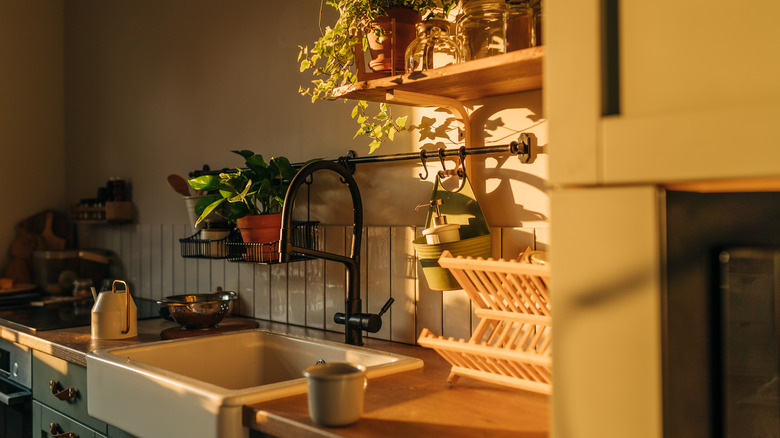
A busy kitchen often needs to be grounded in warmth and simplicity, which natural tones give. Soft whites, creamy beiges, muted greens, and warm browns bring the outdoors inside, echoing the fields, forests, and sunlight of rural life. The effect is subtle but powerful: a kitchen that feels inviting — and visually appealing — without overwhelming the senses.
The fun lies in layering textures within this palette. Think painted cabinets paired with stone counters, wood beams overhead, and woven rugs underfoot. Each material adds its own dimension while staying true to a soothing color story. This approach creates a kitchen that feels balanced and timeless, a space where early morning coffee or late-night snacks feel equally at home. Natural tones tend to whisper (as opposed to shouting), which makes them the perfect foundation for any country-inspired kitchen design.
5. Incorporate shiplap
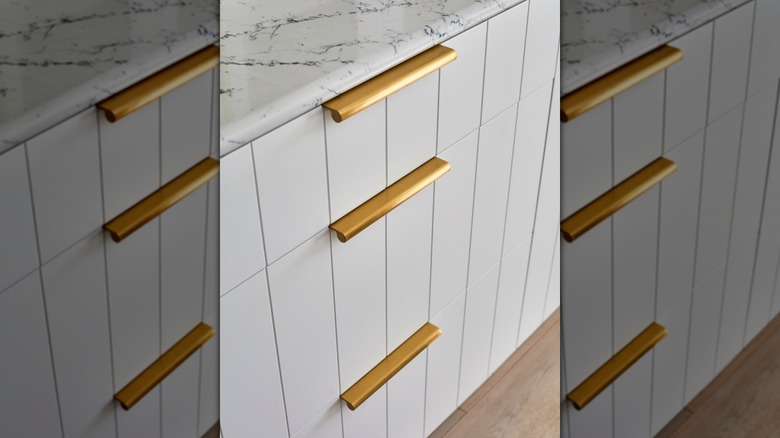
Joanna Gaines is calling and one of her best vintage kitchen remodeling tips focuses on adding shiplap to your kitchen. Shiplap walls bring instant farmhouse character to a kitchen. The horizontal lines of the planks add texture and depth, turning plain walls into something charming and full of personality. Painted white, shiplap brightens the room and bounces light around beautifully. Left in natural wood tones, it delivers warmth and a rustic edge that feels authentic without trying hard.
This versatile detail works almost anywhere whether that's behind open shelving, as a backsplash alternative, or even wrapping a kitchen island. You can keep it simple or pair it with framed art to complete the look. Shiplap tends to quietly elevate a space, providing a cozy kitchen backdrop that looks clean and effortless. It's the kind of design choice that makes a kitchen feel intentionally crafted yet comfortably lived-in, like it's evolved naturally over time.
6. Include open shelving
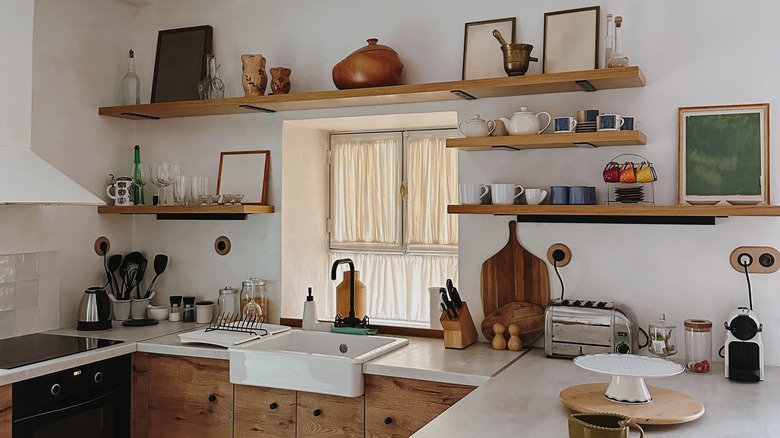
Instead of hiding everything behind solid cabinet doors, open shelves invite you to display your favorite dishes, glass jars filled with baking essentials, or a row of well-loved cookbooks in your kitchen. The result is something between storage and decoration, with everyday items doubling as bespoke design elements.
To keep it all from feeling cluttered, consider mixing practical pieces with a few decorative accents whether it be a small plant, a ceramic pitcher, or even a vintage cake stand. Wooden shelves add warmth (so does raw shiplap) while simple metal brackets keep the focus on what you display. In a country kitchen, open shelving feels natural and inviting, further supporting the room as a place for gathering and conversation rather than one based in perfection. These shelves turn walls into opportunities for personality, giving the space a curated yet lived-in vibe that fits right in with rural charm.
7. Feature a statement hood range
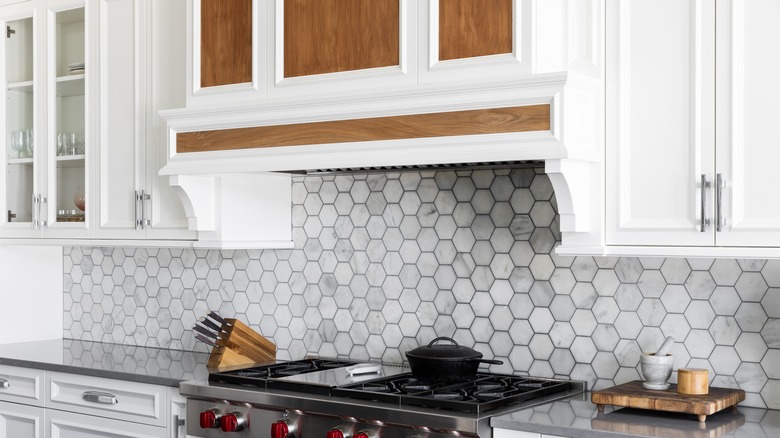
A statement hood range combines function with show-stopping style. Positioned above the stove, it naturally draws the eye, making it the focal point of the entire cooking area. Whether crafted from rustic wood, sleek metal, or painted to match cabinetry, a statement hood adds a touch of drama to any kitchen.
In a country design, the hood might be found anchoring a wall framed by open shelves or cabinets, creating a sense of balance and purpose. It also gives the room a custom, built-in look that feels elevated but completely at home with the other rustic notes in the kitchen. Practical needs aside (remember, ventilation matters) a statement hood turns a purely functional feature into a design moment, proving even hardworking elements can carry enviable style. And as with the other design features on this list, good ventilation in your kitchen doesn't have to break the bank.
8. Add rustic décor
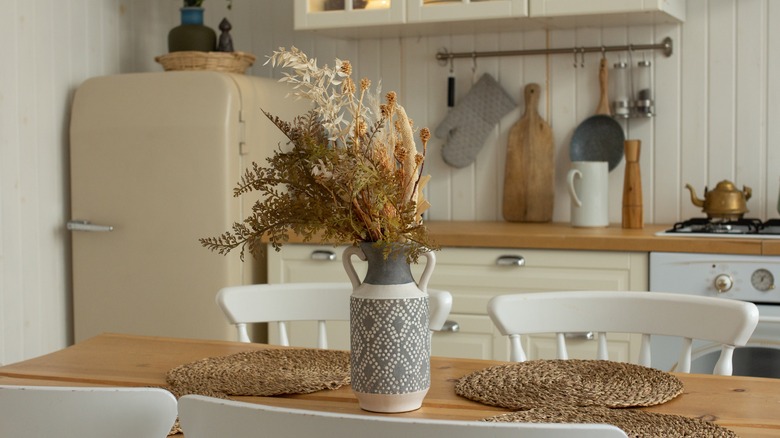
A weathered breadboard leaning against the backsplash, a vase of wooden spoons, and a woven basket for napkins all lend texture and coziness to a kitchen without cluttering the room. These rustic pieces tend to feel collected, rather than purchased in one sweep and give off a purposeful feel like they belong among the ovens and sinks. Just like kitchens gather character over years of meals and use, pieces of vintage décor temper the luxe feel of new cabinetry and stainless appliances with a gentle, familiar touch.
Choose a few hardworking objects you'll reach for often and let them do the styling. Remember that dings in old copper pans and stoneware mixing bowls with imperfections are the point. These worn objects tend to soften the edges and invite use, bridging the nostalgia of the past with the present. Rustic accents say that a kitchen is for cooking, not staging, and that's the most welcoming message of all. Want to take it further? Layer in textiles to soften harder surfaces and invite lingering.
9. Choose colorful cabinetry
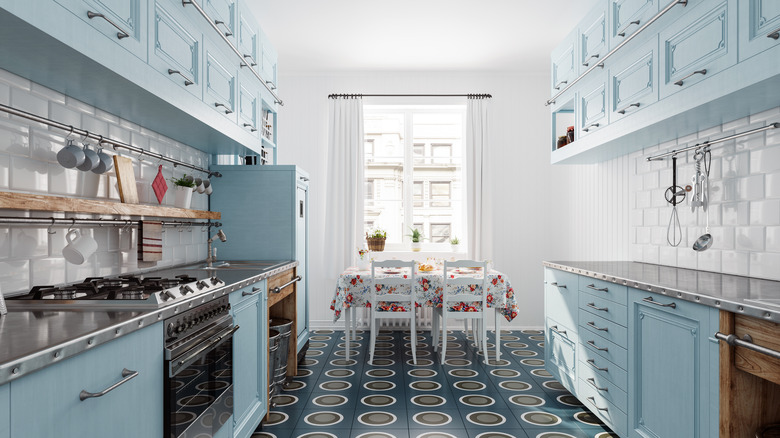
Colorful cabinets change the entirety of a kitchen's mood in one stroke. A soft sage feels calm and is reminiscent of the herbs growing in the windowsill, while navy reads tailored and steady. Paint can take these ordinary pieces and turn storage into a backdrop that supports a friendly, welcoming space that looks lived-in rather than showy.
If you're not quite convinced, start with painting the island or base cabinets and keep upper cabinetry light to maintain openness. Try to pair a more saturated color with warm wood or unfussy hardware so it takes the lead. Add small echoes of the color in a runner or a lampshade to further weave the palette through the room. The goal isn't trend-chasing (even though we know it's tempting), but rather about expressing personality. And if you aren't ready to make a big change, try adding a pop color to the backs of glass-fronted upper cabinets or paint a shelf edge. Before fully committing, be sure to test paint swatches at different times of day so the hue feels right in both morning and evening light.
10. Use warm hardware
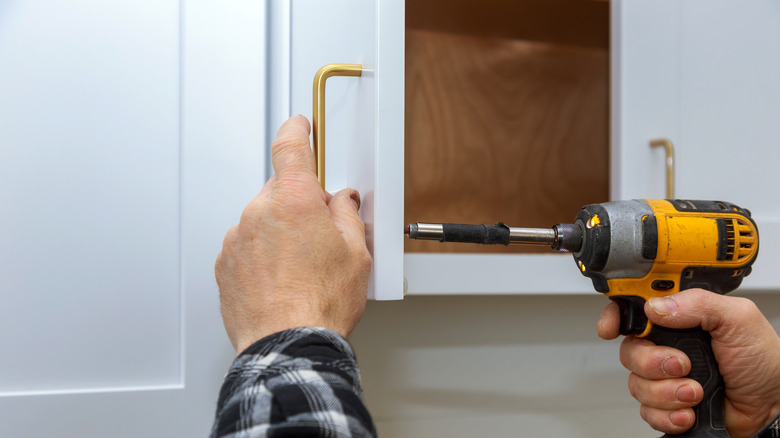
Hardware is often a small and brief part of the kitchen experience, but it's surprisingly memorable. For example, if you swap cool chrome for brass, bronze, or blackened finishes, it can actually soften the room. And warm metals catch light gently, picking up tones in wood grain and natural stone with that vintage charm you want from a country style kitchen.
To create more cohesion, repeat a finish on the faucet and lighting or vary knob shapes for visual interest. It's an easy weekend update with a big effect considering the kitchen will often feel, without much effort, more tailored and finished than it had before. What's so fun about hardware is that there are endless choices. While we recommend something warmer for this style of kitchen, the shape and accompanying colors of the hardware you choose can reflect other parts of your personal style. These small decisions add up in a space that's used as often as a kitchen.
11. Hang pot racks
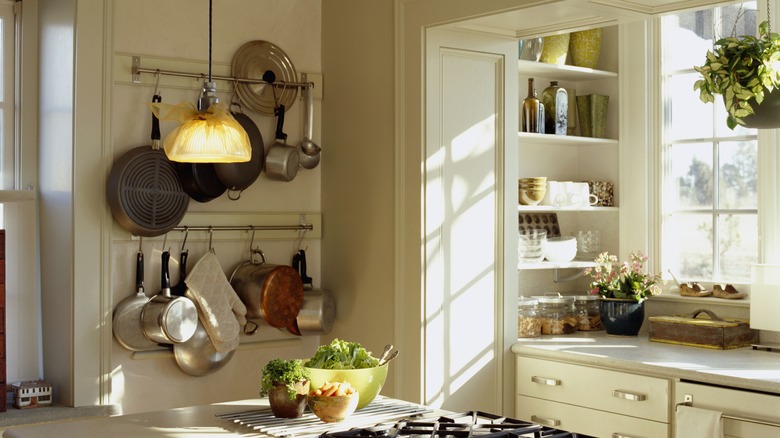
Tools suddenly become decorations when you bring in the idea of a hanging pot rack, not to mention how it frees up precious (and often difficult to find) cabinet space. We aren't saying you need to buy new pots and pans, but there are a few difference in the looks of these cooking tools. For example, copper glows in the light while cast iron steadies the eye with its dark exterior, further blending function and form. Plus, having everything visible tends to make cooking more compelling given the tools are within reach. Suspended over an island or mounted on a wall, a rack adds vertical interest and hints at the delicious food to come. Think of it like the utilitarian version of hanging herbs to dry.
Try to keep it curated so the look stays intentional. Hang the pieces you reach for most but be sure to tuck lids elsewhere. The result is part pantry, part gallery, and entirely country. But be sure to mind the clearances of these racks so sight lines stay open and movement feels easy around the island. Not to mention, you don't want to bang your head against a heavy iron pan.
12. Add cabinet and sink skirts
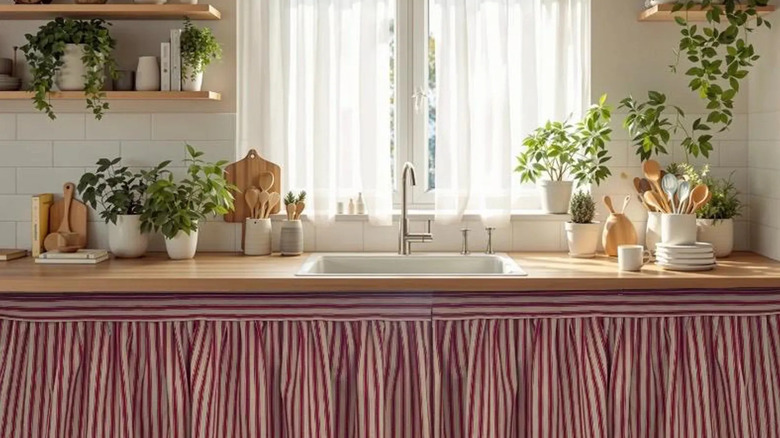
Cabinet skirts are a low effort, low cost way to add nostalgia and charm to any kitchen. A length of linen where a door might be — whether under the sink or across a nook — instantly relaxes the room. It's a simple swap that makes storage feel closer to furniture and gives the eye a place to rest amid the hardness of metal and tile.
Skirts are friendly to budgets and moods and can be easily changed with the seasons or whenever you crave a kitchen refresh. If you're a do it yourself kind of person, you can also easily make these skirts at home if you have access to a sewing machine. Once paired with a farmhouse sink and a braided rug, the whole area tends to read as cottage core cozy in the best possible way. Try using tension rods or hidden tracks for easy removal and be sure that the fabric you use is washable because there will be messes.
13. Install vintage lighting
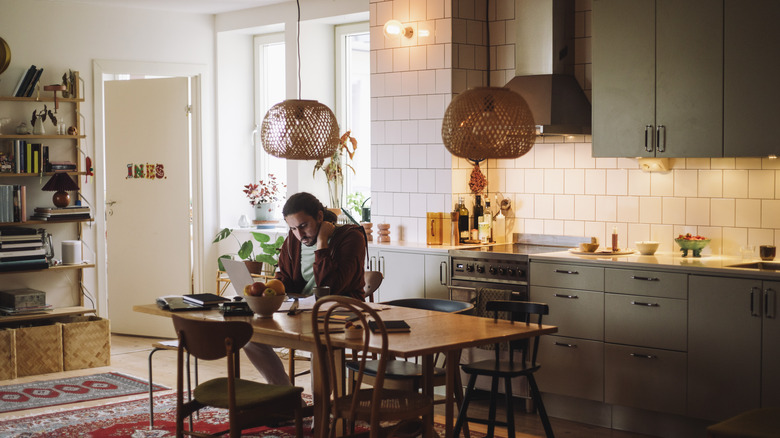
Lighting sets the stage for a kitchen, and vintage-inspired fixtures operate as perfect spotlights for all the kitchen creations you'll whip up. Imagine schoolhouse globes over the island or brass sconces on either side of the sink. The warm bulbs will bounce light off tile and wood, turning evening prep into a quiet ritual and breakfast into a bright and optimistic start to the day. The beauty of vintage fixtures themselves is that they add curve and character with each imperfection.
Like any other design feature, lighting is best done when curated. Make sure to have ample overhead light for tasks, focused light where you chop and stir to avoid any accidents, and finish lighting that adds ambiance like a small, retro lamp in the corner. Dimmer switches can also do wonders in extending versatility to help seamlessly shift the mood from bright prep work to candle-adjacent coziness at dinner. Warm color temperature bulbs pair wonderfully with secondhand lighting fixtures that'll make food look delicious.
14. Add pops of color
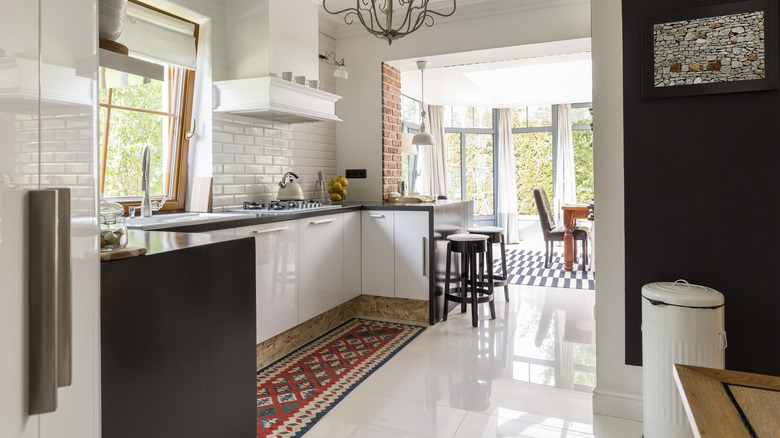
Balance is everything in a kitchen and pops of color keep neutrals from drifting into the background. A painted pantry door, striped café curtains, cheerful barstools, or a runner underfoot can send a spark of creativity through the room without demanding a full repaint. In a country kitchen, these bursts come across as playful, the way a simple bowl of tomatoes or a vase of flowers can make a table come alive.
Because accents are easy to trade out, they're perfect for seasons and the changing of trends. Swap linen towels for pine green cotton during the winter. Spring? Bring out cornflower blue, and let berry reds and bright citrus colors shine in summer. Paint isn't the only way to bring color, especially if you don't want to make a huge commitment. Instead, add colorful pottery to a shelf or put cooking utensils in a painted jar. The base of the kitchen can stay calm, allowing the finer details to shine.
15. Include antiques
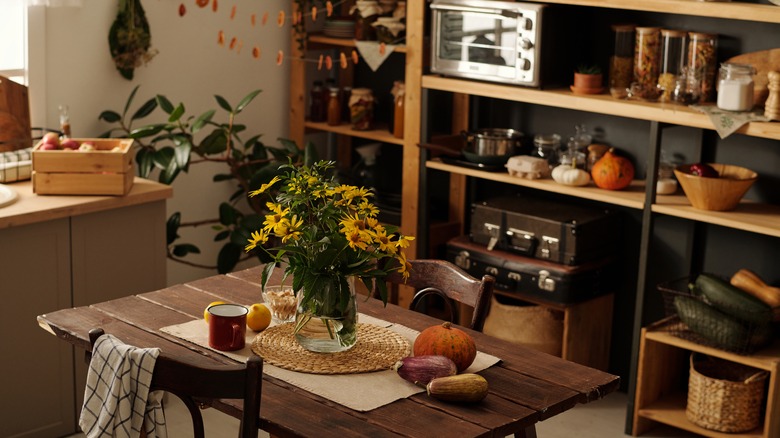
Antiques tell a story and there's no better place for that story to come to life than in a kitchen. Antique shops are full of kitchen tables nicked over time by decades of meals and clocks that creak and tick. These pieces are original not in their design, but in their history. They add warmth to new cabinets and glossy appliances, making modern finishes more palatable.
To avoid getting overwhelmed, start with one anchor item and let smaller finds gather around it: a tin sign, an old butter churner, mixing bowls stacked high. Keep the mix easy and try not to edge too close to museum-like. After all, you want a usable, livable space not something that's too curated to be useful. When old and new sit comfortably side by side, the kitchen becomes uniquely yours and as charming as any other country kitchen out there. When antiques are given purpose, they never feel fussy and become a part of the daily rhythm of a house.
16. Mix materials
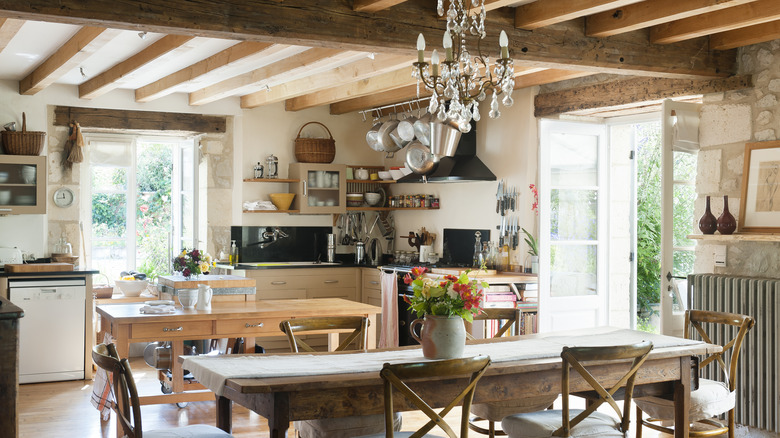
Mixing materials keeps a kitchen from feeling one-note and boring. Where wood brings warmth, stone offers cool solidity and while metal adds sparkle, tile brings pattern and shine. When these differing elements come together, a kitchen becomes tactile and hard to look away from.
To keep things simple, repeat tones to tie the entire palette together while letting textures vary. The goal is balance, which can be hard to strike with a project as big as a kitchen. The key to getting around that is to remember that in a country kitchen the small touches matter just as much as the wall color or brand of stove. Together, metal and wood come together in layers that lean interesting rather than disjointed. Think of the kitchen like a meal. Any good dish requires a level of contrast, and a kitchen requires the same (visually, texturally) to make it truly stand out.
17. Install floating shelves
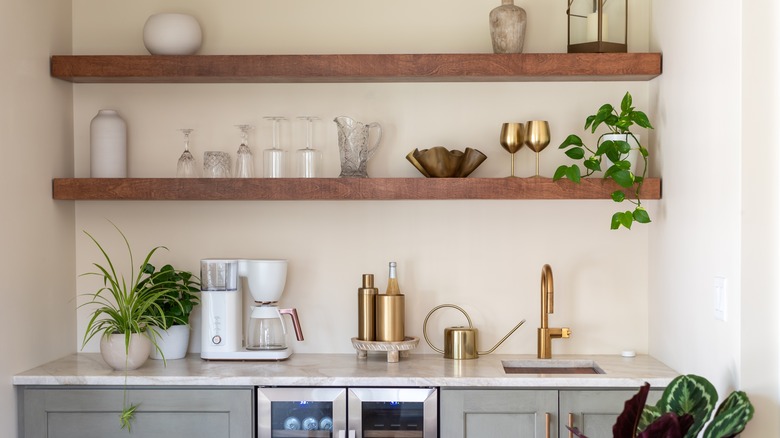
Floating shelving makes walls feel lighter and lets everyday objects from your stacked bowls to your spider plant take its place as part of the overall design. In a country kitchen, that mix of crisp edge and homey display hits all the right notes with a relaxed, yet intentional, design.
Shelves should vary in heights so that taller pots or bottles and cookbooks have a home as well as smaller items. Since visuals are everything with these shelves, try to repeat materials across shelving to create cohesion but leave a bit of negative space so things don't feel cluttered and like an afterthought. The result is useful but beautiful and brings about a practical charm that country kitchens are known for. To prevent any disasters (be sure to really anchor in those shelves) buy shelving with at least a tiny lip to keep items steady up in the air.