

The Creamy Pasta Sauce Mistake That's Leaving You With Lumps
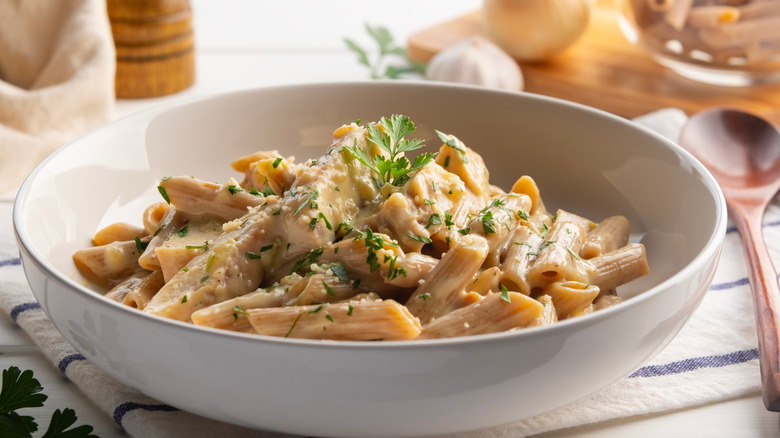
No matter how many times you cook it, pasta always feels like a treat, and a creamy sauce is usually the cherry on top. Still, the velvety sauce in your imagination can sometimes disappoint when you actually make it, and what was supposed to be a simple-yet-silky homemade Alfredo sauce ends up clumpy. Some folks assume it means they didn't stir enough, or maybe they didn't add enough cheese to bring it all together. In reality, though, one of the biggest culprits is the temperature of the cream.
Using cold cream straight from the refrigerator in a steaming hot pan is almost guaranteed to cause lumps. Dairy consists of fat and milk solids, which can create a stable mixture but require some time to form. When you shock the cream with sudden heat, those components will seize up and clump. This is also why your sauce can appear to be curdling despite doing everything else correctly. The solution is to allow your cream to come to room temperature before you incorporate it. This does not mean leaving it out for several hours; just an hour or so on the counter should be sufficient time. By that point, you've brought your water to a boil, chopped garlic, and grated the cheese. This simple change levels the playing field. Now your cream has a head start, and it can emulsify without having to work as hard against the heat.
A few extra minutes goes a long way
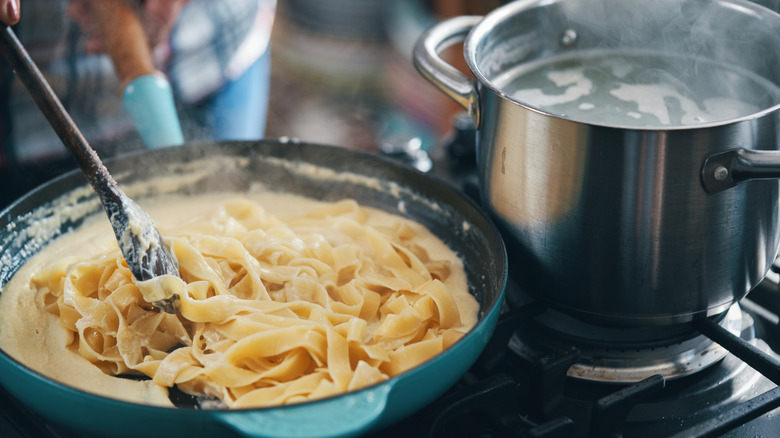
Once you see how effective using room temperature cream for pasta is, it changes the way you approach creamy sauces altogether. The texture improves dramatically, but the dish's flavor becomes better as well. A sauce that is not clumped coats each pasta strand evenly, meaning every mouthful tastes balanced instead of heavy or inconsistent. Letting your cream sit out for a little bit may feel simple. However, it lays the entire foundation for how the final dish will come together.
Of course, room temperature cream won't fix every issue. Gentle heat is equally important. If your pan is too hot, the perfectly tempered cream may still scorch or separate. Whisking also keeps the cream moving and helps to evenly distribute the butter, cheese, and aromatics in the pan. And when it is time to add cheese, patience should be your most valued friend. Adding cheese a handful at a time and allowing it to melt slowly will create a better texture than whisking in all at once. All of these details have one thing in common: They slow you down enough to give the sauce the opportunity to develop naturally. A creamy pasta dish does not have to be complicated, but it does reward the cook with a little patience. Finally, using the best types of pasta that pair well with cream sauces is also a bonus to achieving a better dish overall — as flat-shaped noodles like fettuccine have more surface area for the creamy sauce to coat.