

How To Get A Squeaky-Clean Glass Oven Door Every Time
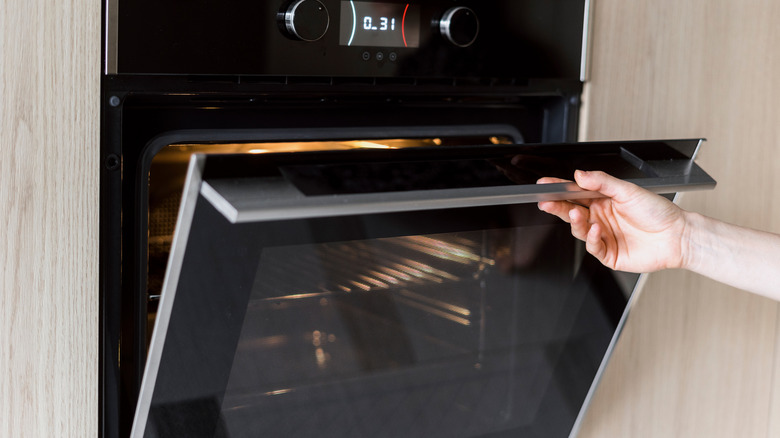
Cleaning the oven can be quite messy. Because, let's be honest, it's probably one of the most overlooked parts of the kitchen when it comes to cleaning, and it rarely even makes it onto the regular cleaning list. The glass oven door is naturally no exception to this, and it often ends up covered in baked-on grease, food residues, and layers of burnt grime left behind by splashes and spills.
To avoid a dirty oven door, which can quickly turn into a breeding ground for bacteria and also cause unpleasant odors, you need to stop making some common kitchen sanitation mistakes. And that includes wasting a ridiculous amount of money on heavy-duty cleaners that barely do the job. All you need to do is remember that everything you need to clean an oven door is in your pantry — just mix together some baking soda and white vinegar, and let it work its magic on the glass.
Kathy Cohoon, operations manager at Two Maids, an Alabama-based cleaning business, told Chowhound that spreading a baking soda and white vinegar paste over oven glass door stains and leaving it to sit for about 10 minutes can actually work wonders. Once the time is up, just make sure to gently scrub the paste with a sponge and wipe it off with a damp microfiber cloth. "Repeat as needed for tough spots and let the surface fully dry before reattaching the glass if you removed it," she told us.
What not to do when cleaning your oven's glass door
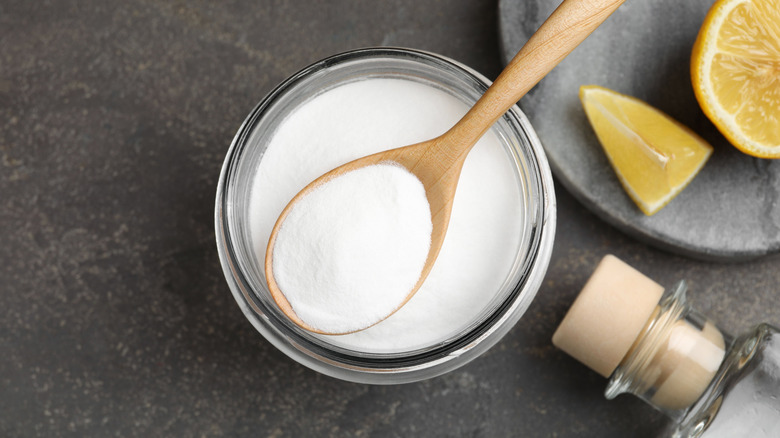
The reason this cleaning solution excels at breaking down stubborn residues is because when combined, baking soda and white vinegar trigger an acid-base reaction. This produces carbon dioxide and sodium acetate, which help loosen up baked-on grime. However, unlike harsh chemicals or abrasive pads that can release toxic fumes or scratch the glass, baking soda and white vinegar are a gentler, non-toxic alternative that won't damage your oven.
Still, Kathy Cohoon highlights that the cleaning method depends on the type of oven, as each kind, whether self-cleaning, textured, or standard, requires a different approach, especially when wiping down the inside. "Non-self-cleaning ovens may need a dedicated oven cleaner and scrubbing pad, but never use abrasives on textured models," she says. "Regular light cleaning, especially after spills, helps prevent baked-on stains, odors, and damage, ultimately extending the life of the oven."
To avoid most of the mistakes you're probably making when cleaning your oven, the Operations Manager suggests taking your time. "Impatience is often the biggest mistake," Cohoon states. "Cleaning the glass door can take time, and rushing the process often leads to using the wrong methods." While the process can indeed be arduous, she says that it's crucial to not resort to harsh chemicals or sharp blades to quickly scrape off the grime, as these can scratch your oven doors or damage them irreversibly. Patience is key, and according to Cohoon, "The best approach is to apply a baking soda paste (with water or vinegar), let it sit for at least an hour, and then wipe it away." For tougher buildup, simply repeat the process until the surface is sparkling clean.