

Anthony Bourdain Loathed This Faux Pas When It Came To Traveling And Food
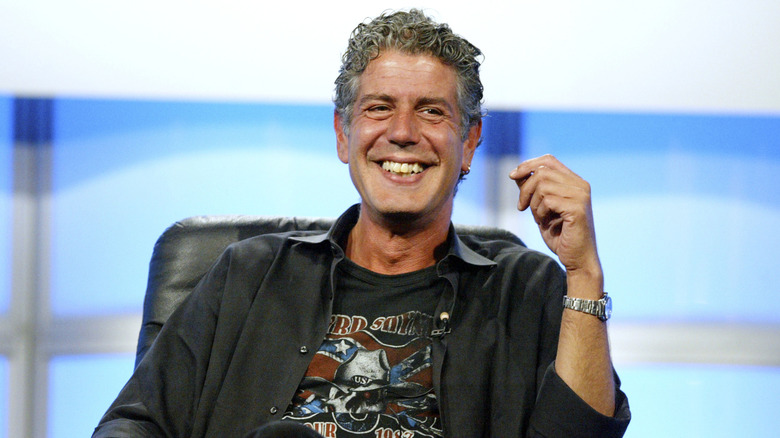
One of the perks of traveling abroad is enjoying new and exciting types of foods you're not used to. For the late Anthony Bourdain, diving into the culinary world of unfamiliar territory was all part of the joys of being away from home. That's why, in a 2006 interview with Journeys in Artistry, Bourdain was certainly not shy about expressing his contempt for the fact that many American tourists would still choose to eat something familiar while abroad. When he was asked about tourists waiting in line to eat at the Hard Rock Café in Singapore (while there were incredible local hawker stalls to be found everywhere), Bourdain's reply was incredibly direct: "Nothing could be more pathetic to me. Why even travel?"
Bourdain always found the best places to eat abroad, so the idea of going to a McDonald's in Mumbai or a Pizza Hut in Paris was not just a poor choice in dining, but an outright rejection of what travel is supposed to do. He held that to travel was to learn about and experience "the everyday food of countries": food that is simple, free of pretense, authentic, and good. He rightly believed that food is a reflection of cultural identity and history, and a component of ethnicity. By skipping over the local food experience, tourists were missing the whole reason for the educational experience of being somewhere else.
Taking a culinary leap makes traveling more exciting
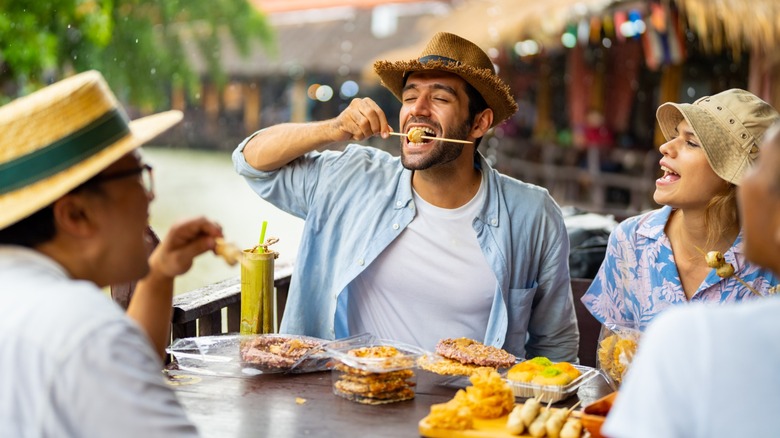
The behavior of sticking to familiar food abroad, which Anthony Bourdain despised, is what experts call food neophobia, which is the reluctance to eat unknown foods. What was once an evolutionary safeguard that allowed early humans to avoid poisonous foods restricts many modern travelers today. However, that safety barricade also blocks access to the real experiences of a trip, the ones that come through taste and smell.
Bourdain advocated for the opposite approach. He cherished the awkwardness of pointing at unpronounceable menu items, the surprise of unexpected flavors, and the vulnerability of adapting to the different restaurant etiquette around the world. These were not obstacles to him, but opportunities, and this openness to embracing being intentionally inexperienced set him apart from most tourists. That kind of vulnerability forces us to create allies with the people around us, a story that rarely happens in big chain restaurants. Bourdain recognized that real travel means being temporarily incompetent. All you have to do is arrive hungry, point at what the locals are eating, embrace confusion, and trust the people serving you. The world is filled with so many food destinations, so taking a culinary risk will undoubtedly elevate your trip. The greatest risk is a disappointing meal, and the greatest reward is discovering flavors and experiences you will remember for years to come.