

Martha Stewart's Canned Secret Ingredient For Mac And Cheese With Big Flavor

We may receive a commission on purchases made from links.
While Martha Stewart's favorite recipes can be rather upscale, some of her most popular ones are classic comfort foods that she elevates with simple household ingredients. Perhaps one of the best examples of this is her twist on mac and cheese. The food icon elevates the classic dish by combining it with another household staple — canned tomato soup. This is a great way to turn boxed mac and cheese into a layered pasta dish that's nonetheless ready in a matter of minutes. It even works if you're making the mac and cheese from scratch; a touch of tomato soup provides an added layer of complementary flavors that brings out all the notes in the recipe.
Tomato and cheese are a classic combination because the acidity of the former perfectly balances the creamy, nutty notes of cheese. Add the characteristic gooey texture of a good mac and cheese into the mix, and you have a winner that will feel equally at home on a simple weeknight dinner or a Thanksgiving meal. And if you're still in doubt, this tomato soup secret was used by Martha Stewart's grandmother and has been passed down to the culinary icon from her mother, Mrs. Kostyra aka Big Martha — who in turn had learned the recipe from her mother.
Incorporating the soup is as easy as adding it to the milk, which is then used as a base to make the cheese sauce. Be careful with how much you add; the milk should just about get a pink hue lest the tomato soup overwhelm the other flavors. Then, continue as you would with your regular method of making mac and cheese.
Using tomato to add big flavor to mac and cheese
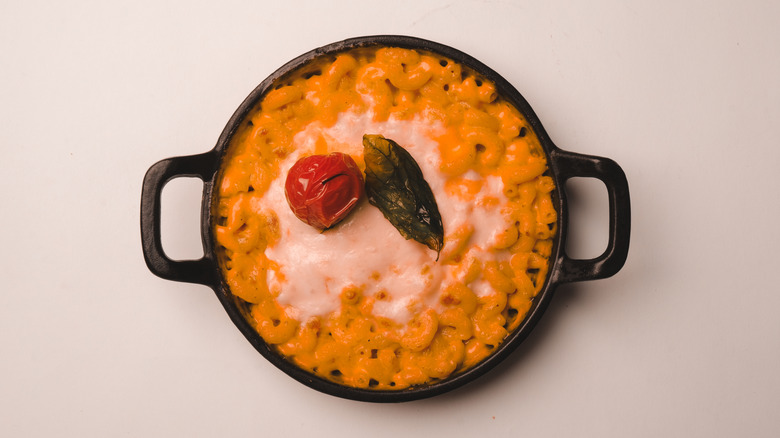
There are several ways to add complexity to mac and cheese using the flavors of a tomato. For one, you can try using different types of tomato soup. A good roasted tomato soup, combined with aged cheddar, can elevate mac and cheese to gourmet levels.
Another way to add umami depth is to use tomato paste — a component in Martha Stewart's recipe – which has a much more intense tomato flavor. Since tomato paste is a raw ingredient, it is important to cook it a little before incorporating it into the cheese sauce. One way to do this is to simply fry a tablespoon of tomato paste in olive oil until the raw tomato smell subsides, and add it to the cheese sauce. The flavor here is deeper, akin to roasted tomato, so consider using a more robustly flavored cheese as well.
Finally, the quickest way to add restaurant-level complexity to your mac and cheese is to add a dollop of sun-dried tomato pesto. An authentic jar, like Filippo Berio sun-dried tomato pesto, contains hints of tomato, vinegar, aged cheese, and more, adding a veritable explosion of complementary flavors to mac and cheese. Since pesto doesn't need to be cooked — and to keep its flavor in the forefront — stir it into the cheese sauce along with the boiled pasta.
More ways to elevate mac and cheese with acidic, tangy, and briny notes
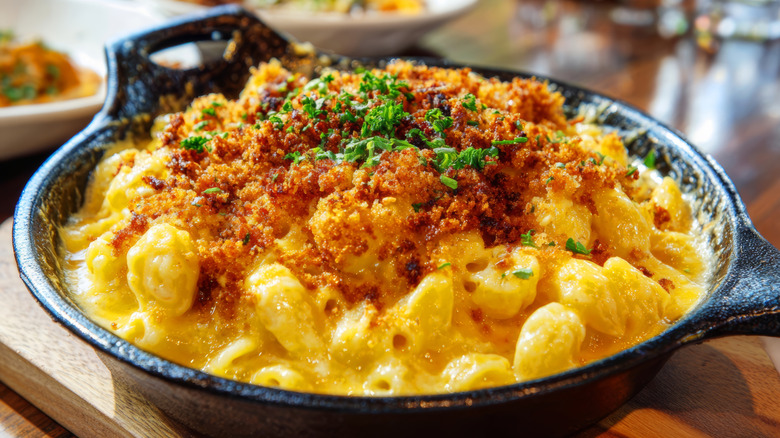
Another trick employed by Big Martha was topping the tomato-infused mac and cheese with a dollop of sour cream before serving. Apart from the obvious indulgent creaminess and contrasting cold texture to the hot mac and cheese, sour cream also has that touch of acidity which works well with a deeply creamy mac and cheese.
To explore more layers of acidity when making mac and cheese, consider complementing the tomato flavor with spicy or briny ingredients. Jalapeños are a great way to upgrade a simple mac and cheese, as are capers or olives, all of which add simple acidity. Most mac and cheese recipes also ask for a touch of yellow mustard for some sharpness. Anchovies are another popular option, and you can actually make a quick paste of anchovies and tomato paste by frying them together before adding them to the cheese sauce.
Finally, consider using a red wine or balsamic vinegar reduction with your mac and cheese to add a truly gourmet touch to the household classic. You can either roast tomatoes in balsamic vinegar to concentrate the flavors, or make a balsamic vinegar glaze by cooking it down on low heat on the stove till thickened. Both can be used as a garnish. And if you ever find things getting too acidic, tangy, or spicy, balance it out by levelling up the creaminess of mac and cheese with egg yolks.