

Save Yourself From Soggy Or Tough Zucchini With These Essential Cooking Tips
We may receive a commission on purchases made from links.
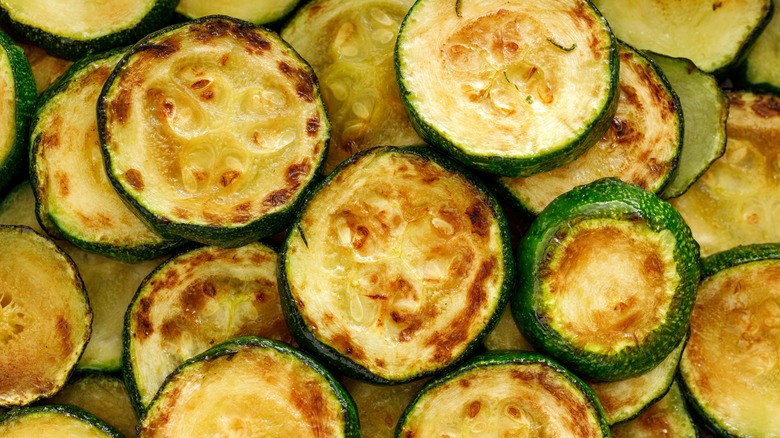
Whether you have a ton of zucchini from your garden or you're just looking to create a healthy, delicious dinner side, roasted zucchini is a simple and tasty way to add some veggies to your plate. Zucchini can be a little tricky to cook, however — if you don't get it just right, you might end up with soggy or tough pieces, instead of tender, slightly-browned slices roasted to perfection. Nisha Vora, author of the New York Times Bestseller "Big Vegan Flavor," spoke exclusively with Chowhound to share her tips on how to create perfectly roasted zucchini at home.
First, temperature is key for cooking zucchini, especially when it comes to roasting, says Vora. "To avoid soggy or tough zucchini, roast it at a high temperature, 425 degrees Fahrenheit or even 450 degrees Fahrenheit." While your oven preheats, you can liberally salt your zucchini to draw out moisture. Let it sit for about 20 minutes, and use a paper towel to remove the water that comes to the surface. This can help to lessen the likelihood of a soggy outcome. As you arrange your zucchini, give them plenty of space — try to make sure that none of the pieces are touching one another. Vora says that giving the zucchini slices plenty of room helps moisture evaporate, and allows each slice to get golden brown edges. While it might be tempting to slice your zucchini into super-thin rounds to decrease cooking time, Vora points out that this technique can backfire. "Cutting it into thicker spears or thick half-moons also helps it hold its shape better than thin rounds."
More tips to help you roast zucchini to perfection
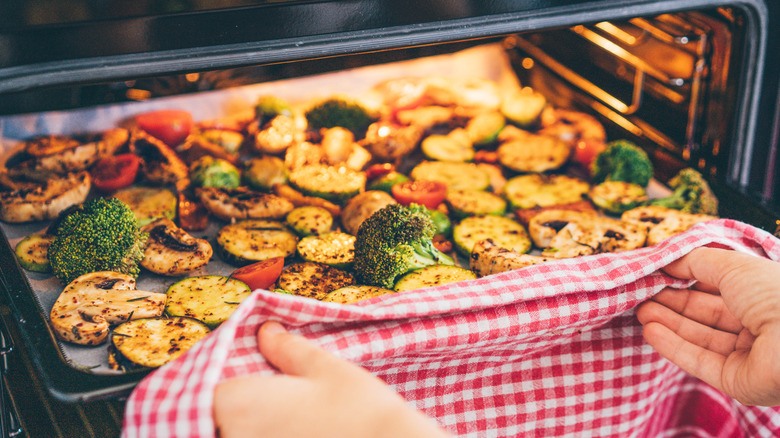
If you're making a veggie-heavy meal or side dish, you can save time and space by roasting finely chopped veggies at the same time. While Nisha Vora says that there are some vegetables that you can roast on the same sheet pan as your zucchini. "Zucchini roasts well with vegetables that have similar moisture content and cook times, like bell peppers, red onions, cherry tomatoes, and eggplant. They will soften at roughly the same temperature and time. If using zucchini and eggplant together, make sure they are cut into the same size," she recommends. If you're also roasting harder veggies, like carrots, sweet potatoes, or white potatoes, she recommends roasting them on a separate sheet pan and adding them to the oven before you start roasting your zucchini.
You might also want to consider forgoing the oven altogether when cooking zucchini. Vora says cooking in a cast iron pan can work well for creating a tender (but not soggy) texture. "The direct heat ensures it cooks through quickly, before it has time to get soggy." Watch for the edges of your zucchini to start to caramelize, and be careful you don't overcook it, whether you're oven-roasting or using a cast-iron pan. "Zucchini is done when it's tender but still has a bit of bite," Vora says.