

How Wolfgang Puck Makes Spices Taste Way More Flavorful

We may receive a commission on purchases made from links.
Spices are fickle things — use them right, and you'll have an incredibly useful tool at your disposal, ready to bring brightness, heat, and complexity to almost any dish you can imagine. From adding nutmeg to flavorful bolognese pasta sauces to making curries like butter chicken or tikka masala, they can be an easy way to seriously upgrade your home cooking. Use them wrongly, on the other hand, and you'll find yourself with a bitter, overwhelming mess of flavors. To truly unlock their potential, though, means treating them well before you even start cooking — and according to legendary chef Wolfgang Puck (who, let's face it, knows a thing or two when it comes to cooking) that means toasting them.
In an interview with MasterClass, Puck explained, "If you can, toast your peppercorns a little bit in the oven to release a little bit of the oil, and they will be even more fragrant. We do that with all of our spices. If it's cumin, coriander seed: We toast them, then they have more flavor because they release their oil." Toasting the spices is often said to awaken them — as heat works to intensify an ingredient's flavor (or at least how we perceive it). Any gentle coloring that occurs will be the result of the spices beginning to caramelize, which will create deeper, nuttier, and more complex flavors. Even 30 seconds in a hot pan can turn your spices from flat to vibrant. Cumin and coriander seeds, for example, go from a subtly herbal, vegetal flavor, to packing a bright, surprisingly rich aromatic punch when toasted.
The science of how toasting spices works
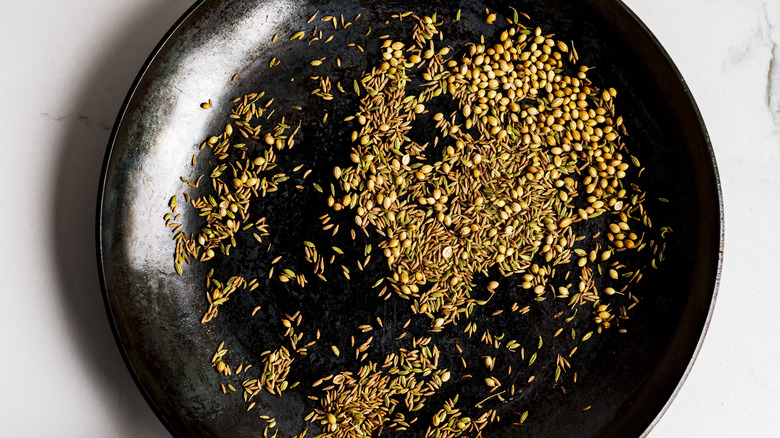
Toasting spices releases their flavor, that much we know — but how exactly does it work? While it might seem like alchemy, it's really all down to science. Spices contain essential oils, which are the compounds that give them their signature flavors and aromas. These oils are volatile when exposed to heat, and when they hit a hot pan, they (and the flavors they contain) are released, intensifying their taste and fragrance.
Black pepper, for example, contains piperine, which becomes more pungent once it's heated — which also results in pepper's natural sharpness rounding out, becoming nuttier and subtler. Coriander seeds, meanwhile, take on warm citrus notes as well as a surprisingly nutty quality. Cumin, on the other hand, develops earthiness and a subtly sweet and smoky flavor that makes it a brilliant addition for dishes like grilled meat skewers as well as sweets like homemade buns or even a cup of chai. This isn't exactly a new technique, either — cuisines across the world have been blooming spices for centuries — in India, for example, the process is known as tadka, where the spices are toasted in oil before being added to all sorts of dishes. In the West, meanwhile, Italians advocate toasting pepper when making the Roman pasta classic cacio e pepe. The toasting process makes for a deep, complex flavor while still highlighting the spice's sharp nature.
How to use this Wolfgang Puck technique at home
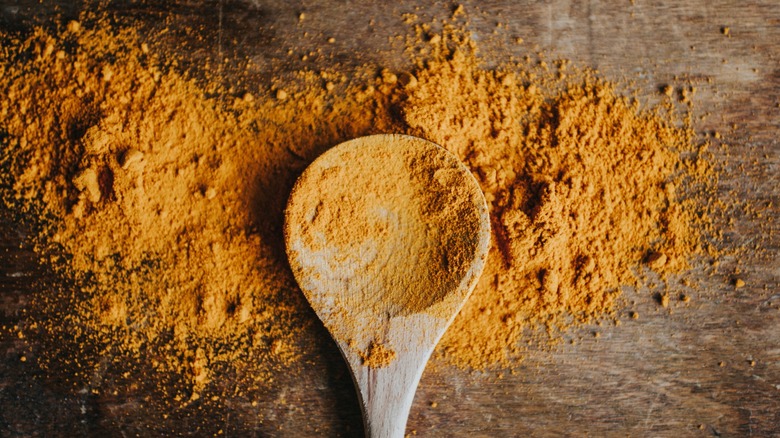
So you know the science behind how this ingenious trick works — but how do you put it into practice? There are a few different methods of blooming spices, each with deep cultural roots and each with its own unique benefits. The most common method is dry-toasting them — before grinding, place your whole spices (be they cumin, anise, fennel seeds, or any other dried spice) into a dry pan over a medium heat. Agitate them frequently so as to avoid burning them, which can be done either with a wooden spoon or by simply giving the pan a shake. Toast them for a minute or two until they've slightly darkened in color and are smelling deeply fragrant. Let them cool a little, and then grind them. You'll notice an immediate explosion of flavor from the spices — for such a simple process, it can be transformative.
If you're toasting your spices ahead of time, keep them whole until you need them — this will preserve their flavors more effectively. If you're using pre-ground spices, don't worry, the technique is exactly the same! Just keep a close eye on things, as pre-ground spices are more likely to burn quickly. That's all there is to it! It's a quick addition to your cooking that's easy to clean up and that'll elevate your dinner to restaurant-quality — maybe even Wolfgang Puck-quality — with minimal effort.