

Is It Safe To Eat Guacamole That's Turned Brown?
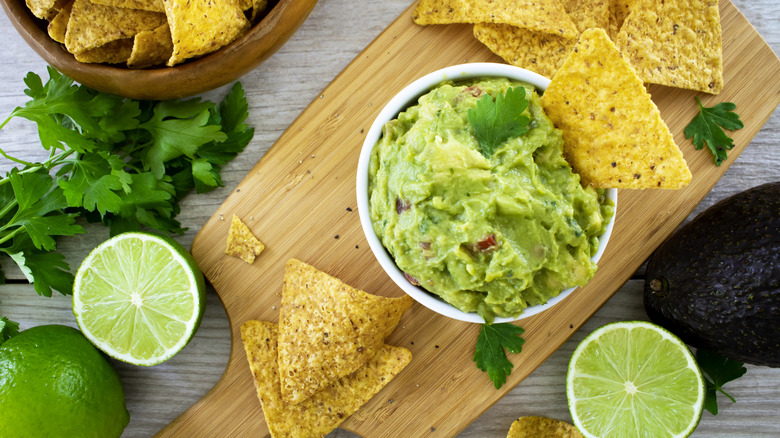
When you're craving guacamole, it's difficult to find a satisfying alternative. Whether you purchased one of the best-ranked store-bought guacamoles or your guacamole was made at home the day before and has been sitting in the refrigerator, you might wonder if it's safe to eat if it turns brown. Kantha Shelke, PhD, Certified Food Scientist, principal at Corvus Blue LLC, and senior lecturer of food safety regulations at Johns Hopkins University spoke exclusively with Chowhound to answer this question.
"Guacamole that has turned brown is usually safe to eat, provided it has been refrigerated, smells normal and not off or fermented, and shows no signs of mold or sliminess," Shelke explains. "Simply scrape off the top layer and enjoy the green underneath." The key is to check if the brown discoloration only occurs at the surface layer, or if the brown color is deeper and a sign of greater degradation. "Guacamole that has spoiled is usually dark and with an unmistakable sour or yeasty odor. It will be brown and gray all the way through and may have pools of oozed liquid and patches of fuzzy mold," Shelke said. Avoid guacamole in this condition.
Why guacamole turns brown
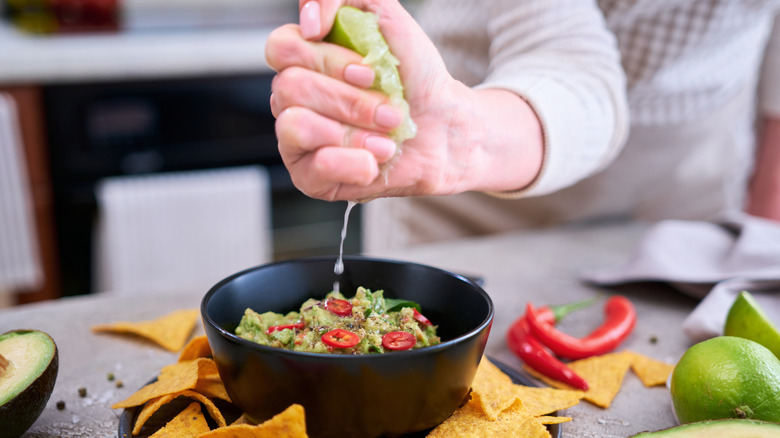
The brown layer that forms on guacamole is a result of oxidation, meaning contact with air causes the guacamole's surface to change color. This occurs because of a number of chemical reactions between enzymes in the avocado and oxygen. "Avocados contain enzymes called polyphenol oxidases, which cause them to turn brown when cut or mashed. Polyphenol oxidases, when exposed to oxygen in the air, reacts with phenolic compounds, such as catechins and epicatechins, that occur naturally in avocados and oxidizes them into dark-colored compounds called melanin," Kantha Shelke explained. Melanin is a pigment that is found in living organisms, including in feathers and skin.
There are a few ways to limit the appearance of brown color on guacamole, keeping your guacamole fresh for use the next day. First, refrigeration is one of the best ways to preserve guacamole. Then, Shelke says you can try to limit its exposure to oxygen "by pressing a plastic film or parchment directly onto the surface or storing it in an airtight container." Additionally, you can prevent oxidation by "creating a thin ice-water barrier on the surface of the guacamole to prevent exposure to air and draining just before serving," Shelke explained. Another option to maintain freshness is "adding acid, like lime or lemon juice, to lower the pH, which slows enzyme activity." This maintains the green color longer, just like it does when adding citrus to banana slices to prevent them from browning.