

This Smell Is A Clear Sign You Need To Avoid That Shrimp At The Grocery Store
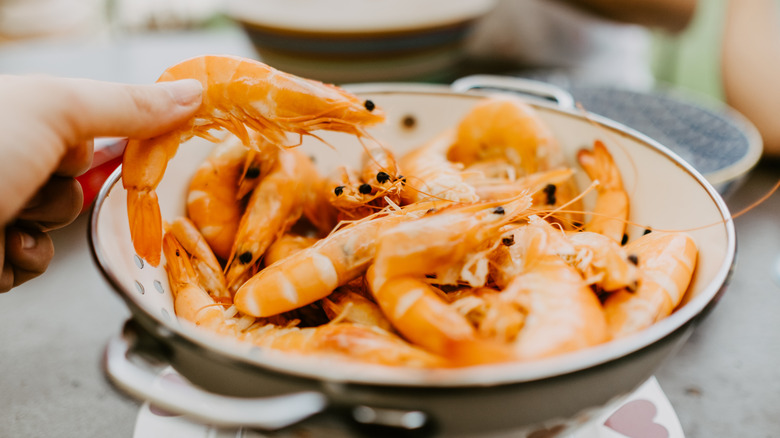
If you're a fan of shrimp — or any seafood for that matter — you know freshness is crucial. Whether you're using them in a stir fry or just grilling them old school-style, it can make or break your dish. Sure, the freshest seafood is usually the tastiest, but it's also crucial to start with the freshest product possible to ensure what you're cooking is safe to eat. That starts at the grocery store, but how do you know if the shrimp you're buying is fresh? While there are a fair few obvious signs, such as the date on the packaging, there are others to consider. To find out more, we spoke to Dora Swan and Peter Kenyon, co-proprietors of Fin — Your Fishmonger, in Guilderland, New York.
The biggest sign might just be the smell, they said. Fresh shrimp smells clean and certainly not fishy: "Fresh or frozen/thawed shrimp should smell like the ocean," they explained. Maybe there's a briny, salty, almost mineral whiff, but nothing unpleasant. Spoiled shrimp, on the other hand, makes itself known: "A strong ammonia smell would indicate that the shrimp is old," Swan and Kenyon added. Any hint of that, and you know your shrimp is less than fresh. At the end of the day, your gut is as good an indicator as anything else; it's pretty clear if something smells off, so take a whiff and trust your instincts.
Other signs your shrimp isn't fresh
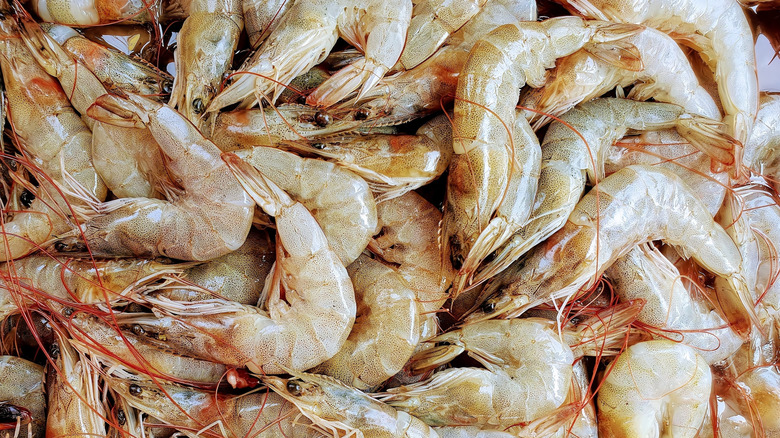
While smell is a pretty good metric of how fresh (or not fresh) your shrimp is, it's far from the only way to tell if it's spoiled or not. You could always rely on sight; if you're in the grocery store and buying prepackaged shrimp, it might be all you have to go on. "It's hard to tell if shrimp is going bad just by looking at it," Dora Swan and Peter Kenyon told us, but it's not impossible.
Look for firm, bright looking flesh and avoid shrimp with any discoloration or yellowing. Black spots, too, can be a telltale sign of spoilage. Also, have a look at the shell; if it's cracked, it can be a sign of rough handling or that the shrimp has been sitting out for too long. Color can and does vary depending on what species your shrimp is, and discoloration can be entirely harmless. But, once again, it's best to trust your gut. If your shrimp is looking worse for ware, chances are it probably is.
The thing is, sometimes looks can be deceiving. It might be a better plan, then, to go on touch: "If it's slimy or mushy, that's an issue. The meats should feel firm to the touch," Swan and Kenyon said. That goes for prepared stuff, too. At least, Swan and Kenyon noted, "cooked shrimp (like the leftover shrimp cocktail from your party last night) will last a couple of days in the refrigerator."
How to choose the freshest shrimp at the grocery store
Now that you know what to look for, you're more than prepared to head out and find yourself some quality, super fresh shrimp. But what do you need to do to make sure you bring home the catch you're after? The best bet, according to Dora Swan and Peter Kenyon, is to head to a fishmonger: "It's more likely that their fresh stock is turned over faster and comes in more often than at the grocery store." The staff at a fishmonger are also usually much more knowledgable about what they're selling than at larger stores, so they can help you find the freshest product you can. As they explained: "The staff should be aware of where the shrimp is from."
If, for whatever reason, you don't have easy access to a fishmonger, the grocery store is still a good option — but you might need to pay a little more attention and ask the right questions. First off, have a look at the packaging (or ask the staff) and find out how your shrimp were sourced: "The bags may be labeled with MSC (Marine Stewardship Council) or BAP (Best Aquaculture Practices) certification," Swan and Kenyon told us. "Taking out your phone and using the Monterey Bay Aquarium Seafood app to determine if the product is good for purchase (Best Choice-certified, Good Alternative, or Avoid) is a great habit to get into." Seafood that's been sourced sustainably and with greater care is usually a pretty safe bet in terms of freshness, too, and that also goes for frozen shrimp.