

Why Bucatini Can (And Should) Replace Spaghetti In Most Dishes
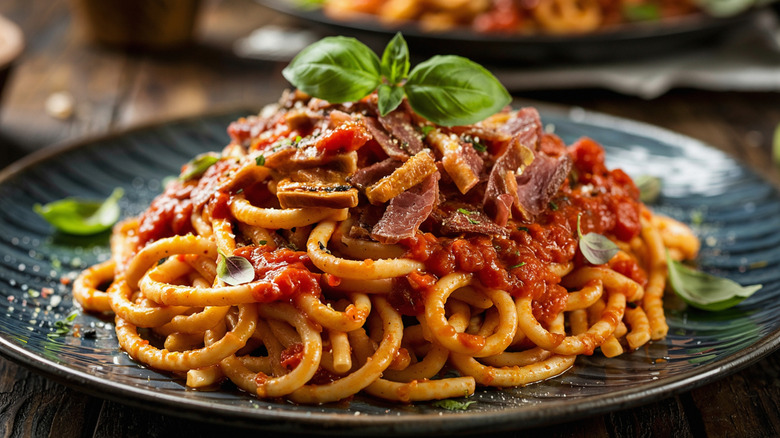
When it comes to cooking pasta, the focus always seems to be on the sauce. Whether you're making a cold pasta salad or a vegetarian carbonara, the pasta itself always seems to take a backseat compared to whatever deliciousness it's being drenched in. But the truly knowledgeable will tell you that while sauce is important, it's far from the only thing that can make or break a pasta dish. You might not realize it, but the shape of pasta that you use can have a huge impact on the dish you end up with. One shape that always seems to get overshadowed is bucatini. You may not have heard of it, but this is a powerhouse pasta in its own right, and more often than not, it's an upgrade compared to its more famous cousin, spaghetti.
To find out more, we spoke to Luca Corazzina, chef de cuisine at Olio e Più. First things first — what's the difference? "Spaghetti is thinner, while bucatini is thicker and has a hollow center," Corazzina told us. These long tubes of pasta are perfect for sucking up sauces, much like other hollow pastas like rigatoni. As Corazzina explained, "The hollow center helps it hold onto sauces in a way that is often way more satisfying!" Because the sauce gets inside the pasta, as well as just coating the exterior (like it would with a spaghetti dish), every bite is guaranteed to really cling to your sauce, making it a great upgrade for pretty much any spaghetti dish.
Why bucatini is so much better for saucy pastas
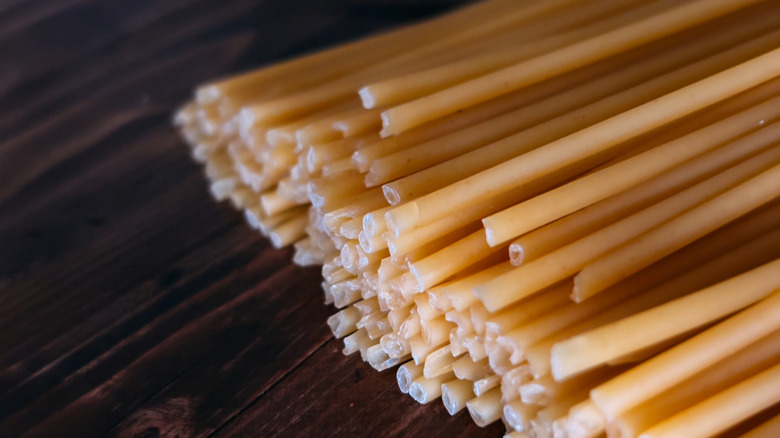
For most dishes where you'd use spaghetti, bucatini isn't just an interesting swap — it's a genuine upgrade. Though they differ slightly in texture, that difference will more often than not add to the final product, rather than detract from it. The goal for any wannabe pasta chef is sauce retention; nobody wants mouthful after mouthful of boring, dry pasta, only to be left with a bowl of sauce at the end of their meal. As we mentioned earlier, this is where bucatini really shines. "Bucatini is the winner when it comes to holding onto sauce," Luca Corazzina elaborated. "The thicker shape and hollow center holds more sauce so each bite has way more flavor than spaghetti."
That textural difference also means that bucatini holds up to slightly chunkier, heavier sauces that spaghetti might be swamped by. "I like to use bucatini with sauces like Bolognese or amatriciana," Corazzina said. "Bucatini has a heartier structure that can handle these thicker sauces and ensures that the flavor stays front and center in each bite." Those meatier sauces are often paired with long, flat pastas like tagliatelle or pappardelle — both excellent choices, sure, but bucatini, more so than non-hollow pasta types, has the added benefit of aerating your sauce as you slurp it. That extra air (much like when you slurp during a coffee tasting) opens up all the aromas in the sauce, giving it a natural flavor boost. It's essentially a straw you're using to suck up more sauce as you eat — and while it's considered a little uncouth in Italy, in the comfort of your own home, it's more than worth a try!
How (and when) to swap out spaghetti for bucatini
So, you can swap bucatini in for spaghetti pretty much anywhere, but what's the best way to do it? There are indeed dishes where it works particularly well. As we've already discovered, big, meaty ragù sauces are the perfect accompaniment, and according to Luca Corazzina, "Any sauce that is chunkier or heartier would benefit from the swap."
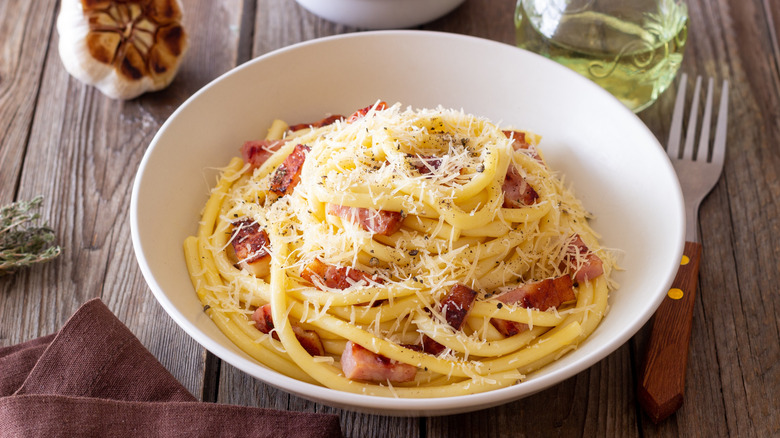
It's not just heavy sauces, though — the creamier, slicker varieties go just as well. "Classic spaghetti dishes like cacio e pepe or carbonara take on a new taste with a bucatini swap," he told us. These two Roman pasta legends benefit from that aeration we mentioned earlier, which actually lightens them a little, making sure that the richness of these ultra-cheesy dishes doesn't overpower you. In the case of a carbonara (or indeed its close cousin, the truly delicious pasta alla gricia), any guanciale or pancetta you use will infuse into the sauce that gets sucked up inside the pasta, delivering little bursts of fatty, salty flavor that'll make your bucatini truly restaurant-worthy. Bucatini's natural shape means that it has far more surface area than spaghetti, too: More surface area, more sauce, more flavor. As Corazzina explained: "The sauce has more surface to cling to, which makes each bite richer."Just remember: Bucatini, like spaghetti, is best served al dente, so watch out for overcooking — but as long as you keep an eye on your pasta, and taste as you go, you'll be well on your way to better pasta in no time.