

This Digestif Liquor Is The Perfect Flavor-Booster For Lobster
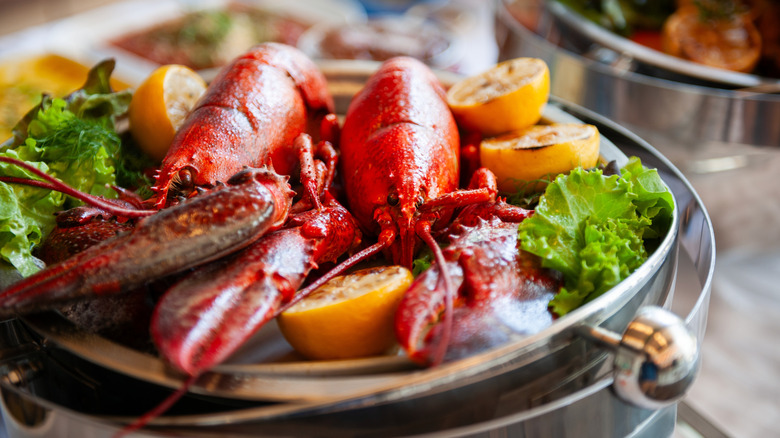
Lobster always signals luxury, whether you've tossed it on the backyard grill or simply boiled it in a pot. Add even fancier ingredients and techniques to the mix, and the once humble crustacean seems even more spectacular. Because lobsters tend to land among the more expensive items at the seafood store, make sure you aren't adding anything antithetical to shellfish success. We pinched Jeremy Blutstein, executive chef of Mavericks Montauk and Shark Bar Montauk, for a literally enlightening look at an upgrade that is, as they say, fire.
"Pan-roasting whole lobsters on the stovetop with a flambé of Cognac or brandy is about as classic as it gets," Blutstein tells Chowhound exclusively. "Highly recommend trying it out!" The process is as straightforward as it is intimidating: "Screaming hot pan, add the split whole lobsters, remove from the flame and add the Cognac, move it back to the burner and turn the flame back on medium-low," Blutstein says. "The fumes will ignite and burn off the alcohol, perfuming the lobster. Finish in the oven."
Flambéing lobsters at home
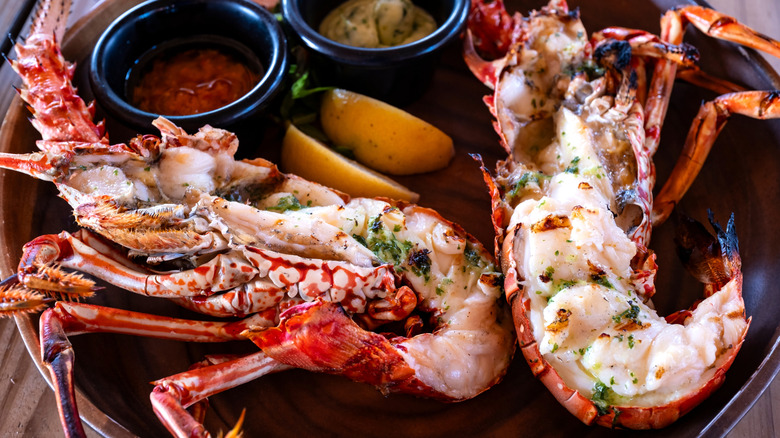
If the notion of setting your stovetop on fire makes you sweat, that is a totally sensible and good instinct. But home cooks have been dabbling in the flashy practice for time immemorial. Heck, Julia Child was showing folks how to light up a coq au vin back in the days of black and white TV, and fire extinguishing technology has surely improved since then. Plus, you aren't aiming to create a cartoon flare-up; just a quick flame to give the lobster a little more dimension than those other cooking methods.
You need to split the lobster vertically, from the eyes through the tail, with a sharp knife. Your fishmonger might be able to do this for you, as well as tell you whether you're dealing with soft or hard-shell lobsters. Back in the kitchen, start the lobster halves in a heavy sauté pan with melted butter for a few minutes before adding about a shot of the booze. Ignite it with an extended wand lighter if necessary, tipping the liquid away from you. Jostling the lobster around the pan helps keep it from overcooking and puts the flames to rest. You can finish on the stove or in the oven, as Jeremy Blutstein suggests, keeping in mind that lobster shouldn't be exposed to any potential heat source for too long.