

The Unexpected Seafood That Actually Makes An Irresistible Compound Butter
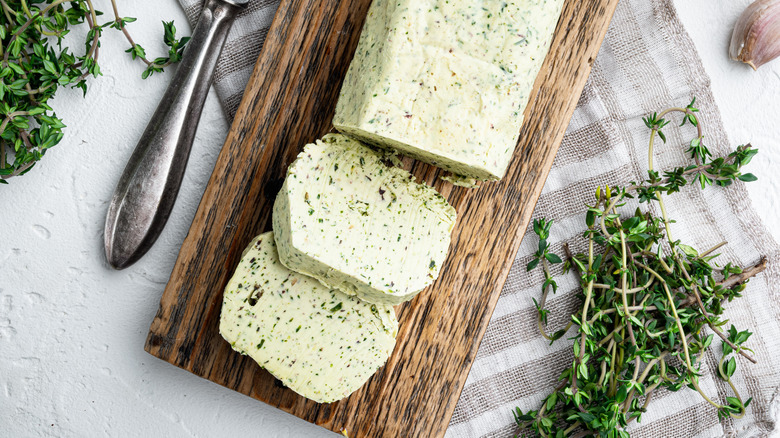
When you need a little extra flavor and rich creaminess on your steak, grilled fish, or roasted veggies, a compound butter can really pack a punch — or, well, more like a nice sturdy hug. Many compound butters are made with herbs, like rosemary and thyme, to help expand the savory flavor. Blue cheese is one of the best choices for a compound butter because it adds a lot of funky flavor, and its soft texture makes it easy to blend with butter. On the spiced, boozy side, whiskey butter makes an interesting spread, and it can be used on savory and sweet foods.
But one seafood ingredient you may not have thought to add to your compound butter is tinned fish. It can add some killer umami that will take your compound butter to a whole other level. For some advice on the subject, we reached out to David Burke, chef at Mojito Restaurant & Bar, who's preparing food for the 2025 US Open, for a Chowhound exclusive. As for what tinned fish to use, Burke says, "Smoked salmon or anchovy come to mind first. Shrimp with garlic would also make a good compound butter." Burke says making a compound butter with tinned or smoked fish or shellfish is simple, "because no additional ingredients are required. Just add butter and you have a memorable compound combination." Beyond just mixing the two ingredients, there are a few tips and tricks to get your compound butter just right.
How to make tinned or smoked fish compound butter and what to use it on
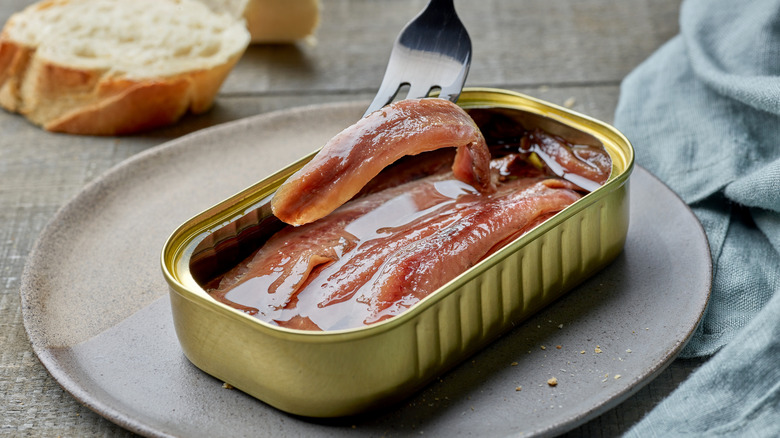
When making your compound butter, David Burke says you should use softened, unsalted butter as the foundation. "In the case of anchovies, the oil needs to be drained off," he says. "For shrimp or smoked salmon, some lemon juice is in order, along with a little parsley." Burke also recommends a dash of Worcestershire sauce with the shrimp.
There's an easy formula to build your compound butter. In general, you'll need about a tablespoon or two of whatever you choose to season it with, per stick of butter. But with tinned fish, you can use the whole tin if you want more unctuous seafood flavor. Once your butter is softened, you simply hand-mix in your ingredients. Or for a more thorough incorporation, whip your butter until nice and fluffy then mix in the other ingredients. Once the ingredients are fully integrated, roll the butter into a log with parchment paper or plastic wrap, and refrigerate for later use.
"Compound butter can do wonders for fish or steak," Burke says. "I also like it on pasta, added at the end." When cooking fish in the oven, you can spread the compound butter on the top of the fillet, and let the flavor percolate into the flesh. For steak, it's probably best to simply add it to the top of the steak after cooking, or the compound ingredients could burn in a hot pan or on the grill. However you use it, even on a simple slice of toast, tinned fish compound butter creates an incredible balance of creamy, salty, umami goodness that you probably never even considered.