

Are Any Longhorn Steakhouse Steaks Grass-Fed?
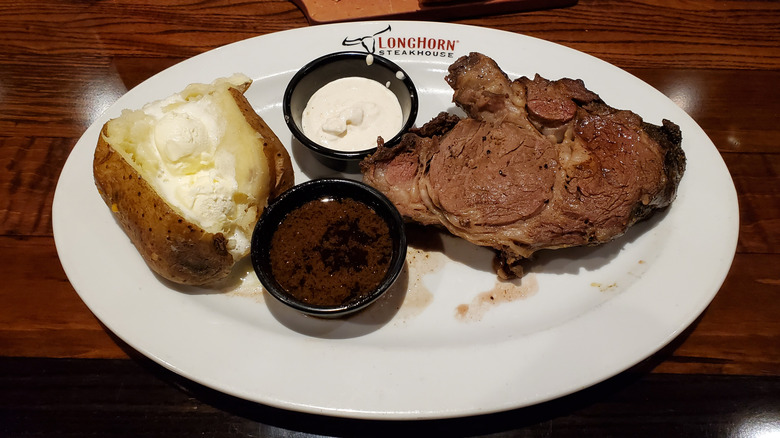
Step into any Longhorn Steakhouse and you may be plagued with one burning, health-conscious question: Are these steaks really grass-fed? Well, the answer is yes — but also, not really. In a technical sense, yes, the steaks at Longhorn are grass-fed, because most cattle in the United States spend part of their lives eating grass. Grass feeding is not exclusive to Longhorn beef or any other brand, since it is the standard practice in the U.S. beef industry. Calves are born and raised on grass, but after the juvenile stage, their diet changes.
Responding to a consumer question on Yelp, a Longhorn guest relations officer clarified that the chain serves grain-finished beef. The key difference comes when the now-mature cattle are "finished," or fed for the final few months before slaughter. They are moved to feedlots and switched to a grain-based fattening diet. Grain is cheaper, and it produces consistent fat marbling that the average American's taste buds tend to prefer.
Grass-fed beef and grain-fed beef differ in notable ways. For example, grain finishing has been found to change both the nutritional and flavor quality of the beef so much that it can override characteristics gained in the earlier grass-fed period. So while it could still be labeled "grass-fed", that description doesn't tell the overall story. After all, even "organic" and "grass-fed" beef are technically not the same thing.
Understanding the marketing reality
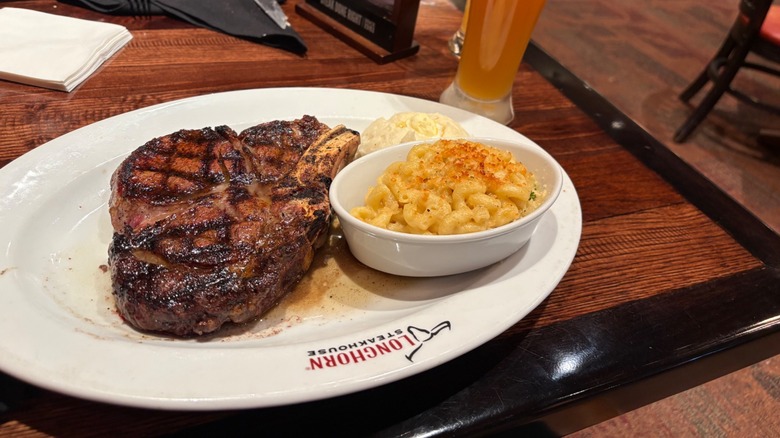
When you pay a restaurant for a steak, the meat has been processed to give you as much consistency as possible. Grain-finishing allows for consistency and tenderness, targeted to appeal to as many people as possible. That is why nearly every major steakhouse franchise uses the same process.
This is not to say that grain-finished beef is inferior. It is simply different. Grain-finished steaks tend to develop fuller, richer, more buttery flavors. Grass-finished beef, on the other hand, often produces a more gamey taste. If you are a home cook who wants to explore true grass-fed (grass-finished) beef, the delicate nature of this type of beef will require you to adjust your techniques. Cooking at lower temperatures for shorter durations and allowing longer resting times can help avoid tough results. These steaks also pair well with compound butters or finishing salts that enhance — rather than mask — their stronger beef flavor.
Altogether, the Longhorn situation is representative of a larger issue in beef labeling from coast to coast. Many consumers do not understand that "grass-fed" does not mean an exclusive grass-only diet. You could order the best or worst steak at Longhorn, but that won't change the fact that while the cattle were raised on grass, it was not their only feed.