

Blue Sausage Fruit Is The Furthest Thing From Sausage
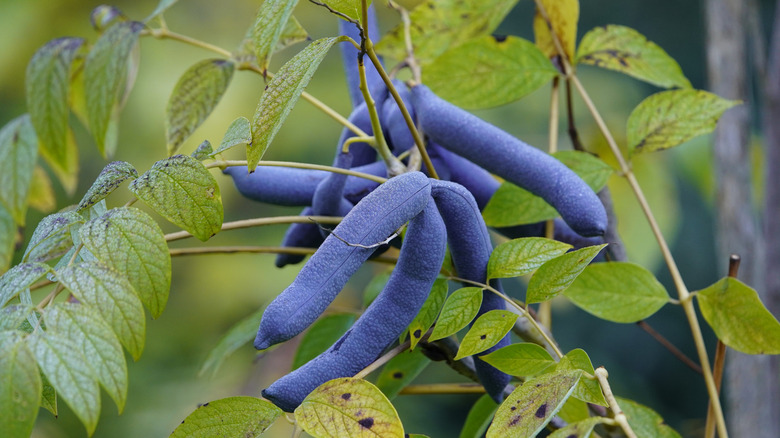
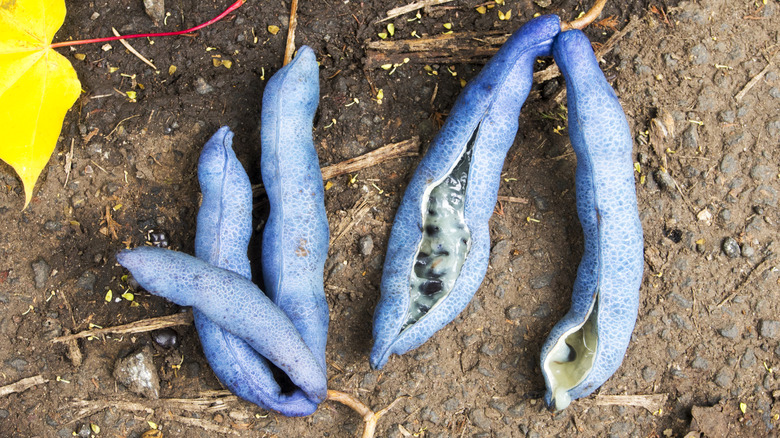
Despite its playful nickname, the "blue sausage fruit" has nothing to do with meat. Known as Decaisnea fargesii, it is a shrub found in mountain forests and shaded ravines stretching across western China, Nepal, Bhutan, and the surrounding regions. In the autumn season, the plant produces elongated pods, shaped like beans, that mature into an unusual shade of metallic blue. When the pods split open, they reveal a soft, jelly-like flesh wrapped around many flat black seeds. The pulp itself is mild and faintly sweet, often compared to melon or cucumber, though the rest of the plant is of little culinary interest.
While the fruit is edible, curious gardeners and collectors appreciate the shrub more for its surreal appearance than its taste. Similar to the striking appearance of yellow watermelon (which has a uniquely distinct taste), the vivid blue pods lend an almost otherworldly presence to botanical displays and ornamental plantings, making the plant a conversation piece wherever it grows. The blue sausage fruit won't be seen next to scrambled eggs and pancakes; instead, it's a visual spectacle wrapped in a layer of gelatinous, subtly sweet pulp.
A fruit that defies its name
The plant known as the blue sausage fruit hardly lives up to the image its name suggests. Also known as "Dead Man's Fingers," the fruit offers a strange mix of elegance and variety to your DIY raised garden bed. It can grow into a broad shrub or even a small tree, with sweeping leaves that stretch almost 3 feet across. Each leaflet is velvety, with a soft look that favors tropical plants. The plant is an eye-catching addition to a garden or yard, long before the fruit even arrives.
The real show begins toward the end of summer and early fall. Clusters of narrow pods, often compared to resembling dangling fingers, turn an astonishing metallic blue as they ripen. Split one open, and you'll find a glistening pulp that looks almost translucent, accompanied by rows of dark seeds. The outer skin is not eaten, but the interior is soft, cool on the tongue, and faintly sweet. Some gardeners call it refreshing. Chef and co-owner of the famous NOMA restaurant in Copenhagen, René Redzepi (who chose LA to house his first pop-up restaurant in the United States), has highlighted its surreal appearance, exploring how to use it in dishes. The blue sausage fruit is an inspiring oddity in the world of culinary art and curious gardeners. Nature has its own quirks, and this fruit is sure to make you do a double-take.