

Popular Ice Cream Flavors From Each Decade
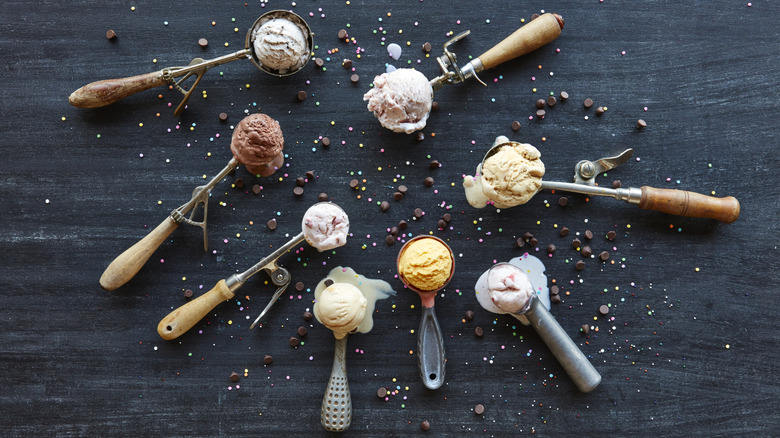
If bread is the food of the common man, then ice cream must be his delight. While not nearly as ancient or foundational as grains or alcohol, ice cream still serves as proof that humans, throughout history, can always make time in their day to indulge in something sweet and luxurious. Over time, ice cream has evolved from homemade, sherbet-like desserts to fantastical cone creations topped with gold leaf, but the classics remain among the world's most beloved desserts for a reason. Simple flavors like vanilla, chocolate (see our favorite store-bought brands here), or strawberry consistently top the ranks across the country, and it's enlightening to see that despite the passage of time, very little has changed about our ice cream flavor preferences.
However, as trends come and go and world events shape society with every passing decade, new preferences for delicious ice cream flavors rise up. Whether an underrated flavor gains newfound popularity, or some new and innovative twist on a classic storms onto the scene, it's evident that history informs trends, and ice cream is certainly no exception! Every decade has some new sweet secret to share, so join us as we travel across 100 years of history to see which ice cream flavors are attracting attention.
1920s: Rocky road
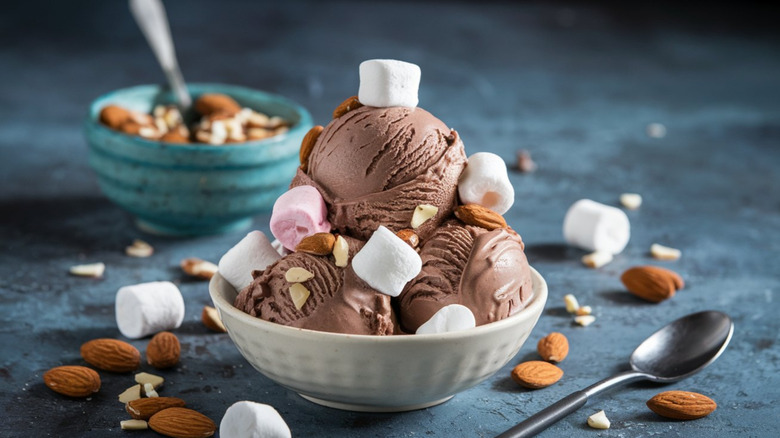
It's difficult to name a more decadent and historic decade in America than that of the Roaring Twenties. Jazz music was on the rise, the iconic flapper dress was in style, and modern American culture as we know it was beginning to take shape. However, the bitter came with the sweet; organized crime was reaching its peak, uneven economic distribution hinted at a difficult future, and Prohibition laws rolled out with the veto of the Volstead Act in 1919, which effectively criminalized the manufacture and distribution of alcohol throughout the U.S. Ice cream took alcohol's place during these dry years, with variations of the rocky road flavor among the most popular.
At this point in time, ice cream was already nearly 2,000 years old, but it was during the past few decades that the dessert began to resemble the modern-day creation we enjoy today. While rocky road didn't become fully established until Dreyer's ice cream created its version in 1929, many similar iterations of the iconic flavor, all featuring chopped chocolate chunks, assorted nuts, and marshmallows, were in great demand across the country. Sundaes especially shot to popularity thanks to their plays on varying toppings and textures, so it only made sense that the multi-textured rocky road immediately took America by storm after its creation. Today, rocky road remains a beloved flavor for sweet tooths all over the world.
1930s: Rum raisin
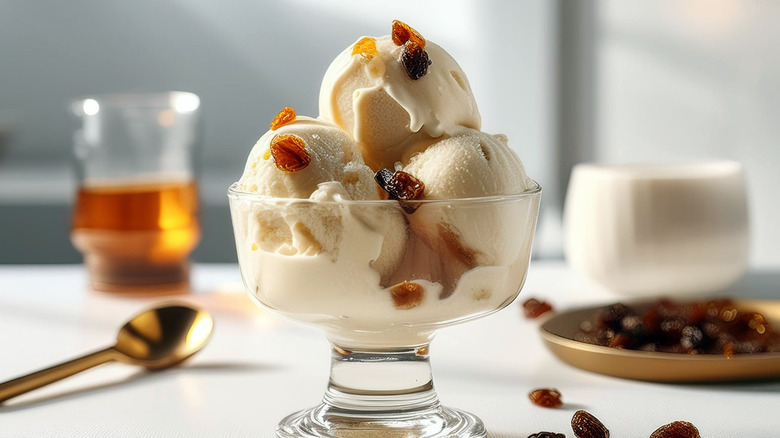
Prohibition, the so-called "noble experiment," had a generous lifespan of about 13 years before the U.S. government repealed the alcohol ban in 1933, and you better believe that everyone scrambled to enjoy their newfound drinking privileges. Many iconic mixed drinks were created, culinary techniques employing alcohol such as flambé and alcoholic reductions rose in popularity, and the boozy, delicious ice cream flavor of rum raisin became a crowd-pleaser during the 1930s in ice cream parlors all over the country.
Unlike rocky road ice cream, which was created during a surge in popularity for its mix of flavors, rum raisin in a very base form already existed by the 1930s. Italy, specifically the Sicilian region, is credited with originating the technique of soaking fruits and other ingredients in a sweet alcohol such as rum or dessert wines. Italians went a step further to mix those rum-softened raisins, themselves a delicacy, with vanilla-flavored gelato to create the titular rum raisin. In America, the gelato was swapped out for the more luxurious vanilla ice cream, and the rest, as they say, is history.
1940s: Vanilla
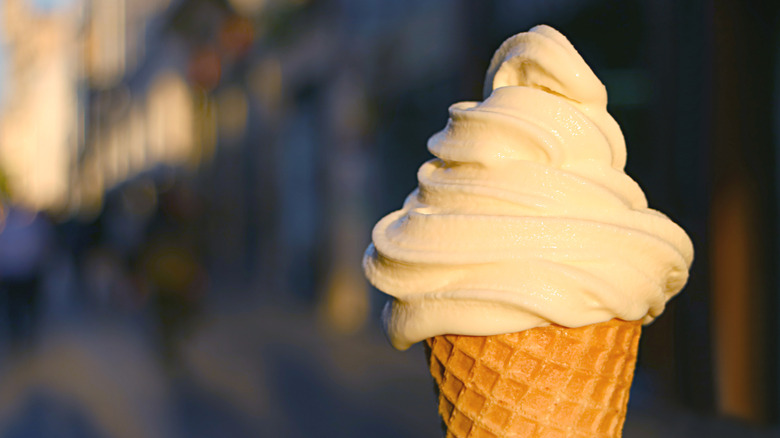
As World War II raged, spirits flagged. To keep up patriotism on both the front lines and back home, positive symbols like victory gardens and Rosie the Riveter's famously bared arm were diligently distributed. One of the biggest priorities during this time, of course, was the morale of soldiers, and efforts were made to keep them well-fed and motivated, especially by serving vanilla ice cream whenever possible. It was during this time that the iconic white vanilla contrasting the ecru shade of the cone became renowned for its simplicity. The sweet treat soon became a smash hit with both American soldiers and non-combatants back home.
The nostalgic scoop of white, creamy vanilla was a beloved but delicate dessert to bring to soldiers stationed far from home, giving sweet-toothed engineers the opportunity to create new and improved methods of transporting and operating ice cream machines in improbable places such as submarines due to the specific freezing temperature the dish required. The military, however, would spare no expense; according to the International Dairy Foods Association, "each branch of the military tried to outdo the others in serving ice cream to its troops." Like bright red lipstick, vanilla ice cream became a symbol of resistance during the height of the war, and even today it remains one of the most classic American desserts and symbols of summer.
1950s: Pineapple
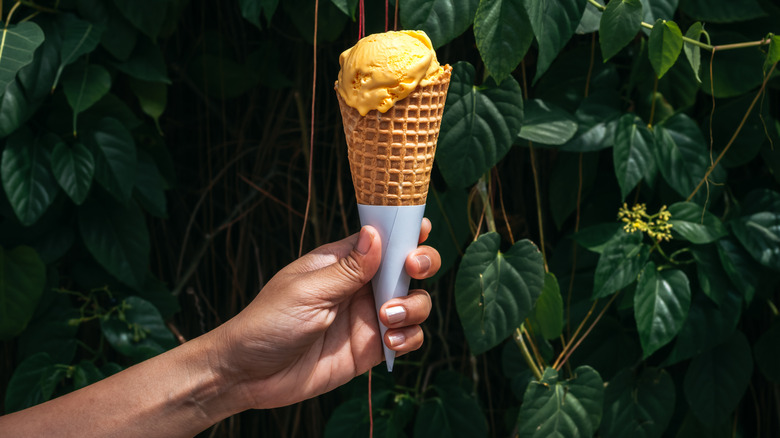
Ever since the European explorers' discovery of pineapples in the late 17th century, the fruit has enjoyed quite the gilded reputation. Because of its unique shape, golden coloring, and overall novelty, pineapples became known as a luxury fruit; kings commissioned portraits of themselves being presented the "King Pine," as pineapples were reverently called, and nobles would display the iconic fruit as centerpieces on their dining room tables to show off to their guests. Even in the 20th century, pineapples continued to fascinate people with their bright, tropical taste forever associated with sun and warmth, even in something as cold and refreshing as ice cream.
People found endless ways to incorporate the unique fruit; many infamously bizarre dishes of the 1950s starred pineapple rings suspended in brightly colored Jell-O creations. A naturally sweet pineapple-flavored ice cream enjoyed newfound popularity in multiple magazine ads during the decade. Pineapple sundaes, a precursor to pineapple ice cream, were documented as early as the 1930s, and the flavor itself rose in popularity in the 1950s, when Hawaii, a major pineapple producer, became an American state, stirring up interest in Polynesian culture as well as flavors associated with the tropics. What a sweet welcome to the 50th state of America!
1960s: Butter pecan
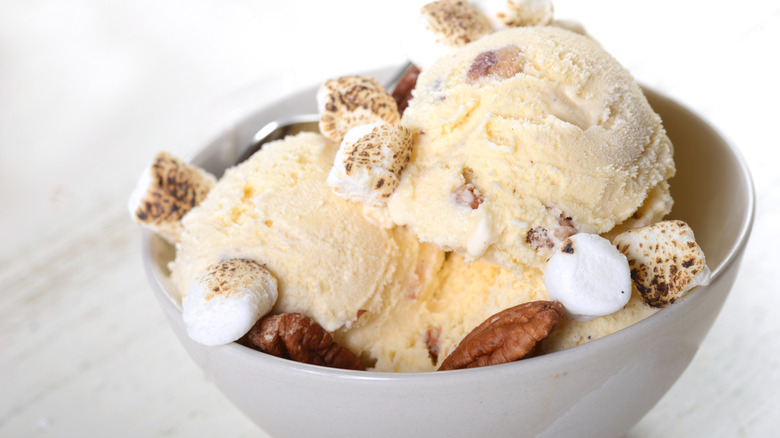
Out of all the flavors on this list, butter pecan ice cream might arguably outrank them all in terms of historical significance. Shouldering a loaded past, butter pecan first rose to prominence during the '60s in the aftermath of the Jim Crow laws, when many store owners in the South refused to sell vanilla ice cream to Black customers due to systemic racism. Butter pecan, with its swirls of roasted pecans, vanilla, and melted butter, quickly became a popular alternative, and soon the dish cemented itself into the hall of fame of soul food. Butter pecan ice cream became a beloved closure to a meal filled with a long line of celebrated Southern dishes such as collard greens, shrimp gumbo, and cornbread.
Despite its rough beginnings, butter pecan remains a popular ice cream flavor to this day, thanks in no small part to the widespread cultivation and distribution of pecans from the state of Georgia, one of the largest pecan producers in the country.
1970s: Mint chocolate chip
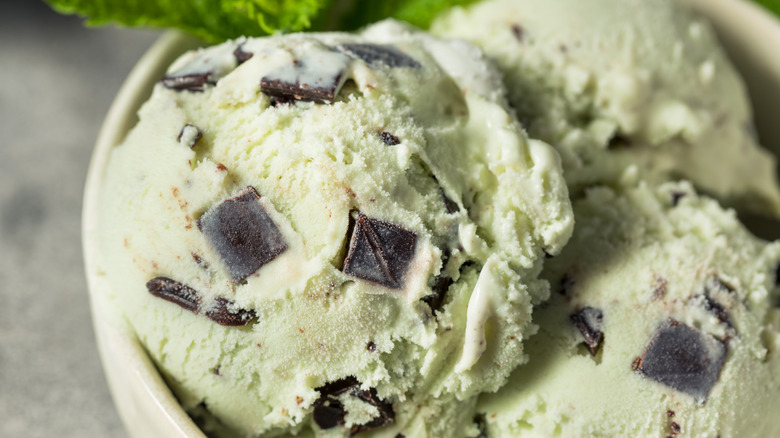
Mint-flavored ice cream had been around some time before the cultural zeitgeist of mint chocolate chip ice cream began to take effect in the '70s. According to the Food Timeline, peppermint flavored ice cream had been a go-to choice for many ice cream parlor customers since the 1940s. In 1948, Baskin-Robbins rolled out a cool green-colored ice cream called Green Mint Stick that featured green peppermint candy.
The fan-favorite flavor went through several drafts until the '70s rolled around, when the well-known combination of dark chocolate chips and peppermint flavored ice cream rose to international prominence thanks to a British royal wedding. Marilyn Ricketts, an undergraduate student at Torquay Catering College, submitted mint chocolate chip ice cream as a potential dessert option for Princess Anne's wedding in a culinary competition. When she won, the flavor soared in popularity, and over 50 years later we're still enjoying the sweet impact that mint chocolate chip has left behind. This iconic mint marriage has spawned many iterations that remain on grocery store shelves and in ice cream parlor tubs even today, but nothing beats that classic minty chocolate combo.
1980s: Cookies and cream
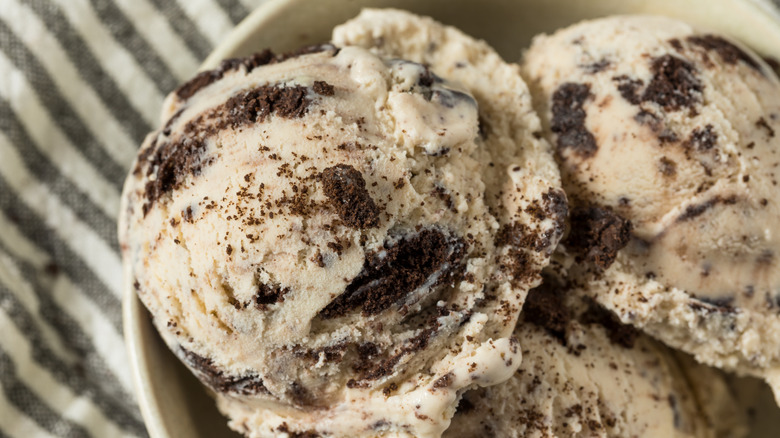
While the exact origin of the cookies and cream flavor remains murky, sources all agree that the flavor was invented somewhere between the late 1970s to the early 1980s, when the popularity of this iconic ice cream flavor skyrocketed. In 1983, cookies and cream became one of the top-selling flavors, with multiple TV ads featuring this combination. It remains a fan-favorite to this day. Its beginnings are still hotly contested; several big name-brands such as Dreyer's and Blue Bell Creameries as well as South Dakota State University and others all claim to have invented this famous mix of Oreo cookies and vanilla ice cream. However, there's no denying that the flavor took the world by storm from the moment of its inception.
In the world of desserts, cookies and cream ice cream is a triple threat in flavor, texture, and versatility. Sometimes called "Oreo cookie ice cream" or "cookie cream" depending on who wants to avoid a licensing lawsuit, this black-and-white speckled ice cream is made by mixing chocolate sandwich cookies, often Oreos, with a creamy vanilla base. The chocolate cookies create a fun texture, and the overall simplicity of the flavor makes the ice cream an easy base for other delicious desserts such as milkshakes, ice cream cakes, and much more. While this popular flavor spawned others, there's no denying the ingenious and beloved simplicity of the original vanilla and chocolate cookie combination.
1990s: Cookie dough
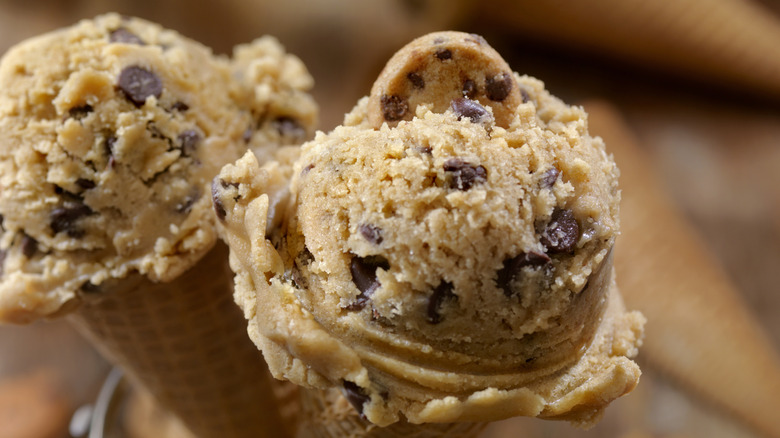
Raw cookie dough was a baker's ultimate temptation. While a smidge of dough to taste the batter for sweetness was usually allowed, the forbidden allure of raw cookie dough has enticed millions of hands to reach for the unattended mixing bowl for a sample. However, the actual act of eating raw cookie dough was a hazard due to the presence of unpasteurized ingredients like raw eggs, and it was only thanks to Ben & Jerry's 1991 creation of its wildly popular chocolate chip cookie dough ice cream flavor that safe cookie dough consumption became a reality.
By eliminating the need for raw eggs in cookie dough, often by substituting vegetable oil or applesauce, raw cookie dough became much safer to eat and consume in larger quantities. The ice cream version takes great advantage of the chewy, varying textures of regular cookie dough, making the flavor highly sought-after in the 1990s. While Ben & Jerry's certainly helped to rocket the flavor to popularity, other ice cream manufacturers quickly followed suit to capitalize on the delicious combination. Dreyer's and Mrs. Fields began making their own versions of the flavor, though the Ben & Jerry's version remained one of its top-selling products. The New York Times reported in 1992 that Ben and Jerry's chocolate chip cookie dough ice cream flavor accounted for over 20% of the company's total ice cream sales, which is a huge testament to the popularity of unbaked cookie dough back then.
2000s: Cake batter
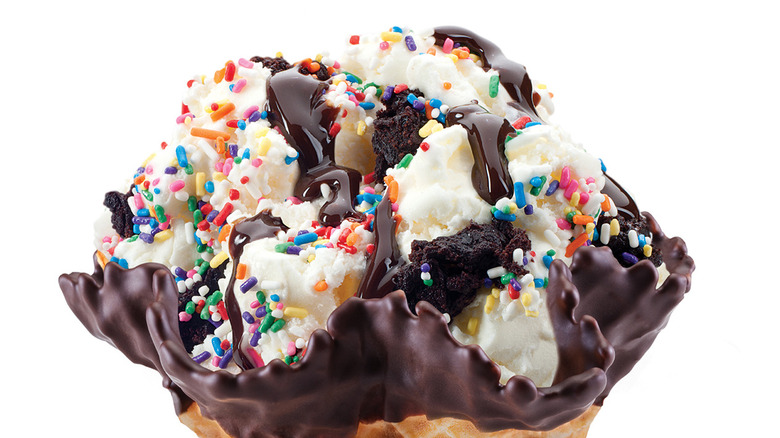
The beginning of the new millennia ushered in some sheer contrasts. Food trends, influenced heavily by the broader media culture at the time, displayed just how wide the spectrum stretched. While the dominant diet culture of the early 2000s nudged millions of body-conscious eaters to watch their weight with absurd dieting trends, monstrously high-caloric desserts were also on the rise. Increasingly sweet and colorful desserts began to pop up in local bakeries and grocery stores. Mini cupcakes sprinkled dessert cases with bright bursts of pastel, and cake pops, invented in 2008, became a smash hit at parties. With such an emphasis on brightly colored cakes and other doughy sweets, it's quite understandable how cake batter became such a popular ice cream flavor in the 2000s.
Cold Stone Creamery takes credit for creating the first iteration of cake batter ice cream, engendering the concept as early as 2003. Its version took inspiration from the widespread popularity of yellow cake and added some extra fragrance with butter and vanilla, resulting in a creamy, smooth texture that was similar to soft-serve ice cream. When cake batter became a smash hit, Cold Stone quickly rolled out other flavors. Birthday cake was another popular iteration as well as red velvet and marbled cake ice cream. However, the familiar yellow and rainbow-streaked cake batter continues to be a smash hit with nostalgic, sweet-toothed customers.
2010s: Salted caramel
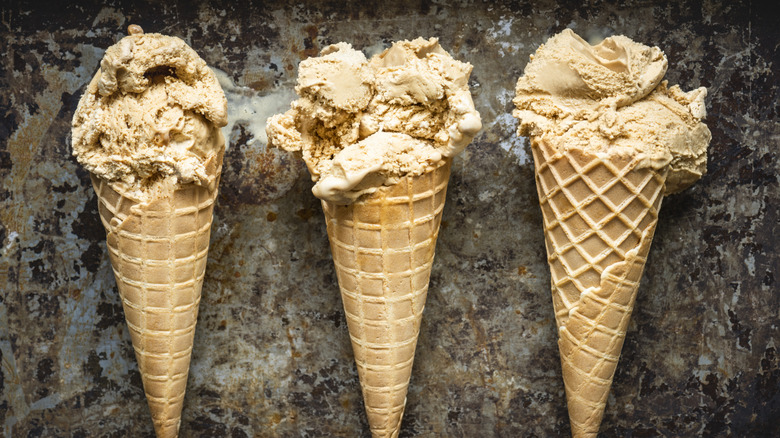
While it wasn't until this decade that salted caramel became a mainstream sensation, its origins can be traced to a decision in the 14th century, when a French tax made salt a luxury good that only certain households could afford. The county of Brittany was spared the tax and became renowned for its salted butter goods. The region later became famous in the 1970s thanks to Henri Le Roux, a French chocolatier who opened a shop there. He is credited with inventing a salted butter caramel with crushed nuts. In 2008, the famous ice cream manufacturer Häagen-Dazs released its own iteration, a salted caramel ice cream that soon became trendy.
Salted caramel as a flavor was not just limited to ice cream. Starbucks introduced its own salted caramel hot chocolate not long after, and soon the flavor became a hot commodity all over the country. Cheesecakes, brownies, chocolate tortes ... there was no limit to the amount of desserts you could make with salted caramel. As an ice cream flavor, though, the taste was unbeatable. Not only did the overall silkiness of the caramel weave enticingly through the vanilla base, but the slight twist of saltiness heightened both the subtle sweetness of the vanilla and the richer flavor of the caramel, making for a luxurious taste.
2020s: What's to come?
Unbelievable as it may be, but the 2020s are more than halfway over! Food fads and the influence from current socio-political climates have about five more years, but flavor trends are already emerging that can give us a guess at what's going to be the top ice cream flavor of the decade. As usual, the past informs most of what's popular; rocky road continues to be a fan-favorite even after enjoying 100 years of popularity, and the usual classics such as vanilla, chocolate, and cookies and cream continue to dominate people's choices across the country. However, if we were to take a look at the more eclectic trends below the radar, there's plenty of other choices to give these traditional flavors a run for their money.
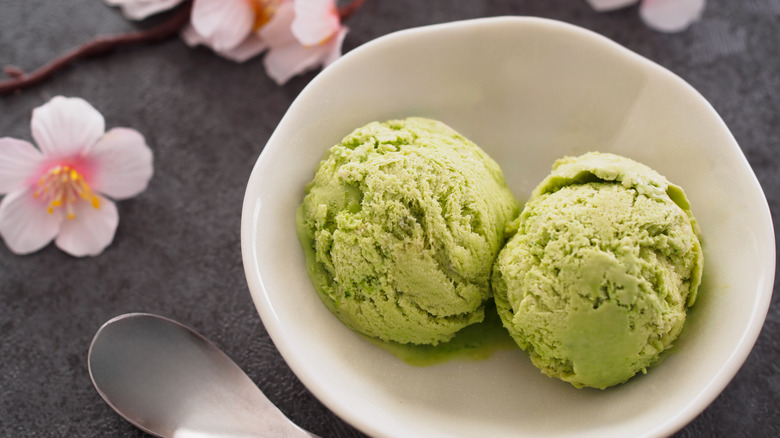
Globally inspired flavors such as green tea, pistachio, and pineapple-coconut are all ice cream flavors that are on the rise for consumers. Among ice cream brands, savory flavors seem to be the current trend: soy sauce, gravy, and oyster-flavored ice cream are all real products that correspond with the running thread of global innovation and creativity. While we've still got half a decade to go before we can come to any real conclusions, it seems that people are looking to connect across international borders in the 2020s, leading to heightened interest in exotic flavors and experiences.