

The High-Protein Cheese That's The Perfect Addition To Most Meals, Even If You Limit Your Lactose
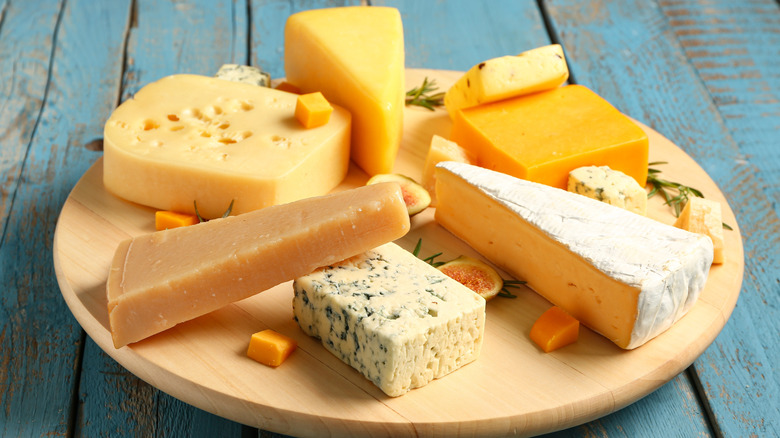
Savory, nutty, and distinctive for its long-lasting aftertaste, Parmesan (or Parmigiano Reggiano if you're Italian) has the power to enhance just about any recipe — no wonder it's colloquially known as the king of cheese. Whether it's a plate of crispy, juicy chicken smothered in marinara sauce, a bowl of creamy, buttery garlic pasta, or a rich, mouthwatering mushroom risotto simmered in white wine, a generous amount of freshly grated Parmesan is all you need to take each of these dishes to the next level. Hailing from the Emilia-Romagna region of northern Italy, Parmesan is made primarily of cow's milk.
This makes it highly flavorful and nutritious, with a 1-ounce serving of the popular hard cheese boasting 10 grams of protein, making it a great alternative for those seeking to increase their intake without giving up cheese entirely. That's why you should think twice before throwing away Parmesan cheese rind — simply toss it in homemade broth instead, and enjoy the extra nutrients and flavor. Still, one of the best things about this delicious cheese, especially for the lactose intolerant among us, is it's low in lactose.
A 100-gram serving contains less than 1 milligram of this simple milk sugar, making it an excellent choice for those who are lactose intolerant. The reason behind its surprisingly low lactose content lies in Parmesan's fermentation and lengthy aging processes, which can last for over three years. During this time, nearly all of the lactose in the milk is essentially broken down by natural enzymes and bacteria.
How aging reduces the lactose in Parmesan
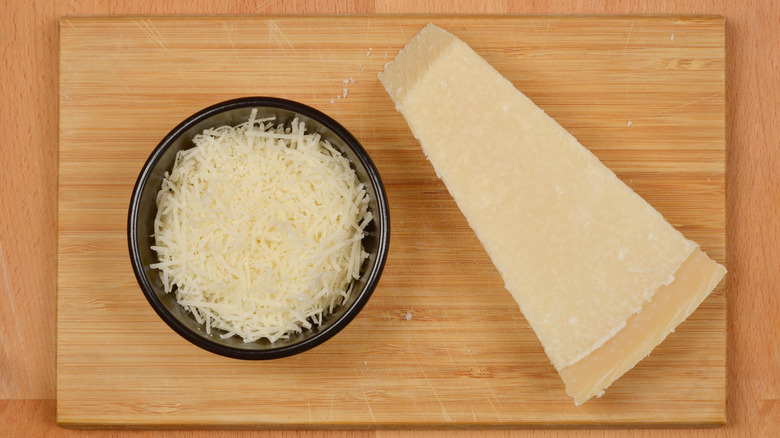
Impressively, lactic acid bacteria present in the raw milk and the whey starter break down the lactose in the curd and transform it into lactic acid within the first eight hours of the fermentation process. In addition, galactose, a monosaccharide also known as brain sugar, which is also found in lactose, gets metabolized within the first couple of days too. Once the fermentation process is complete, the cheese is left to age and mature under controlled conditions, in order to develop its uniquely strong flavors, aromatic profile, and signature grainy texture.
Parmesan typically undergoes an aging period of anywhere from 12 to 40 months, and sometimes even longer, before it's ready for consumption. The fermentation and maturing processes it undergoes, as well as the low lactose content, give Parmesan an especially complex flavor and texture. What's more, unlike soft cheeses, which are the worst for those with lactose intolerance, Parmesan is easy for the body to digest. This is what makes it such a versatile ingredient.
One way to incorporate it is by shaving some fresh Parmesan over a fresh arugula salad for a delectably salty bite. If you buy shredded Parmesan instead of a whole wedge, turn it into irresistibly crispy crackers for a deliciously salty snack. When sliced, it will melt seamlessly into soups and stews, infusing them with a rich umami flavor from glutamate, a free amino acid that increases during aging. Always avoid buying pre-grated Parmesan cheese, though, as it may have traces of cheeses containing lactose.