

Here's How Chinese Restaurants Get Shrimp So Tender
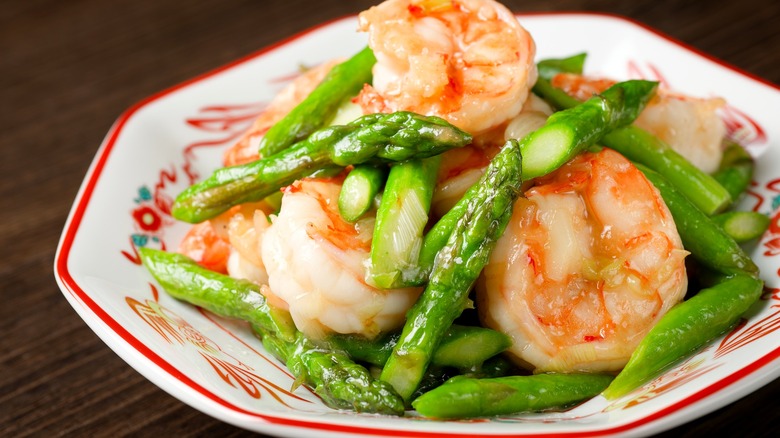
The meat and seafood you get at Chinese restaurants is on another level of tenderness, whether you order five-spice beef and broccoli at your local takeout spot or the best Panda Express menu item in our ranking, honey walnut shrimp. The shrimp, in particular, is usually a standout — it's always so plump and juicy, bursting with freshness from the moment you bite in. According to Chinese-American chef and Bravo TV's "Top Chef" alum Shirley Chung (@chfshirleychung on Instagram), you can get the same tenderness at home by using a very simple technique that many Chinese restaurants use: velveting.
"Using the velveting technique when sautéing shrimp at a high heat is the best way to get tender shrimp," said Chung in an exclusive chat with Chowhound. Velveting involves soaking meat in a very loose batter made with any edible liquid and a small amount of starch. For shrimp, Chung suggested using a mixture of cooking wine, ginger, and scallion water for the liquid, and either potato or corn starch for the starch.
The velveting technique works by essentially massaging liquid into the meat, making it plumper and more tender. If you're using an alkaline ingredient like egg whites in your velveting liquid, it'll also prevent the proteins in the meat from clumping together during cooking, which further tenderizes your shrimp. The starch, on the other hand, coats the shrimp in a thin film of batter that seals in moisture as it cooks, keeping the meat as soft and juicy as possible.
Tips for velveting shrimp more effectively
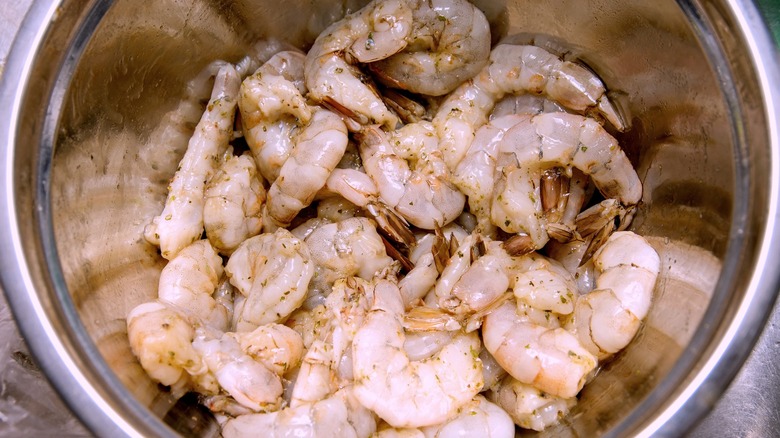
Velveting meat at home is incredibly easy as long as you follow a few guidelines. To get restaurant-quality shrimp, for instance, you need to be light on the starch. An excessive amount, Shirley Chung explained, causes the shrimp to become "goopy and gummy." For reference, the classic marinade for velveted shrimp uses 1 tablespoon of cornstarch for an entire pound of shrimp, giving the resulting batter a more slurry-like consistency.
Chung also said that overcooking can undo all the work you put into velveting. You'll want to take the shrimp off the heat as soon as it turns opaque and just begins to curl — by the time it curls up into a ball, it'll be overcooked and rubbery. "Medium-size shrimp only take less than three minutes of total cooking time," she advised.
Lastly, you can boost the tenderizing effects of velveting by adding a small amount of baking soda to the mix; Chung recommended using just ½ teaspoon for every pound of shrimp, and then marinating it for a minimum of 30 minutes. Baking soda is a game changer for shrimp because, like egg whites, its high alkalinity slows down the bonding process of the meat's proteins while also trapping moisture inside. If you feel like practicing all these techniques, this recipe for shrimp and eggplant stir-fry is a great place to start.