

The Country That Wastes The Most Food Annually (4x More Than The US)
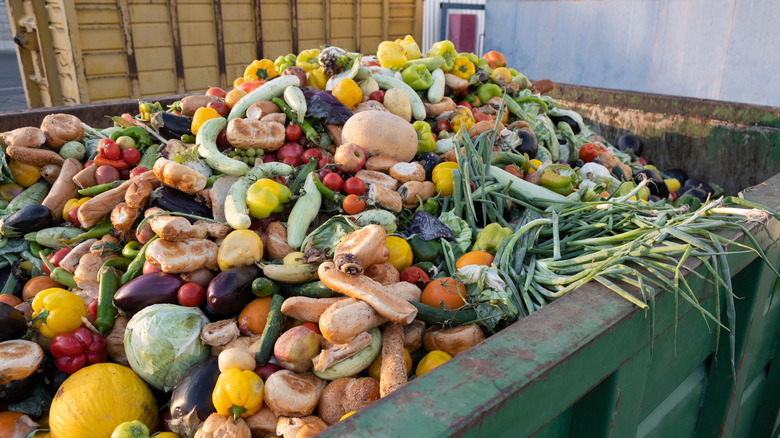
Despite the modern marvel that is our industrial food system — which is in many ways truly miraculous in terms of output and sophistication — there's a very dark side to the industry in the staggering amount of food wasted annually. America ranks first in a lot of undeniable categories when it comes to food and sustainability — but perhaps surprisingly, it's not in the top spot when it comes to one big category no one wants to rank highest in. That's China, which snags the undesirable title of the nation producing the most food waste.
Just how much are we talking? A shocking four times more waste than we produce here at home — more than 108 million tons of food wasted annually, compared to the 24 million tons of edible food the United States discards each year (though China and the U.S. are nearly neck and neck when it comes to per capita food waste).
These numbers are calculated by the United Nations Environmental Programme (UNEP)'s 2024 Food Waste Index Report, noting waste in 2022. This report examines total worldwide waste, trends, and origins of this waste, as well as individual country-by-country performance.
So why is it that China tops us four times over? The largest and most obvious contributing factor is their sheer size — more than four times that of the U.S., with a national population of over 1.4 billion people. But other major contributing factors are infrastructure, economic growth, and even cultural norms.
China's food waste problem is complex, but not insurmountable

Though food waste at a household level is a major contributor in all countries (underscoring the need for individual efforts to reduce food waste, like purchasing mindfully and using simple fridge hacks), much of China's food waste occurs during harvesting and production. This means food is discarded both before it reaches plates, like at farms during harvesting, as well as by restaurants and retailers. This speaks to inadequate infrastructure, production methods, and harvesting and storage systems stressed by the changing climate and disease.
The obvious, most heart-wrenching cost of the food waste problem is a humanitarian one. While nations waste billions of tons of edible food, millions upon millions of global citizens go hungry each day. The cost is also a literal, economic one, as well as an environmental tragedy, wasting billions of dollars and contributing significantly to greenhouse gas emissions.
Can such a massive and complex problem even be tackled? In recent years, nations like Japan and the United Kingdom have both significantly reduced their national annual food waste to the tune of 31% and 18%, respectively (per UNEP). In Japan's case, the nation has taken a multi-pronged approach aimed at every step of the problem and all the players involved — addressing public awareness, changing mindsets, passing legislation, and making technological improvements. Awareness is the first step in addressing any problem, but we know real change is possible, even for a crisis that can feel insurmountable.