

Add This Cooking Oil To Your Cake Batter For The Moistest Texture
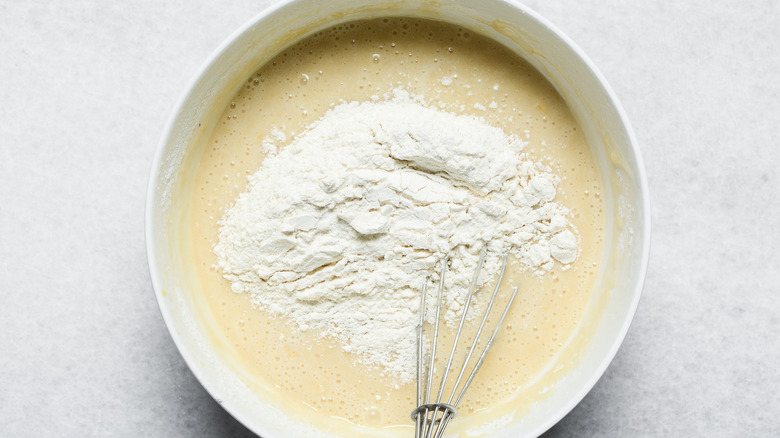
Every home cook knows that getting the cake batter right is the secret behind every perfect bake. Whether it's a delicious banana bread cake topped with thick, fluffy cream cheese frosting or an incredibly soft and moist red velvet cake, it all starts with the batter. If you're aiming to take your chocolate cake to the next level with one simple swap, chances are you probably weren't aware that extra virgin olive oil can make all the difference. You just have to use it instead of the plain vegetable oil or butter the recipe calls for.
Believe it or not, extra virgin olive oil is an excellent alternative to traditional fats when making cake batter. And that's not just because the monounsaturated fats in olive oil are great for your heart(although that's definitely a bonus). The thing is, using olive oil will add a subtle richness and a whole new depth of flavor to the cake. It will also make it irresistibly moist and tender, and will beautifully complement the rest of the ingredients.
If you're unsure about which olive oil to use, just take a look at the ultimate guide to buying olive oil. Make sure to give it a taste and see if it suits your preferences. Flavored olive oil is a great way to give your cake a whole new dimension. Once you've found the one you like, you're all set to use it. However, there's a right and a wrong time to use olive oil in cake batter. Understanding how to do this is also crucial.
Olive oil will prevent your cake from going dry

To avoid the mistakes beginner bakers make, it's important to start with a little research. Extra virgin olive oil is generally a safe substitute in most recipes that require melted butter. However, to keep the texture just right, it's important to cut the butter amount down by a quarter when using olive oil instead. Meanwhile, olive oil should be avoided in recipes that call for frosting or use the creaming method, in which room-temperature butter and sugar are mixed together to create a light, fluffy, airy base. This is due to the fact that olive oil is liquid, unlike butter, which is saturated and stays solid at room temperature. That's why olive oil won't solidify or add structure to the cake the same way butter will.
The type of oil you use also matters taste-wise. A mild and fruity olive oil can add floral or herbal hints that will deepen your cake's flavor profile, especially in citrus-based cakes. Whether it's added to a soft and velvety lemon loaf, a fresh and rustic citrus semolina olive oil cake, or a perfectly moist and tender blood orange upside-down cake, the olive oil will beautifully boost the brightness of the citrus. The best part is, it won't compromise its unique, zesty character or leave behind any odd aftertaste. On the other hand, peppery or pungent olive oils are perhaps better suited for chocolate cakes, since they won't overpower the chocolate's richness and intensity.