

Building An Outdoor Kitchen Can Get Expensive. Here's An Easy Way To Do It Cheaply
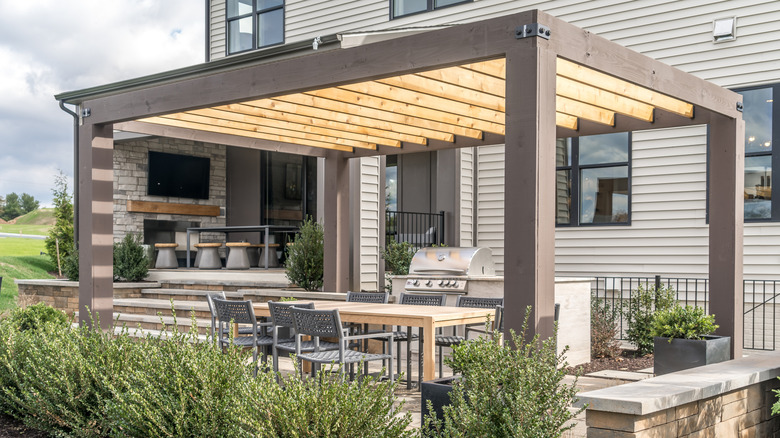
Gone are the days when al-fresco cooking meant only a solitary grill balanced on patio pavers in the backyard and dining options limited to slightly overcooked hot dogs and slightly undercooked burgers. These days, home cooks can practically bring their whole kitchen outside. That once-solitary grill can now be surrounded by beautiful cabinets, countertops, appliances, and amenities to give you the full culinary experience out in the fresh air. But while outdoor kitchens are created on a variety of budgets (on average, around $6,300 to $27,000 — but with a wide margin in both directions), it's easy to find yourself going over your allocation in the midst of all the options. So Michel Hidalgo, director of BBQGuys PRO Sales, gave Chowhound a few essential, exclusive tips for reducing your outdoor kitchen expenses.
One of the first things to consider when planning an outdoor kitchen is the design. You have to appraise not only how much space you have but also how the kitchen should be oriented — then stay realistic and specific about what you really need. Hidalgo says to decide how you'll actually use the kitchen, whether for big parties, laidback family lounging, or anything in between, then choose the features and appliances you'll use regularly and avoid those you won't. "Think about how many people you typically cook for, how often you'll be grilling or dining outside, and whether you truly need a full setup or just a few key components," says Hidalgo. "A thoughtful plan tailored to your specific lifestyle can significantly reduce costs without sacrificing functionality."
Get creative with repurposing to reduce costs
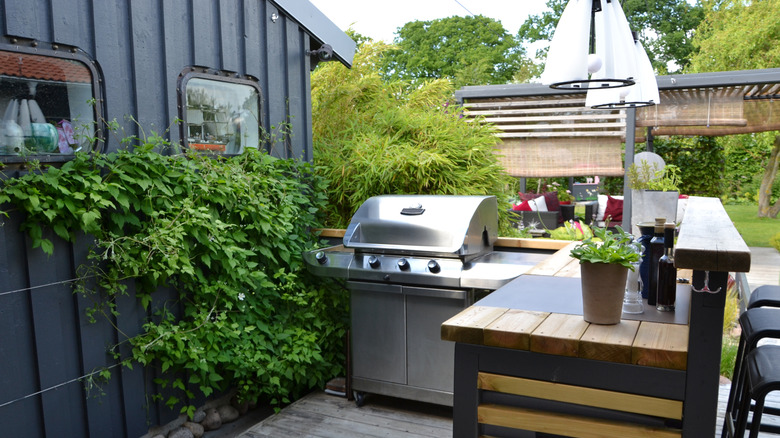
Even if you narrow the design down to the essentials, there's still more saving to do in the planning stage by converting and repurposing items and spaces you already have. "Repurposing is a great way to reduce costs and add character to your outdoor space," says Michel Hidalgo. "The key is early planning. Look at what you already have, research other DIY builds, and consult someone with experience in outdoor kitchens." You might be able to use your already existing patio or any extra pavers you have lying around to mitigate the cost of foundations or landscaping. If your backyard already has storage structures, you can cut down on the cabinets and store some kitchen essentials in the shed. A basic stainless steel cart can be repurposed for your outdoor kitchen prep, allowing for less countertop space.
Building the outdoor kitchen adjacent to your house can also provide easy access for repurposing. Existing overhangs or awnings can act as a cover (so no need to construct a fancy pergola), exterior lighting can circumvent the need for extra illumination, and (if you're close enough to a kitchen door) you can rely on the refrigerator, sink, and other appliances that are already inside instead of building them into your outdoor budget.
Kitchen utilities can be utilitarian
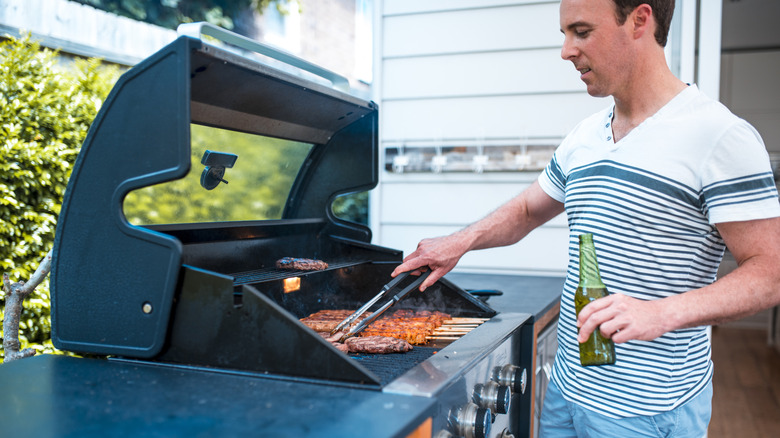
House-adjacent outdoor kitchens have another significant financial benefit — the placement can cut down on the expense of utilities. After all, those shiny new appliances have to run on something. A grill may need gas, propane, or electricity, while a sink or refrigerator may need electricity and a water line. "Utility work, especially extending water, gas, or electrical lines, can be one of the most expensive parts of building an outdoor kitchen," says Michel Hidalgo. "While there's limited room to cut corners here, careful planning can help you avoid unnecessary costs."
Building an outdoor kitchen close to your house means that existing utility lines won't have to be extended as far, and you'll save on professional labor. You should also decide not only what type of grill is best for you (e.g. a natural gas grill means installing a gas line if your home doesn't already have one) and what types of appliances are indispensable (e.g. that extra sink means you'll need drainage installed), but also how much power they'll need to meet your outdoor entertaining needs. "Asking yourself questions like, 'Do I really need a full gas line or will a propane tank be sufficient?' will help," says Hidalgo. "Knowing how often you'll use each feature will help you determine what's truly necessary and where you can save."