

The Parts Of A Full Scottish Breakfast You Won't Find In The English Version
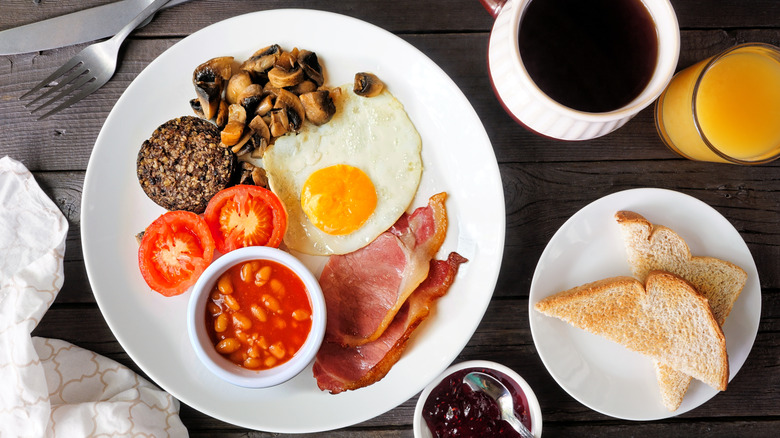
The Full English breakfast isn't just a staple of British culinary life — it's a global icon. A must-try when visiting London (or anywhere else in the United Kingdom, for that matter), it's a dish with a centuries-long history that delivers in spades on flavor. British food, though, is more varied than you might initially expect, and each part of the U.K. puts its own unique twist on this breakfast classic. In the East End of London, for example, within the orbit of the iconic Billingsgate Fish Market, it's common to see scallops served alongside more traditional ingredients like bacon and black pudding. And of all those regional spins, perhaps the proudest is found in the far north of the U.K. in Scotland.
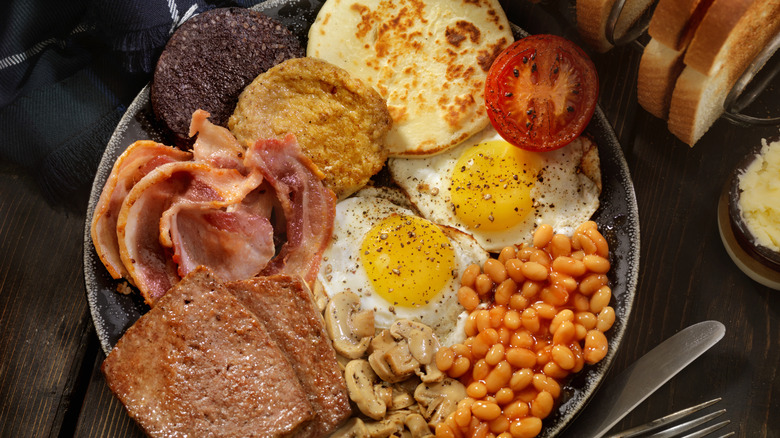
The so-called Full Scottish breakfast is broadly similar to the better-known English version, but puts a uniquely, well, Scottish twist on things. The core of the dish remains the same: pork sausages, bacon (back, never streaky), baked beans, fried eggs, grilled tomatoes, and toast. Sometimes the latter will be replaced with fried bread, a particularly naughty delicacy which does what it says on the tin — and is sure to soak up a hangover. But where the English version stops there, the Scottish add more starch, more meat, and more calories, with the addition of Lorne sausage, tattie scones, and a national delicacy: haggis. It's a breakfast that's built to set you up for a long day of hard work and highland hiking — or to save you from the consequences of a long night drinking Scotland's finest scotch.
The ingredients that set the Full Scottish breakfast apart
Let's begin with sausages. One of the most crucial elements of a Full English, sausages also take the spotlight in the Full Scottish. But while those down South use sausages that are, well, sausage shaped (usually Cumberland or Old English style, with a crispy, snapping skin and a meaty interior) the Scots sometimes replace them with an ingredient not often found outside of Scotland: Lorne sausage. This is essentially a patty of minced meat — usually beef, pork, or both — shaped into a square and fried until crisp. Developed for convenience and affordability, the Lorne sausage is cut from a "loaf" of meat (not meatloaf, though — that's a uniquely American dish).
Tattie scones are also a Scottish breakfast delicacy. These are a kind of griddled flatbread, made with a dough of mashed potatoes, flour, butter, and salt. They're fried until golden and slightly crispy, but still fluffy on the inside, and add another level of comfort to this already homely dish. They're typically triangular in shape and are best eaten with eggs (or in a roll).
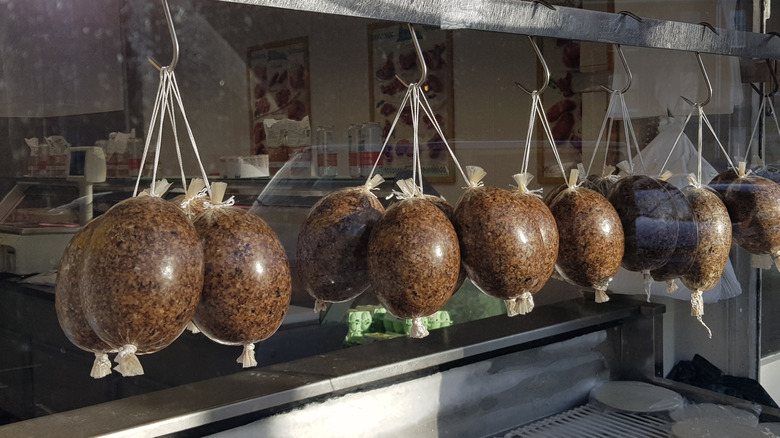
Finally comes the most iconic of all the additions. Haggis is a controversial dish — indeed, it's even banned in some parts of the world (including the U.S.) — but in Scotland it's truly beloved. A sort-of cake, made with sheep's offal, spices, and oats, it has a complex and peppery yet comforting flavor profile that slots in perfectly with the rest of the Scottish breakfast. As the national dish of Scotland, it would be a crime not to have it as part of the country's national breakfast.
Why this breakfast is more than just a couple extra ingredients
The Full Scottish breakfast is more than just a couple of extra things — it's part of a proud culinary tradition that, while perhaps not as famous (or highly regarded outside of the British Isles) as other, more celebrated cuisines, tells the story of the people who invented it and still eat it to this day. It's a dish reflective of its country's culture: one of generosity, thriftiness and, unapologetic Scottishness!
The Full Scottish breakfast was born in a colder climate than its English cousin, in a country that for most of its history relied on a rural economy. That meant food had to be designed to keep people fuller for longer. It emphasized affordable, filling ingredients that could be easily grown and stored: Think potatoes, oats, and under-appreciated offcuts of meat.
Even within Scotland, though, you'll find regions and communities that put their own spins on the breakfast. All sorts of additional ingredients can be found throughout the country, including black pudding (a form of British blood sausage), kippers, fried mushrooms, bread cakes called butteries, and even Scottish oatcakes. Some Scots prefer to stuff the whole thing inside a roll, for the ultimate Highland breakfast sandwich, a tradition that made life easier for the rural workers of the past (and the office workers of the present). You'll find it eaten just about everywhere — from greasy spoon cafes to hotel buffets, from roadside stops to kitchen tables — and whether you pair it with a hot cup of tea or an Irn-Bru, it's a breakfast that'll set you up for the day like little else.