

Give Rice The Best Texture With A Pantry Ingredient You Already Own
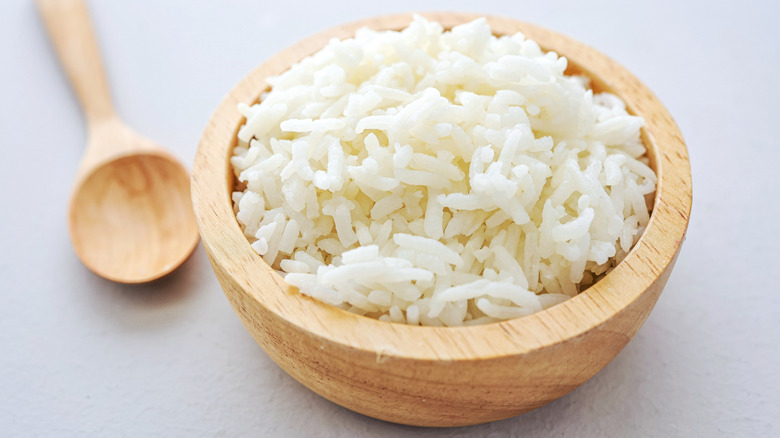
Rice is the staple food of nearly half the world's population — from East Asia, to South America, you'll find it practically everywhere. A particular food being quite so widespread means, naturally, a great deal of variation in how it's cooked — no two recipes are the same, and tradition (as well as millennia of trial and error) means that practically every culture has developed their own methods to achieving that optimum level of deliciousness.
China, for example, consumes more rice than any other country — and as such, Chinese cooking is a gold mine when it comes to rice cooking techniques. To find out how to give rice the best flavor and texture, Chowhound spoke with Shirley Chung (@chfshirleychung on Instagram), a Chinese-American chef and an alum of Bravo TV's "Top Chef." She says that one trick in particular will leave you with delicious rice that has a perfect, fluffy texture: a tablespoon of neutral oil. That is all you need to take your steamed rice to the next level. "We add a tablespoon of neutral cooking oil like rice oil, [or] grapeseed oil in the water," she told us. "This way, the rice will be extra fluffy and bring out [its] fragrance after it's cooked." This trick works because the oil coats the individual grains of rice as they cook — preventing them from clumping together and giving you a light, fluffy texture, rather than a gummy mess.
Why washing and draining your rice is a crucial step
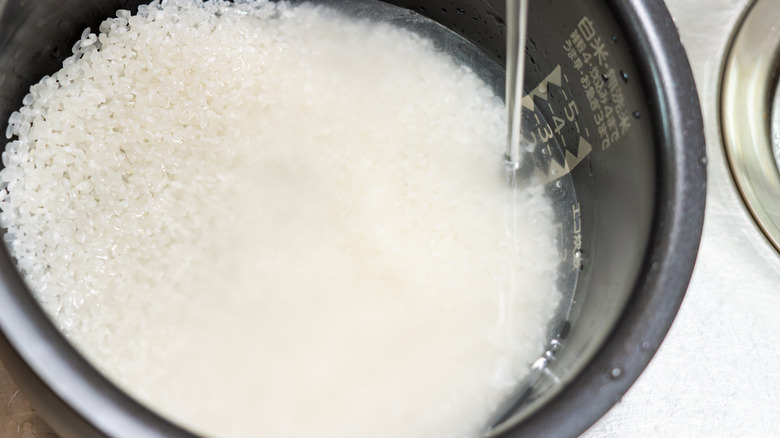
Just as important as the way in which you cook your rice (whether you boil it on the stovetop or use a rice cooker), is how you treat it before it ever touches the heat. When it comes to achieving the fluffiest, bounciest texture, washing it is a key step. If you've never washed your rice before, it's time to start — because this traditional Chinese technique is the secret to the ultimate steamed rice. "By washing the rice first, the extra starches are rinsed off, and the rice gets slightly hydrated," Shirley Chung says. "The result is steamed rice kernels that are more plumped, less clumpy because the outside starch was washed off." Be careful when using this technique to ensure that your rice grains are properly drained — if you don't, you'll risk offsetting that crucial rice-to-water ratio, and end up with a soggy, over-hydrated final product.
The Chinese method is also set apart by its simplicity when it comes to measuring. Rather than using measuring cups, Chung says, the hand is used to measure the water level. To make stovetop steamed rice, she explains, put your washed rice in a pot on a flat surface. Touch the surface of the rice with your index finger, and pour in just enough water to reach your first knuckle. Add that important tablespoon of neutral oil, cover the pot, and cook.
Once you've nailed your rice's texture, build your dish with big flavors
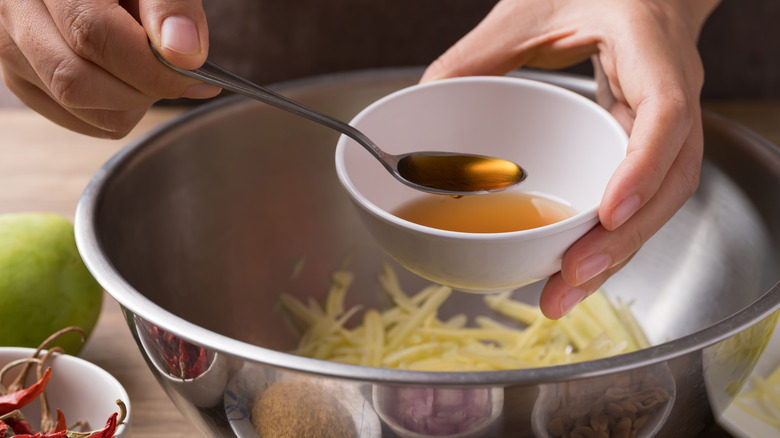
Once you've got a steaming pot of delicious, perfectly fluffy rice, it's only right to make a dish worthy of one of the world's truly great springboards for flavor. If the goal is to make the most of the traditional Chinese palate, it's best to build a strong flavor base using the classic ingredients. "When we make fried rice or clay pot rice, we start with ginger and scallion as the base aromatics," Shirley Chung told us. Their big, bold flavors pair well with rice's subtle sweetness and nuttiness.
To take things to the next level flavor-wise, consider bringing some sauces into the mix, too. Chung likes to incorporate umami, the essence of the savory taste, into rice dishes by adding soy sauce, oyster sauce, and fish sauce. While the latter might be something of a love-it-or-hate-it ingredient for many because of its powerful aroma, fish sauce is packed full of delicious savory (and sweet) richness, and has a surprisingly delicate flavor that belies its distinctive smell.
That trio of umami sauces and the fragrant aromatic base don't just set you up for success when it comes to Chinese cooking. From simple but delicious Korean breakfast bowls, to Japanese donburi, to Southeast Asian dishes from the likes of Thailand and Vietnam, having an understanding of how to use these foundational sauces of Asian cuisine can help you make the absolute most of your (gloriously textured) rice, every time.