

What Every Gardener Should Know About Using Too Much Mulch
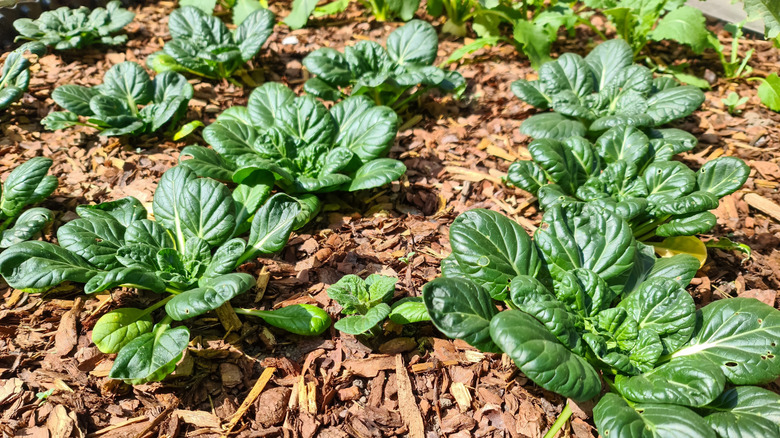
Using mulch can lend an elegant look to a vegetable garden, highlighting plants with a raised layer of textured wood chips. Mulch also does amazing things for the health of a garden, at least when used correctly. If you're new to gardening, there are numerous tips for beginner vegetable gardeners to remember, such as how to start seeds, utilize fertilizer, and select plants for your space. However, one important thing to know is the best way to use mulch, as using too much can lead to problems.
Adding too much mulch can be detrimental to your garden's health for a number of reasons. For starters, too much mulch holds moisture in already wet soil, and too much moisture can cause diseases in your plants' roots. On the other hand, when mulch is piled too deep on soil, it becomes hydrophobic, which means it repels water. This will dry out your plant's roots. In addition to adding too much moisture or drying out the roots, making the layer of wood chips too thick can suffocate roots and overheat the soil in hot weather.
A good rule of thumb for flower beds and vegetable gardens is to use up to a 3-inch layer of mulch. Create a 6-inch layer if you're using it to suppress weeds and grass from growing. This latter situation will require you to prepare the space by weeding it and laying down some landscape fabric.
More tricks to effectively use mulch
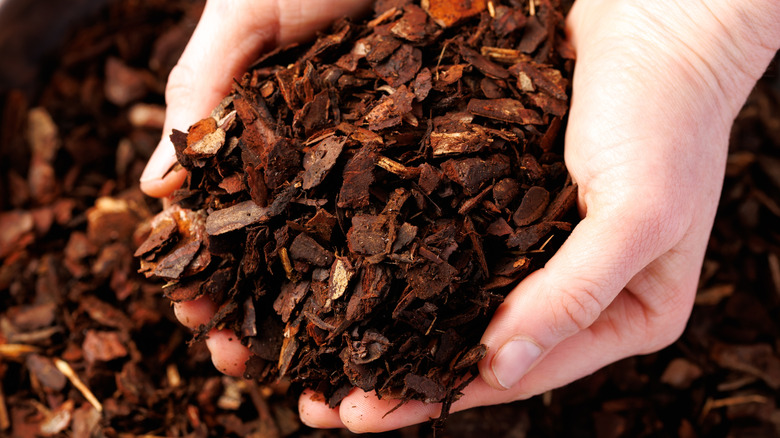
There are more issues to consider when using mulch in your vegetable garden. For one, using fresh wood chips will take nitrogen out of the soil as they begin to compost. It's a good idea to season your wood chips by letting them weather for a few months before you lay them down. When adding mulch, just put a thinner layer directly beside tree trunks and plant stems, not letting it touch the base of the plants, as it may cause them to rot.
Mulch comes in many varieties besides wood chips, including straw and homemade versions from food waste materials. One such kind is from bananas. There are surprisingly many ways to use bananas in your garden, including using overripe peels to make mulch. You can also use bananas to create compost and even fertilizer. Another surprising household substance that has multiple gardening uses is coffee grounds. Old coffee grounds can assist your garden in numerous ways, including fertilizing it, protecting your seedlings, and helping to control pests. Combined with using the proper amount of mulch, these homemade gardening techniques can help you achieve positive results with an incredibly successful and lush garden.