

Never Store Leftover Baked Potato In Aluminum Foil. Here's Why
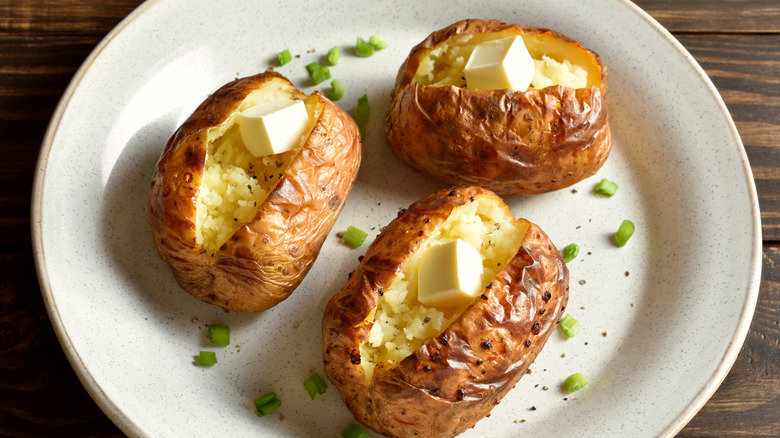
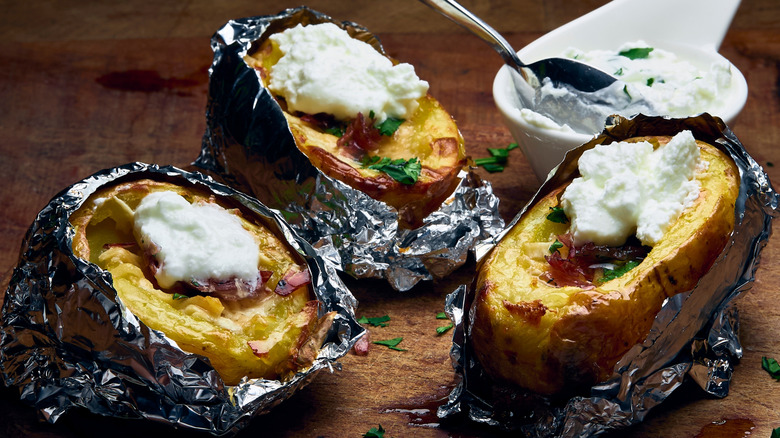
Most people would think leftover baked potatoes are pretty innocent enough. You finish off your meal, wrap them in foil, and put them in the fridge. No problem, right? Well, not quite ... that middle step may be a little more dangerous than you think. As important as it is to know the right way to make a baked potato, knowing how to store it is also necessary. When a baked potato is placed in aluminum foil to cool, it produces an oxygen-deficient environment that harmful microorganisms crave.
One of these is called Clostridium botulinum, which causes botulism. What makes this microorganism so frightening is that it needs an oxygen-free environment to grow, flourish, and reproduce in moist, warm conditions, the very environment that foil encourages. That foil wrap, which appears to be a neat and clean food storage method, locks in moisture and heat during the essential cooling hours. In fact, if the potato doesn't cool quickly, bacteria can form toxins while it's still warm. Furthermore, one of the dangers is in how difficult the toxins that cause botulism are to detect. You can't see them, smell them, or taste them.
So, the next time you enjoy some delicious air-fried baked potatoes (skip the oven for the fluffiest potatoes), ensure you take the right next steps to avoid the kind of food poisoning that could land you in the hospital. This isn't about panic, but about prevention, and this problem is easy to avoid once you know what not to do.
How to store your baked potatoes safely
So what's the safest option to properly store baked potatoes? First things first, ditch the foil entirely for a better baked potato overall. That means even before it goes into the air fryer or oven. Let your naked potatoes enjoy the oven's heat and allow them to breathe after baking. Instead of foil, place them directly on the oven rack, in an air fryer basket, or on a sheet pan or glass baking dish.
Next, once the potato is cooked and tepid enough to handle safely, let it sit out at room temperature to cool naturally. The sooner it cools, the lower the chance for bacteria to grow. Let the potato sit uncovered for no longer than two hours, or until it feels cool to the touch. After that, put the potato in the fridge in an open container or even an airtight box. Furthermore, don't store baked potatoes in a slow cooker or warming drawer for hours after cooking. Just like foil, these spots can hover in that "danger zone" temperature where bacteria multiply quickly.
In summary, ensure you refrigerate baked potatoes within two hours of cooking them, whether you plan to eat them the next day or a few days later. And be sure to use a reheating method that gives them a piping hot internal temperature. That extra measure can destroy any remaining bacteria it may have picked up.