

Stop Ruining Leftover Roast Beef And Use This Reheating Method For Tender, Succulent Results
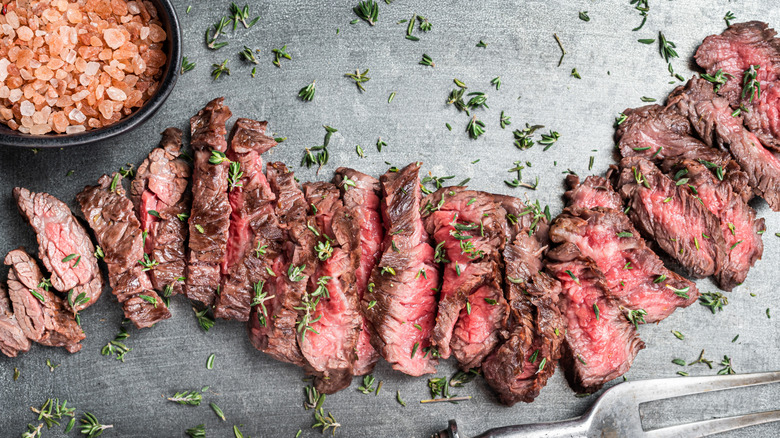
Sometimes it's hard to gauge how much food you'll need to prepare, resulting in leftovers that are reheated the next day — though they don't taste as good as you remember. It's an easy tip to reduce food waste, sure, but when it comes to entrees like roast beef, the tricky part comes in preserving its tender texture that makes it enjoyable to eat.
To learn all about how to best reheat roast beef for a succulent result, Chowhound exclusively spoke with Dagan Lynn, executive chef at Beef. It's What's For Dinner. Lynn advises, "Place the roast beef in an oven-safe dish, add a splash of beef broth or water to the bottom for moisture, and cover it tightly with foil." Enclosing it with foil is an important step for this 20- to 30-minute method, as it helps keep the moisture in and allows the center to warm perfectly. It's then popped into an oven preheated at 250 degrees Fahrenheit, until the meat reaches a medium-rare (which Lynn says happens at an internal temperature of 135 to 145 degrees Fahrenheit).
It's kind of the same method for thin meats — adding broth for moisture — but you can do it in a pan with a lid on. Lynn warns against high heat and recommends avoiding the microwave to prevent a rubbery texture. If the microwave is your only choice, however, you can rely on the steam to keep it moist by using low heat, done in short intervals, and adding some broth in between takes.
Are you storing roast beef properly?

You already know the best way to reheat your leftovers without overcooking them, but knowing how to best store roast beef is just as important. Dagan Lynn recommends slicing the meat (for larger cuts) to allow it to cool faster for storage and to heat more easily for your next meal. Keeping it in an airtight container is best. Alternatively, covering it tightly with foil also works. Not doing so is one of the storage mistakes that could ruin your food, because not only does a secure lid help keep the moisture intact but it's also a sanitary practice that preserves freshness and flavor.
Taking advantage of any leftover sauces on the pan by loading it into the same container is just as important a step. It helps retain the juiciness, as the meat soaks it up upon reheating, which ensures a delicate and tender bite like it was just freshly roasted.