

This Part Of Your Fridge Is Probably Filthy — Here's What To Do About It
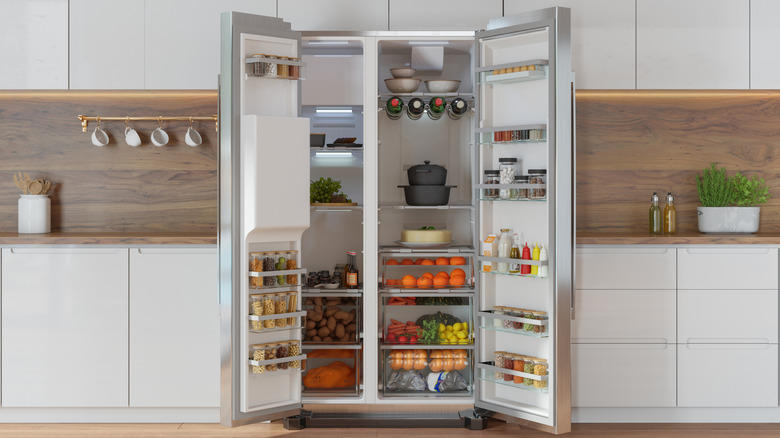
Though having a built-in ice maker was once a sign of wealth, it's an almost universally standard feature in today's models. This is likely because so many homeowners enjoy the convenience of having ice ready at a moment's notice to chill cocktails or experiment with ways to make ice cream without a machine using ice and a plastic bag. Of course, as with most innovations, there are disadvantages to having a built-in ice maker in your fridge, such as losing freezer space to the ice bin. Even if it's located in the door, this means the door projects deeper into the freezer, limiting storage. The other disadvantage is that automatic ice makers also often attract grime over time, making them breeding grounds for bacteria and mold if neglected long enough.
Fortunately, cleaning your ice maker regularly helps prevent long-term problems like these, while also leaving your ice smelling and tasting fresher. This is also a great time to declutter and reorganize your fridge, since you'll need to empty and unplug it anyway. After removing the old ice from the bin, wipe down the surfaces inside your freezer and fridge with warm, soapy water — dish soap is great for cutting through grime. Give the same treatment to all the exterior parts of your ice maker, making sure to remove all soap residue with a damp, soap-free cloth. After plugging everything back in, discard the first two or three batches of ice to ensure you're using the clean stuff in your drinks.
How to tell when your ice maker needs extra TLC
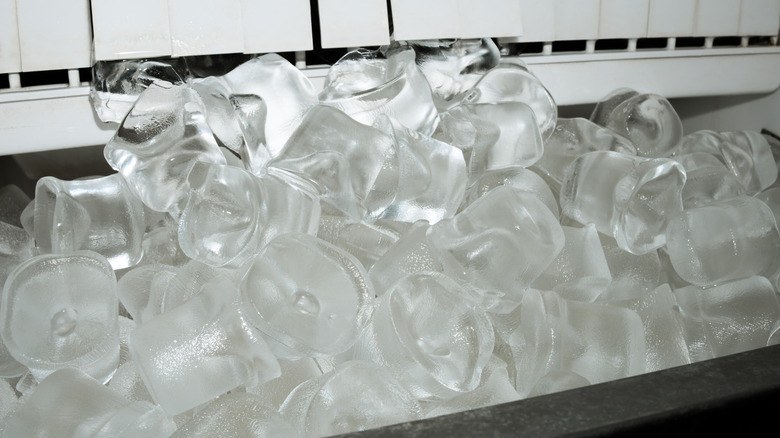
Generally speaking, you should be cleaning your ice maker about every six months to prevent bacteria or mold growth that could form even in freezing conditions. This is also a good time to replace the water filter on your ice maker — your owner's manual should have the instructions to do this, since each fridge model is a little different. If you can't find your manual, most refrigerator manufacturers store PDFs of these manuals on their websites for owners to access anytime.
Since the ice storage bins are usually open to the rest of the freezer, smells and germs from the food stored inside can easily contaminate the ice, so it's best to clean out your freezer regularly as well. You may need to do an extra cleaning if you've recently had a power outage, especially if the food in your freezer began to thaw. Additionally, if your ice looks oddly cloudy, tastes strange, or has an unpleasant odor, it may mean it's time for an extra cleaning or that your ice maker's water line needs to be flushed.
Similar to properly cleaning the inside of a drip coffee maker, you can flush your ice maker's water line with white vinegar, which contains acetic acid that will help remove any microbes from the tubing. As with a regular cleaning, discard the first few batches of ice after this, as they'll likely taste slightly of vinegar and may still be contaminated.