

Do You Really Have To Peel Carrots To Eat Them?
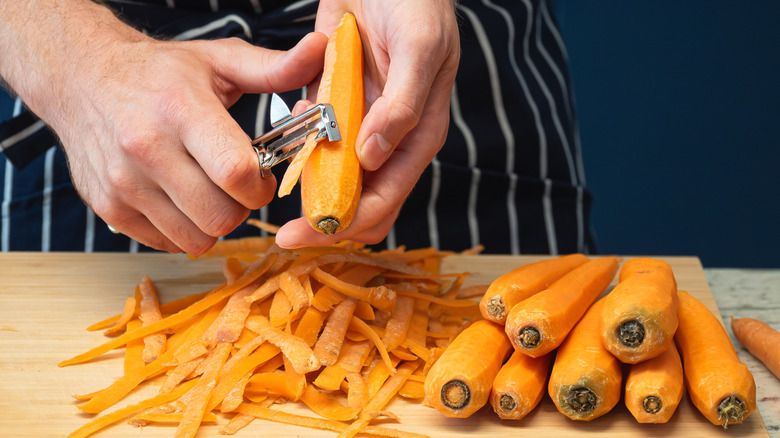
Naturally refreshing and crunchy, it comes as no surprise that carrot is one of the most popular vegetables around the globe. A botanical cousin of celery, parsley, and fennel, this beloved root plant is extremely versatile and finds its way into many dishes. This is thanks to its sweet and earthy, yet also slightly bitter, flavor, which comes from a group of aromatic compounds known as terpenoids. Hence, whether sliced into strips for the crispiest vegan bacon you've ever tasted or cut into stick-length chunks, topped with some lemon juice, and enjoyed as a fresh snack on their own, they're absolutely delicious.
Perhaps the only downside to carrots is having to peel them, and this becomes particularly frustrating when you don't have much time or your vegetable peeler is nowhere to be found (which ironically happens every time you need it). Luckily though, here's some good news about peeling carrots that might not have crossed your mind: It's not always necessary as the skins are perfectly edible. In fact, carrots, along with cucumbers, eggplants, and potatoes, are among the vegetables you don't need to peel.
The reason for this is that carrots are packed with nutrients such as vitamin C, carotenoids, and niacin (a compound that protects brain cells from stress). Most of the time, these nutrients are present in higher concentrations in the skin than in the inside of the carrot itself. What's more, a 2019 study published in the journal Foods reveals that the skins are also packed with a whopping 54% of a carrot's phenolic acids, which are known for their antioxidant, anti-inflammatory, and antimicrobial properties.
When is it okay to skip peeling carrots?
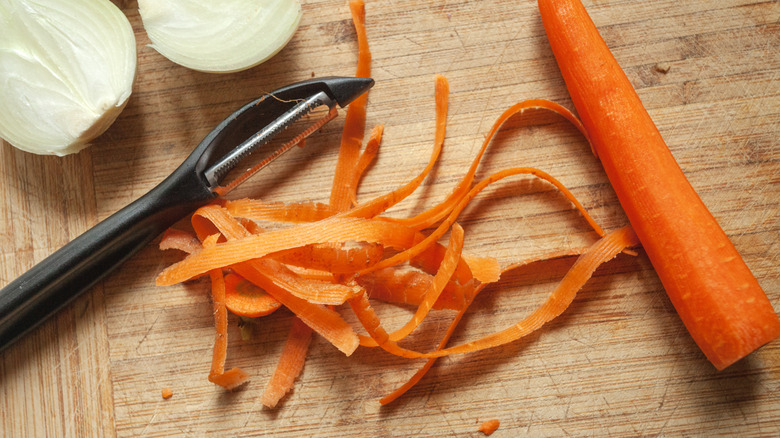
Whether you peel carrots or not depends on how you plan to use them. For instance, if you're aiming for a smoother texture (say, you're making a carrot puree or a luscious, creamy soup to comfort you on a cold night), then it's best to peel them. Peeling is also helpful if you want to avoid the tough, gritty texture and occasional bitterness found in the skins of some carrot varieties, especially when making something fresh and vibrant like a carrot salad, or when you're trying to put a Greek spin on coleslaw.
On the other hand, if you're making caramelized carrots as a rustic side dish, then peeling isn't really necessary. So, ditch your skillet and turn to your oven for convenient glazed carrots with their skins left on. The skins will help them turn out richer and more flavorful, too. Juicing is another case where peeling isn't required, as you want to keep all the extra nutrients present in the skin. Also, using unpeeled carrots in a classic carrot cake never goes out of style and can give the bake more texture.
Remember that regardless of whether you decide to peel the carrots or not, they should always be thoroughly washed. Simply scrub the skin with a vegetable brush under lukewarm running water to remove dirt, bacteria, and pesticide residue that may be present on the surface. Never use soap or detergent during the process, as the carrots can absorb them. Finally, before consuming them, give the carrots a quick pat dry with a kitchen towel to prolong their shelf life by removing excess moisture.