

Reach For This Affordable Cotija Cheese Substitute When You're Running Low
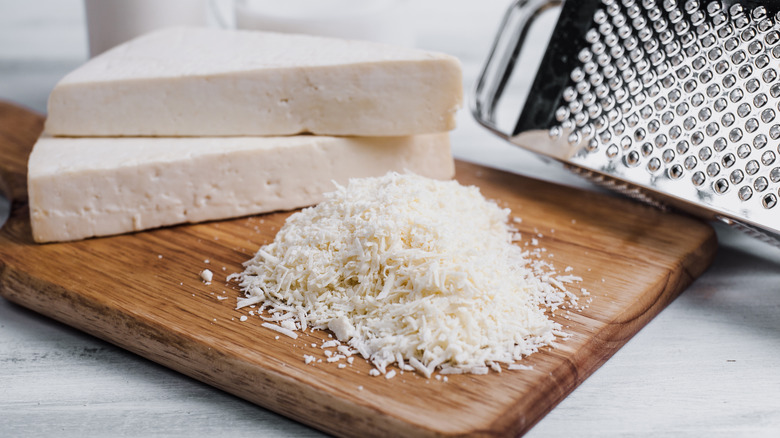
There are few things more satisfying than that salty, crumbly finish that cotija cheese brings to a dish. It's the final flourish that elevates street corn, adds bite to Mexican tacos, and makes black beans sing. But cotija isn't always hanging out in your fridge or even on the shelf at your local grocery store. So when you are running low (or completely out), don't panic. Just do what savvy home cooks do and reach for feta instead. Yes, feta! The briny, tangy Greek classic that's probably already in your cheese drawer is the affordable and widely available cotija stand-in you didn't realize you have been sitting on.
Now, purists might raise an eyebrow. After all, cotija is a Mexican cow's milk cheese, aged until firm and dry, while feta is usually made from sheep's milk (or a sheep-goat blend), and it's soft, wet-packed, and unapologetically punchy. But when it comes to texture, saltiness, and crumbliness, feta comes impressively close, especially in everyday, casual recipes where cotija is used more as a finish than a star.
How to make the swap work
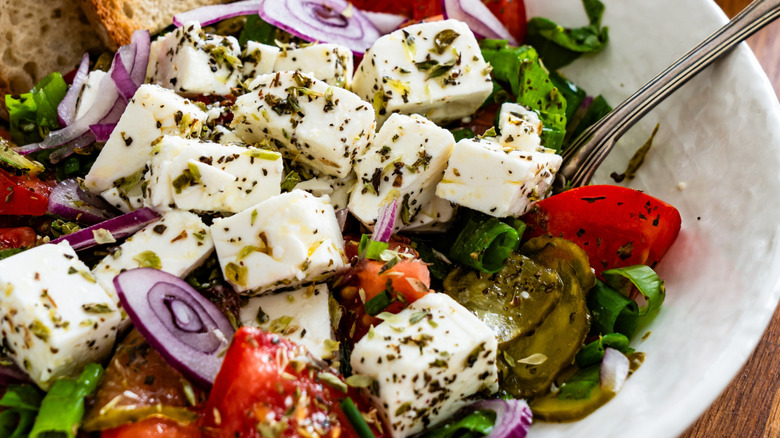
Cotija's magic lies in its ability to add salty depth without melting — cotija is more Parmesan than mozzarella in that way. Feta performs similarly when crumbled over dishes. So if you are making elote (Mexican street corn), tacos, nachos, chili, or even a grain bowl with a Latin spin, feta is a perfectly solid backup. You will get the same pop of umami and tangy contrast, just with a slightly creamier bite.
The key is in how you use it. Go for the firmest feta you can find, not the super soft block that comes swimming in brine. Pre-crumbled feta, while slightly less flavorful, tends to be drier and more cotija-like. But even a block will work if you pat it dry and crumble it by hand.
Worried about feta's stronger tang compared to cotija's mild savoriness? That brightness can actually work in your favor. It cuts through fatty meats, enhances acidity in lime-heavy dressings, and adds contrast to spicy foods. It's very similar to what cotija does, just with a slightly louder presence. If you really want to mellow it out, give the feta a quick rinse in cold water and dry it with paper towels before crumbling. It tones down the brine and makes it a bit more neutral.
There is also the price point: Cotija, when you can find it, tends to cost more than feta, especially outside areas with a wide selection of Latin American cheeses. Feta, on the other hand, is everywhere, from fancy cheese counters to the dairy aisle of grocery stores and supermarkets. So while it may not be a one-to-one replica, feta is the kind of kitchen pinch-hitter that brings the same salty sparkle but with a slightly Mediterranean twist.