

Making Microwave Jam? Use This Sticky Spoon Test To Check For Perfect Consistency
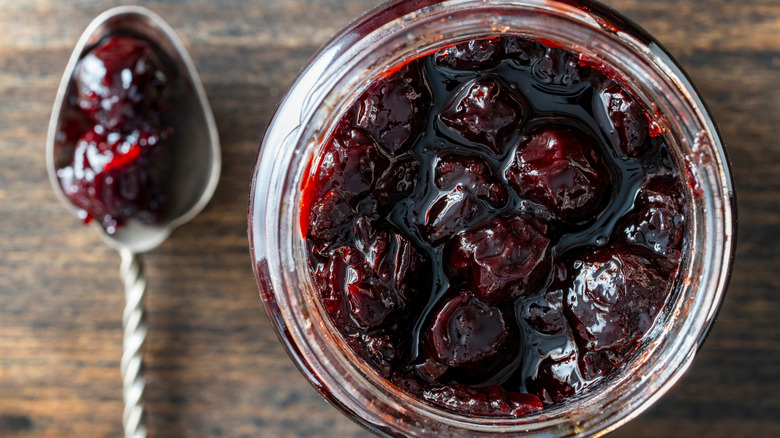
Making jam in the microwave sounds like one of those shortcuts that probably shouldn't work — but it does. Simply combine fruit and sweetener in a bowl and microwave until the mixture is thick and syrupy. With this hack, you can skip out on the giant pot, not to mention those scary moments when your jam looks like it's going to boil over. Still, there's a catch. Since you're not using the stovetop, how do you know when the mixture is done cooking? That's where the sticky spoon test comes in.
Microwave jam cooks in a smaller container, like a jar, that can be difficult to see into, and it just doesn't bubble up like it does on the stove. Luckily, the sticky spoon test can help you figure out when this topping is ready. When you feel the sauce is done cooking, take out a little spoonful. Drop it onto a chilled plate or spoon and wait about 30 seconds. Then, run your finger straight through the middle of the jam. If the line you created with your finger stays and the mixture doesn't rush back, it's done. If it's still too runny, pop the dish back into the microwave. Cook the sauce for another minute and test again, watching for that thick consistency when separated. Whether you're craving a classic PB&J or want a sweet ingredient for your savory sandwich, this microwave hack can come in handy.
Getting the perfect consistency with microwaved jam
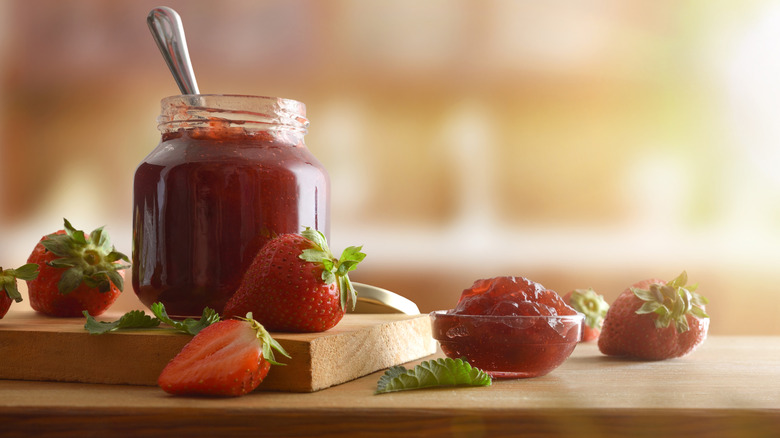
The tricky part of making jam in the microwave is hitting that sweet spot with texture. Jam keeps thickening as it cools, so it's a fine line between pulling it too soon and making syrup, or ending up with something closer to fruit candy. To nail the right consistency when making jam in the microwave, understanding your ingredients is key. Strawberries and peaches have more water in them and might need extra time to cook. Plums and crab apples may thicken faster because they have more natural pectin.If you don't have fresh fruit on hand, there's also a genius hack that turns frozen berries into jam. This is why it's best to microwave the fruit in short bursts toward the end of the cooking process. A minute too long can take your jam from perfect to overcooked fast. It's also why the sticky spoon test is so helpful — you can skip the guessing games without the need for a thermometer. All you need is a plate, a spoon, and a little patience.
Once you're all done microwaving, you can give your homemade jam an extra kick with this common canned ingredient. Some people also like adding lemon juice, an ingredient that is high in pectin and can help the jam set better. Whatever you do, don't skip the spoon test, as it might be the secret to making the best microwave jam.