

Andrew Zimmern's Clever Tip For Picking And Storing Fresh Tomatoes

We may receive a commission on purchases made from links.
It's no surprise that chef and restaurateur Andrew Zimmern loves tomatoes. In fact, in addition to the ones he grows in his garden, he also buys them by the bucket from farmers' markets to use in mouthwatering recipes. Whether you're serving a flavor-packed bruschetta for the perfect summer appetizer, putting together a refreshing tomato panzanella salad, or simply slicing and serving the fruits atop freshly toasted bread, picking and storing the edible berries properly is crucial.
Obviously, Zimmern has some words of wisdom up his chef's hat when it comes to this topic. For starters, the tomatoes that pack a punch in the flavor department are either straight from the garden (if you're fortunate enough to have one) or handpicked from the abundance of varieties sold at your local farmers market. Since tomatoes are sensitive to how they are stored, it's imperative to create a suitable environment so they retain their fresh flavors. One of the many Zimmern-approved tips is to store them in breathable containers.
Sealed plastic bags or airtight containers can trap moisture, in turn accelerating spoilage. Conversely, ventilated vessels keep the airflow going and lessen the risk of condensation forming on the fruit, which can lead to mold and decay. It might be worth investing in some reusable mesh produce bags or a bamboo basket with a gauze cover. Generally, you should leave tomatoes at room temperature for as long as possible, especially when they are just under their peak ripeness. Once they've reached their prime, it's best to consume them right away or move them to the fridge to preserve their freshness before they ultimately start rotting.
Store your tomatoes at room temperature, stem-side down
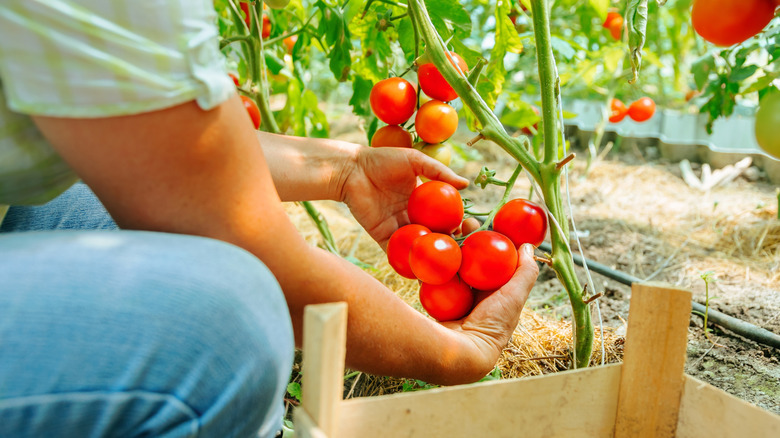
We wouldn't blame you if you got a bit carried away when stocking up on the season's bounty of fresh tomatoes. After all, who wouldn't want to savor the unmatched flavors of these fresh fruits picked at their prime? So, if you find yourself swimming in tomatoes this season and are worried about them going bad, there are a few tips and tricks worth having up your sleeve to avoid sending anything to the bin or compost.
While the fridge is the go-to destination to preserve certain produce, it's not the best spot for tomatoes. Low temperatures trigger the breakdown of their cell walls, resulting in an unappetizing, mushy texture. The cold also inhibits the enzymes responsible for imparting robust flavor to the fruit. For this reason, always store your tomatoes at room temperature (in a single layer as opposed to stacking them over each other to avoid bruising).
For ripe fruits with their stems removed, store them stem side down to minimize exposure to the elements and prevent moisture loss. If your tomatoes are underripe, place them in a paper bag with an ethylene gas-producing fruit like a banana to hasten the ripening process. And if you're left with tomatoes that have passed their optimum ripeness and are teetering into potential food waste territory, consider whipping up a simple yet flavorful all-purpose tomato sauce, using them for a creamy roasted tomato soup, or blending them into a refreshing tomato gazpacho — all of which you can freeze and eat later.