

Jimmy Dean Sandwich A Microwaved Mess? Here's How To Heat It Properly
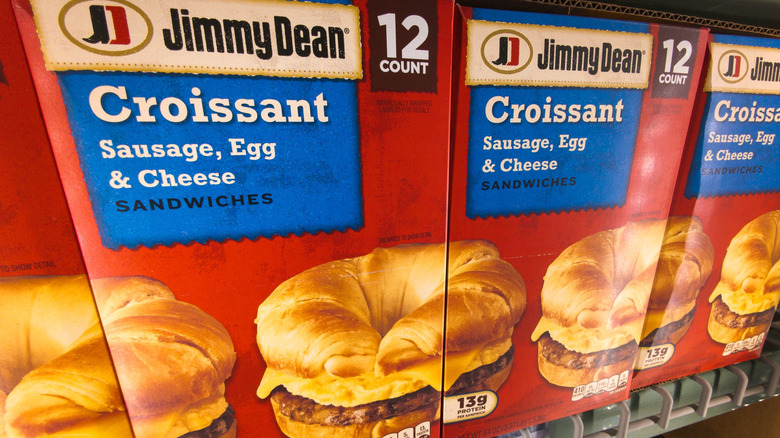
Jimmy Dean breakfast sandwiches out of the freezer can make for a hot, fast, protein-packed breakfast on a hectic morning, but the heating instructions on the box seem designed to sabotage the entire affair. It advises defrosting the sandwich in the microwave at 30% power for 90 seconds, flipping it, and then cooking on high for another 50 seconds. These slightly fussy instructions don't actually lead to a perfectly cooked sausage, egg, and cheese, but rather a soggy, runny mess.
There are better ways to reheat the sandwich, depending on where your preferences lie on the scale of effort to result. Starting with a sandwich that's been defrosted without a microwave is an easy way to improve the final quality. Even on lower power, a microwave defrost can unevenly cook your food. So just pop a frozen sandwich into the fridge the night before. They'll even stay good in the refrigerator for up to three days. Another way to get the best reheated Jimmy Dean sandwich is to take apart the sandwich and heat the components separately. Toast the croissants while you heat the meat and egg in the microwave, and then reassemble with the cheese to allow it to soften without liquifying completely. But if that's getting a little too close to just whipping the whole thing up from scratch, you can just wrap the sandwich in a paper towel and microwave it on high for two 40-second blasts, making sure to flip the sandwich halfway for even heating.
Why a long stint in a microwave ruins your breakfast sandwich
There are two reasons the Jimmy Dean microwave instructions lead to a disappointing sandwich. The first is simple. The amount of time needed to fully reheat the egg and sausage is far more than what's necessary to heat the high-liquid-content, famously melty American cheese, making it liquify and spill out of the sandwich. The second reason has to do with how a microwave heats food, and how that technology is disastrous for reconstituting a frozen croissant. There are a lot of great ways to use your microwave, but zapping bread isn't one of them.
Microwaves vibrate the water molecules inside your food, which generates heat. But this rapid heating causes the water to quickly convert into steam, and inside a sealed microwave oven, there's no where for that steam to go. So that steam condenses on the bread's surface, making it soggy. On top of this, microwave energy softens the starches in bread, giving it a rubbery, unpleasant texture. That's why it's best to take the sandwich apart and use the dry heat of a toaster oven to bring the frozen bread back to life. And if you're already taking the breakfast sandwich apart to heat it up, add some easy-to-make pickled red onions to truly make it the best it can be.