

How To Cook Scrambled Eggs In A Bain-Marie
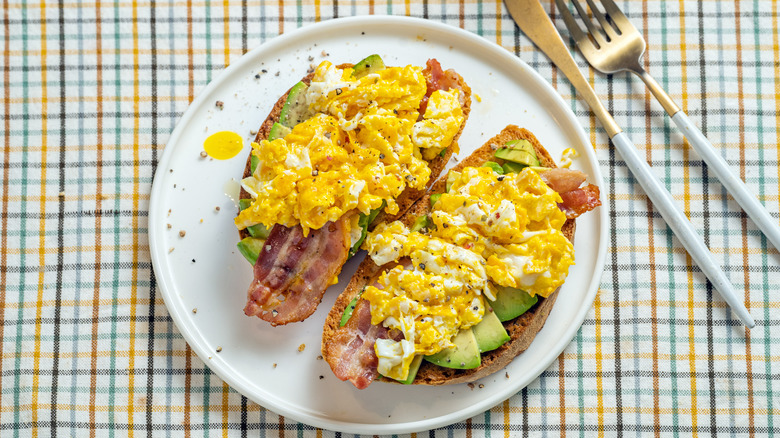
You may think you have mastered the secret for making the best scrambled eggs. Maybe you have tried low and slow in a nonstick skillet or whisked in cream for richness. But there is a technique that takes those soft curds to the next level. And it doesn't require any special ingredients, just a little patience. Enter: the bain-marie. Also known as a double boiler, a bain-marie uses indirect heat to gently cook ingredients. It is more often used for melting chocolate or thickening custards. But here's the secret: it's also one of the best methods for making the silkiest scrambled eggs of your life. Think fine-dining brunch or a luxury hotel buffet that is not rushed weekday breakfast.
The process is surprisingly simple. You whisk your eggs (with a splash of milk or cream if you like), then cook them in a heatproof bowl or saucepan set over simmering water. The steam gently heats the bowl from below, ensuring the eggs cook slowly and evenly. No browning, no rubbery bits, just a rich, custardy texture that melts in your mouth. Stir constantly with a spatula or wooden spoon, scraping down the sides as you go. It takes a few minutes longer than your standard pan method, but the payoff is absolutely worth it.
The magic here lies in control. Regular stovetop heat can be unpredictable. One second you are stirring, the next you have got brown bits. But with a bain-marie, the temperature stays steady. The result? Eggs that are unbelievably creamy and ultra-luxurious without a drop of extra butter or cheese.
Add-ins without overpowering the texture
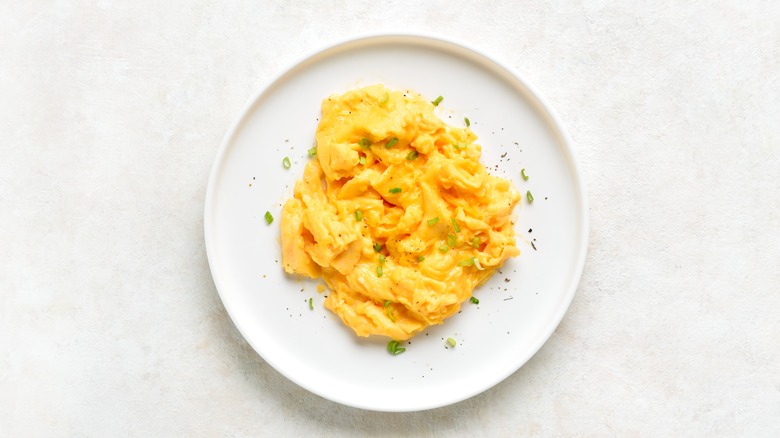
Once you have nailed the basic technique, feel free to play around. These eggs are a dream base for elevated flavors: soft herbs like chives, tarragon, or dill; a whisper of crème fraîche or goat cheese stirred in at the end; or even a sprinkle of finely grated Parmesan. But keep it subtle as this method is all about that perfect texture. Heavy mix-ins can weigh it down or disrupt the delicate curd.
A few practical tips: don't let the water in your bottom pot touch the bowl. You want steam, not direct contact. And keep the water at a simmer, not a boil. Too much heat can still ruin the magic. If the eggs are taking too long, resist the urge to crank up the flame. Stir patiently. The texture depends on slow, even cooking. Serve your scrambled eggs right away, ideally on warm toast or an English muffin. They are also incredible spooned over roasted asparagus, nestled beside smoked salmon, or simply topped with flaky salt and cracked pepper.
Bain-marie scrambled eggs aren't about speed. They are about care. And in return, they deliver a breakfast that feels like a morning off, even if it's just Tuesday. Because sometimes the best dishes aren't the ones you whip up fast, they are the ones that ask you to slow down and savor every bite.