

What To Keep In Mind When Baking Salmon In A Glass Dish
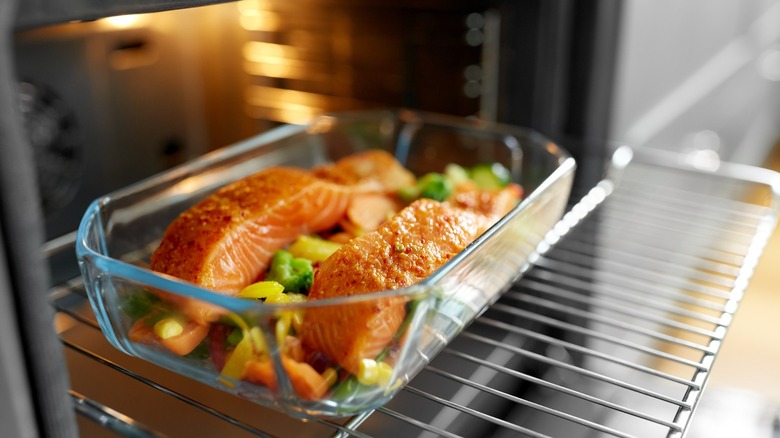
Let's say you want to bake some hearty, nutritious salmon. You've already found out how to buy the best piece of salmon from the store. You've even perfected the best way to season salmon for baking. You're feeling unstoppable. Then you come to the last hurdle: What do you actually put the salmon in to bake it? You may think that a glass dish is the ideal vessel for your salmon, but there's more to it than that. In times like this, an expert analysis can be crucial — and that's exactly what Chowhound did.
Alekka Sweeney, a Pittsburgh-based professional chef and instructor, spoke with Chowhound about all the positives and negatives of using glass to bake salmon. Ultimately, the choice to use glass comes down to ease and utility. "The easiest way [to bake salmon] is in the oven in a glass baking dish; these are good conductors of heat," Sweeney states. "I recommend lining the dish with parchment paper or coating the bottom with oil to prevent sticking." Of course, you'll still need to keep an eye on your salmon to make sure it's cooked just right, but it turns out that using a glass dish can make the whole baking process that little bit more streamlined. And when you're eagerly waiting for some delicious salmon, every little bit of help goes a long way.
Pay close attention when you're baking salmon
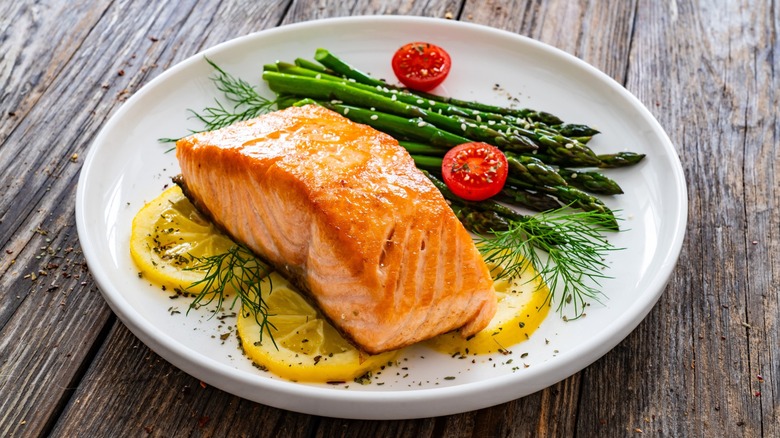
One of the biggest mistakes you should avoid when cooking salmon is to bake it in an inappropriate dish. But even if you eliminate that problem by using glass, there's still so much more that goes into baking the perfect piece of salmon. Thankfully, though, Alekka Sweeney is well aware of this reality and made sure to provide some bonus tips and cooking instructions to make your baked salmon a meal to remember.
First things first, it pays to know how well done you want your salmon to be. "The salmon should be cooked to an internal temperature of 125 to 130 degrees Fahrenheit (medium rare) or 135 to 145 degrees Fahrenheit (well done)," says Sweeney. This is where investing in a meat thermometer would come in handy. This way, you can get a precise temperature reading and avoid cooking your salmon beyond your desired doneness.
To check the salmon's temperature, Sweeney says to "check the fattiest part of the filet to ensure proper temperature." And when your salmon comes out of the oven, don't dig in right away! Instead, "let the salmon rest uncovered for 5-7 minutes after baking to ensure the juices redistribute, and you are not steaming the salmon." With all the right tools at hand, then, it shouldn't be hard to bake some exceptional salmon every now and again.