

The Bad Habit Many Shoppers Display When Picking Out Corn
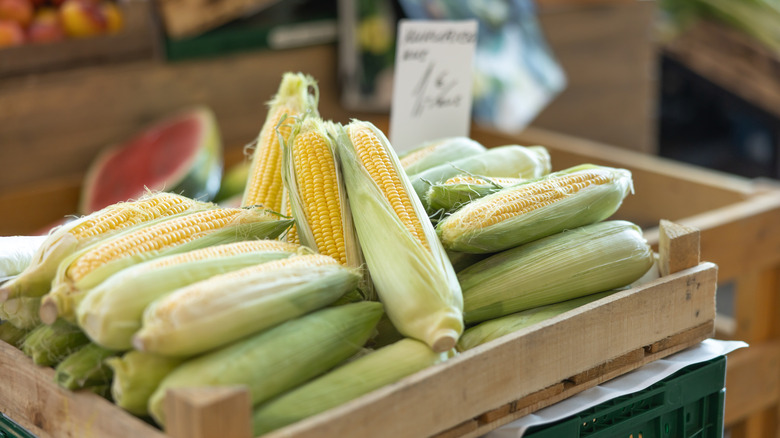
Few foods scream "summer is here!" like fresh corn on the cob. Whether you like it boiled and smothered in butter and salt, or prefer grilling flavorful corn in tin foil surrounded by seasonings, there's something ultra satisfying about biting into juicy, sweet and savory kernels that taste just a little bit like sunshine. This is doubly true if you're lucky enough to have your own patch of corn in the garden, or live near a farm that lets you pluck it right from the stalk. However, many Americans have to settle for what their local grocery stores have to offer.
That's not to say you can't get delicious, fresh corn on the cob from your local grocery store, but the reality is that those trays of cobs still in the husk have likely traveled some distance, which may have affected their quality. While it's important to check grocery store ears for freshness, it's bad etiquette to do so by peeling back the husk. The husk keeps the kernels plump and moist, and removing it triggers the drying process, which means that the ear is ruined for every customer after you and may end up tossed out.
Alternatively, following the silk test when buying corn not only protects the cobs from drying out, it's also a more accurate way to test for freshness. A few plump or underdeveloped kernels doesn't tell you much about the rest, but the silk extends to every kernel. Ears featuring golden brown, slightly sticky, and sweet-smelling silk are likely fresh, golden, and sweet inside.
More ways to test for fresh corn + signs to watch out for
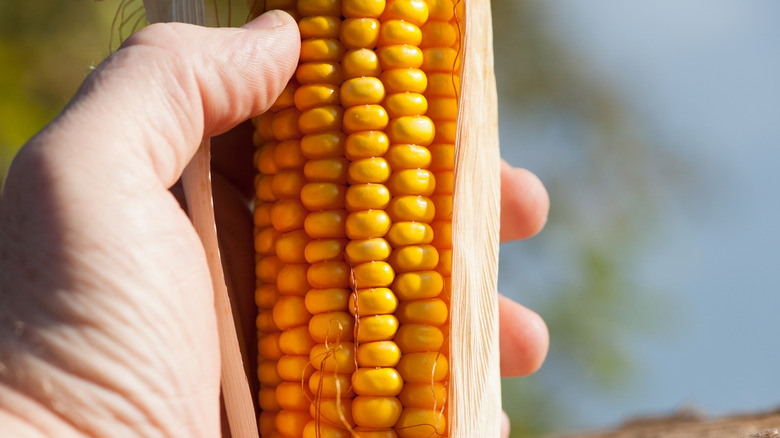
When inspecting corn silk, some warning signs to look for are black threads, a dry and crumbly texture, or an unpleasant smell. All of these are indicators that the ear you're holding has begun to spoil. Of course, sometimes corn silk also picks up dirt or absorbs weird smells during transportation, so it's important to be aware of other telltale signs of freshness and spoilage, as well.
For instance, the intact husk is also a pretty good indicator of what you'll find inside it. Much like the silk, you're looking for signs of freshness in terms of color and texture. Ideally, the husk should be a pretty green color — if the outermost layers look a little dark you can very gently peek at the inner leaves. Bright green leaves clinging tightly to the cob mean freshness, while dry or limp husks from the outside inward are a bad sign.
Though squeezing the ears to test their texture is also a common way to check for freshness, we advise against this. Like peeling away the husk, too much squeezing from too many people could burst the kernels and speed up the spoilage process. A visual inspection is usually enough to know whether or not the corn is fresh enough to take home. Once you have it there, you can take a lot of the work out of shucking your corn by tossing it in the microwave to loosen the leaves a bit.