

The Easy Way To Prevent Pesky Bottom Rot On Your Tomato Plants
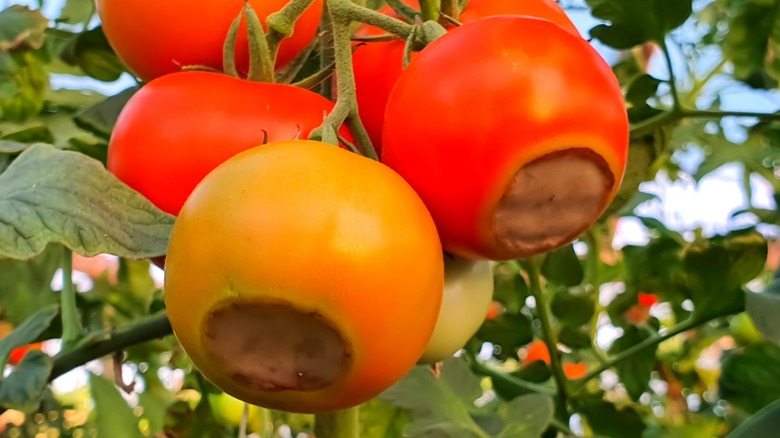
One minute you're growing your own tomatoes from store-bought plants, and the next you're flipping them over to find they've been ruined by bottom rot. Also known as "blossom end rot," this issue shows up as dark, often sunken spots near the bottom of the fruit, and can sometimes render them inedible if it progresses too far. Chowhound asked Deanna Talerico, creator of Homestead and Chill, for advice on how to prevent it. According to her, it's all about making sure your plants get the right amount of water at all times.
"Most folks think that blossom end rot is caused by inadequate calcium levels in the soil, but that might not be the case," Talerico told Chowhound. "Rather, it's caused by insufficient calcium uptake by the plants, which is most often exacerbated by inconsistent water supply, poor irrigation practices, and stress. Meaning, the garden soil may have plenty of calcium — the plants just can't utilize it!"
Tomatoes rely on their xylems — which transport water throughout the plant — for their calcium supply, so any sort of issue with watering can result in problems with their calcium intake. According to Talerico, one of the best ways to prevent blossom end rot is to establish a consistent watering routine: "One that offers deep regular water to the plants and keeps the soil evenly damp, not swinging from sopping wet to dry," she says. Using an automated irrigation system will help in this regard.
Other ways to avoid bottom rot in tomatoes
If you want to beat bottom rot by supplementing the soil with extra calcium, Deanna Talerico suggests using calcium-rich amendments like crab meal or gypsum instead of popular additives like eggshells. "The insoluble calcium found in whole or crushed eggshells doesn't break down fast enough to become available for the plants during the same growing season," she explains. Epsom salts are also out of the question; they're made of magnesium sulfate and don't contain any calcium. You'll want to make sure that any amendments you use don't bring the soil's pH level below 5.5, since high acidity can also interfere with your tomatoes' calcium intake.
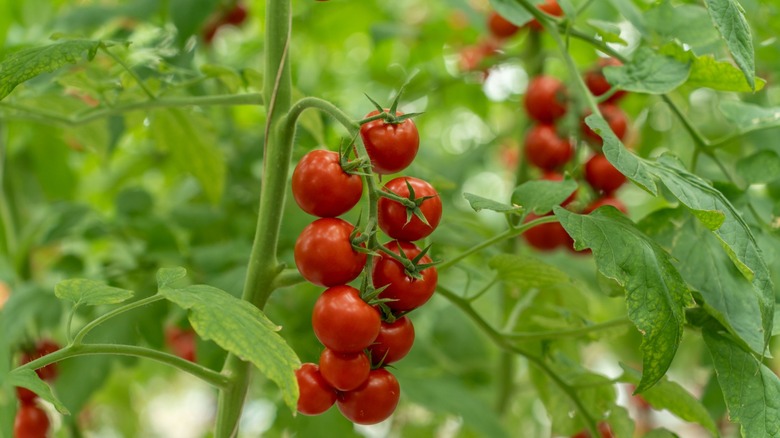
You could also try avoiding varieties that are more prone to bottom rot. Fast-growing types like Roma and Beefsteak tomatoes tend to be more at risk, as well as Big Boy, Supersonic, and Whopper tomatoes. On the flipside, Celebrity, Mountain Pride, and certain cherry tomato varieties are among the cultivars that appear to be more resistant to the disease. Cherry tomatoes, in particular, are one of the easiest tomato varieties for beginners to grow since you can also avoid split tomatoes more easily with them.
For tomatoes that are already showing signs of bottom rot, Talerico says there's no chance of saving the fruit. What you can do, however, is save the rest of the plant. "Using a calcium foliar spray will deliver the nutrients and reverse the issue even faster," she shares. "Applying a water-soluble mycorrhizae around the base of the plant will also help it better uptake nutrients, including calcium."