

Anthony Bourdain's Rule About Mussels Could Change How You Dine Out

We may receive a commission on purchases made from links.
The modern culinary world's rockstar, Anthony Bourdain, was a rebel even before his iconic food and travel shows "Parts Unknown" and "No Reservations" took off. From his wild insider stories about what goes on in some of the world's most famous kitchens to Bourdain's savage takes on the cooking world, he was often exalted more for his storytelling skills than his culinary prowess. However, the late chef wasn't just all spikey commentary; his food insights are some of the best, most practical, and succinct advice you can find. In his maiden book, "Kitchen Confidential," he didn't just reveal what his secret weapon in the kitchen was (a specific chef's knife); Bourdain knew how high-end kitchens work, where they cut corners, and what diners should watch out for even when they're eating at a fancy establishment. On the subject of mussels, he clearly erred on the side of caution. "I don't eat mussels in restaurants unless I know the chef, or have seen, with my own eyes, how they store and hold their mussels for service," he wrote in his book.
Fittingly, the precursor to "Kitchen Confidential," a 1999 New Yorker article which evolved into the book, was titled "Don't Eat Before Reading This." At the time of writing the New Yorker piece, Bourdain had worked in professional kitchens for over two decades, with over 10 years as a chef. What he revealed was, until then, common knowledge only to insiders in the food industry. Seafood took up a significant portion of the piece, ranging from shellfish to yellow-fin tuna at Michelin-star restaurants. All of them got the Bourdain treatment. Even now, when ordering a dish the late chef advised caution against, it's best to think twice.
Why mussels can be dangerous to eat at restaurants
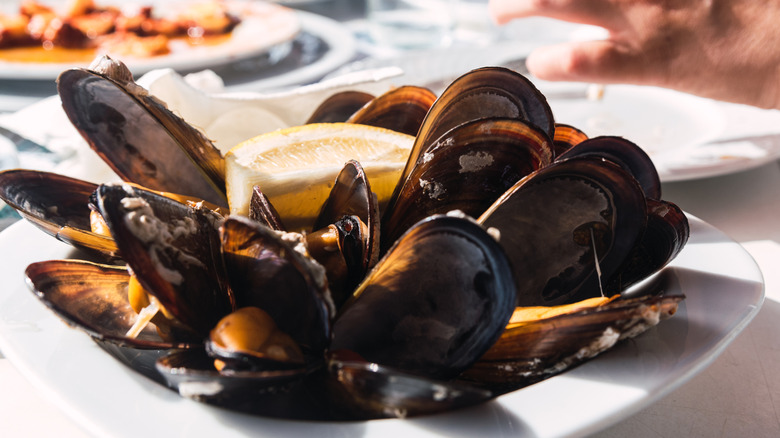
Anthony Bourdain's beef (no pun intended) with ordering mussels without knowing how they are handled by the restaurant was based on how just one tainted shellfish is enough to make one sick. "It takes only a single bad mussel, one treacherous little guy hidden among an otherwise impeccable group," he explained in "Kitchen Confidential." Knowing how things work behind the scenes at restaurants, Bourdain knew that cooks can sometimes be careless in their handling of the shellfish.
Ensuring they are safe, or disinfecting mussels to the point where they can be guaranteed safe to be eaten raw, is a convoluted process. The FDA outlines how some pathogens can be killed by heating or extended storage, while exposure to others should be limited by minimizing the time between harvesting and refrigeration. Sometimes, it's not the handling at fault, but where the shellfish originates from. Mussels can pick up pathogens from the water. While there are strict guidelines for where they can be harvested from, sometimes that's not enough. The paralytic shellfish poisoning outbreak in 2024 sickened over 30 people (via CBS News) and resulted in an FDA warning and a pause on shellfish harvesting at multiple locations.
There are several ways to be relatively safe when cooking mussels at home, like ensuring they're closed when you get them, that their shells are intact, and by checking that they're alive by gently tapping open ones so they close. At a restaurant, it's a lot more difficult to tell. One way is by their smell, which is how you can spot a single bad mussel in a dish.
Lack of attention to detail was Anthony Bourdain's restaurant red flag
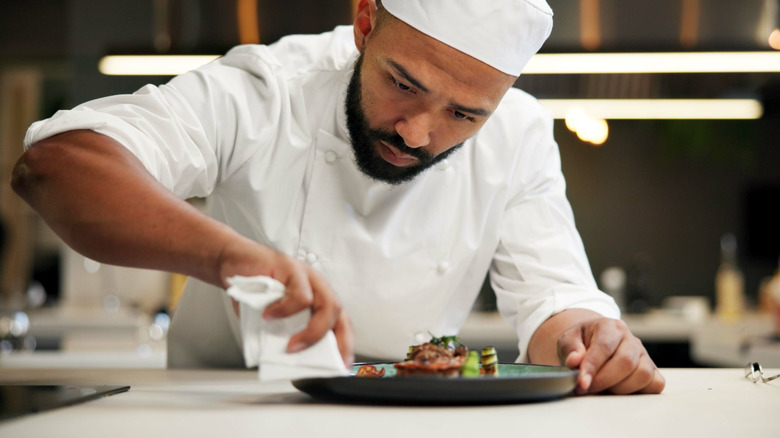
While Kobe beef sliders were a beef trend that Anthony Bourdain called "a clear and present danger" as a matter of culinary principle, there are other foods that he considered actually dangerous because they were low-quality ingredients dressed up to appear otherwise. In his book, he pointed out how a brunch menu was essentially a way for the chef to repurpose all the leftover produce in the kitchen fridge. More seriously, staples like hollandaise sauce could, once again, be rife with bacteria if stored incorrectly. He even mentioned the unappetizingly regular phenomenon of finding parasitic worms in swordfish — something most diners ordering the delicacy would not know (or even want to know) about.
Any restaurant careless enough to serve bad mussels could make similar mistakes with other dishes, so Bourdain's simple mantra for dining out was to gauge how much attention to detail the establishment employed. In his signature style, he conveyed this by stating he would never eat at a restaurant with dirty bathrooms.
Since one can't always know how careful a restaurant is, use a mix of Bourdain's advice. Avoid ordering raw dishes like oysters or steak tartare unless you know the establishment to be exceptional. Those with compromised immunity should also be careful when ordering such dishes. Finally, always trust your nose, and if something smells suspicious, don't consume it even if the restaurant staff insists it's how a certain dish is supposed to smell. It's always better to err on the side of caution, as the late great Anthony Bourdain would, with dishes that can easily make one ill.