

Freeze-Dried Candy Vs Regular Candy: What's The Difference?
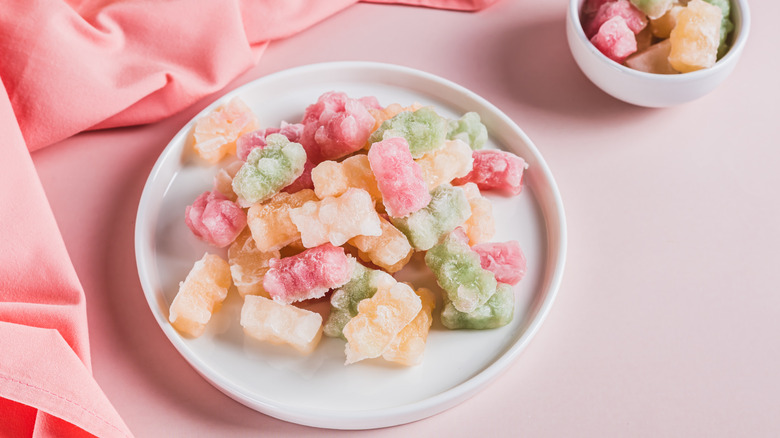
Freeze-dried candy is a popular trend that's entertaining and enticing consumers around the world. The most obvious difference between freeze-dried candy and regular candy is its puffy and cracked appearance. That visual shift is often what people notice first, and it's part of what makes these sweets so fun to try.
Typical candy has familiar flavors, made through recipes that try to balance sugar, fats, acids, and moisture when possible. Because of this moisture in the candy, the flavor is distributed throughout. The textures in regular candy also depend on moisture, as it is vulnerable to heat and humidity. So even though the textures in typical candy may vary widely from chewy (gummies) to crunchy (hard candies) or creamy (chocolate), they can also melt or become sticky or grainy. They're also relatively affordable, and you can make sweets at home too, no candy thermometer necessary.
Freeze-dried candy, however, packs way more flavor than regular candy. Because 99% of the moisture is removed, all those tasty compounds become even more concentrated. A strawberry candy becomes extra flavorful — even tart! The texture changes too: Instead of chewy, it turns light, crisp, and porous, dissolving instantly without any sticky residue. Removing so much moisture also prevents spoiling and keeps it fresh for years, even decades.
Freeze-drying is when science meets sweetness
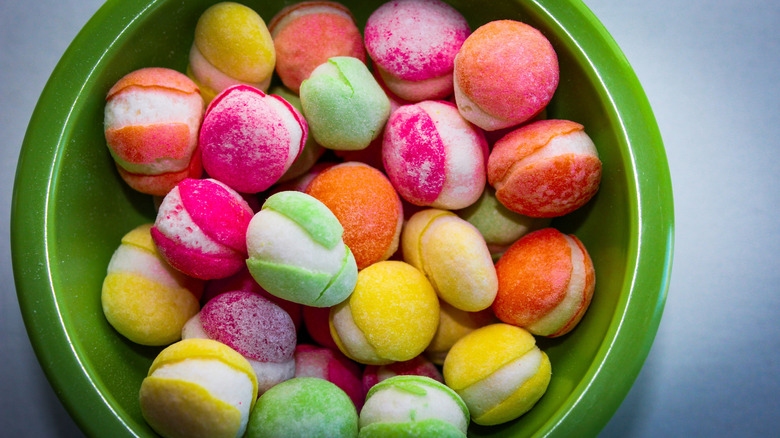
Unlike conventional candy making, freeze-drying is a process where nearly all the water content in candy is extracted through deep freezing and vaporization by high vacuum pressure. This results in a dramatically altered candy with new structure, flavor, and shelf life. This candy category has emerged because of lyophilization, a process initially designed for drugs and feeding astronauts during the 20th century. Even fruits can be freeze-dried for a sweet and crunchy alternative to regular or dehydrated fruit.
The crowning difference between these two methods, however, is the cost. Freeze-drying machines are very expensive, so production costs are high. Not only do the machines cost thousands of dollars, but they are also quite heavy, loud, and will contribute significantly to electricity bills. That's why freeze-dried candy usually costs more than regular candy. Most stores don't want to risk these extra costs, so they don't store them. Still, people are now freeze-drying candy at home, and there are specialty shops where you can rent a machine. You can find lots of freeze-dried treats available for order online or in specialty stores, making it more of a niche, slightly overpriced confection than an everyday snack.