

Don't Bother Trying To Keep Your Butter Cold Next Time You Go Camping
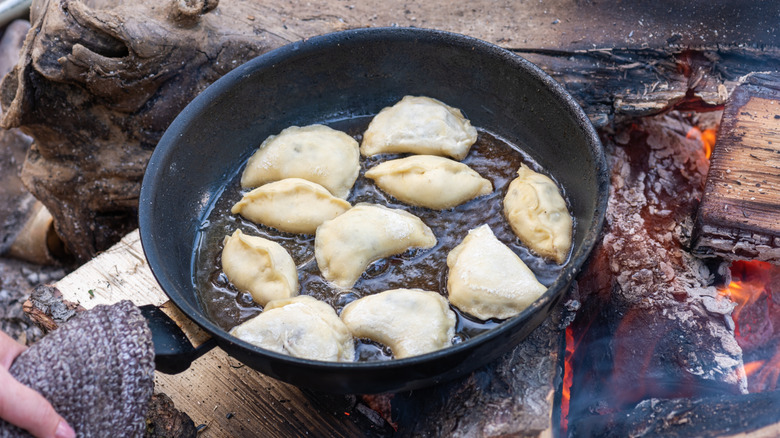
Nothing puts life in perspective better than camping — especially when you realize butter, your campfire cooking bestie, doesn't really need to be refrigerated. Whether you're feeling a little down or overwhelmed by the constant rush and noise of modern life, spending a few days connecting with nature can bring things back into balance. Plus, healthy soil like that found in forests contains Mycobacterium vaccae, a type of bacteria shown in studies to support brain health and elevate mood when inhaled (via Good). Add a dozen convenient, foil-pack meals and a stick of shelf-stable butter, and you've got all the makings of a rejuvenating trip.
Of course, camping safely and comfortably takes a bit of preparation, whether you're enjoying the glamping comforts of an air mattress in a 10-person tent or roughing it in a sleeping bag in a one-person pop-up. Following proper guidelines for cooking while camping will help you avoid foodborne illnesses and improve the whole experience. This is especially true for often-overlooked essentials that can take your campfire meals to the next level, such as seasonings and — but perhaps most importantly — butter.
Butter isn't just for dressing lightly charred toast. It's also essential for greasing pans to make smoky-sweet campfire pancakes and syrupy foil-pack apple crisp. The best part: Because butter is high in fat, low in water, and often salted, it's less likely to spoil at moderate room (or forest) temperatures. That means you can tuck it away with baking mixes and seasonings, leaving extra room in your cooler for coffee creamer and soda.
Safely storing butter while communing with nature
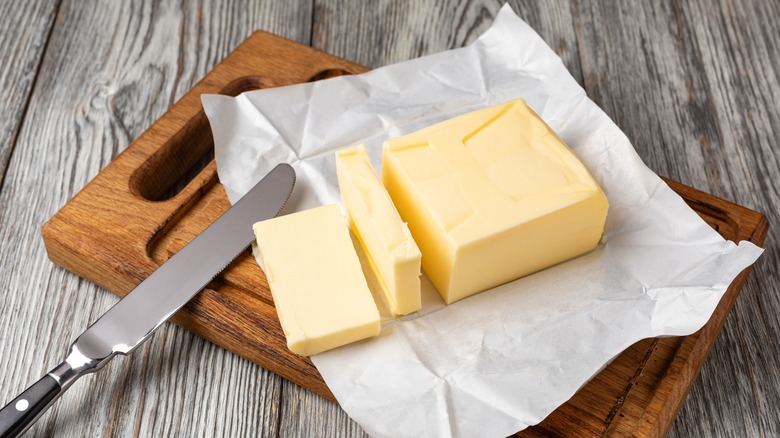
Though your butter is unlikely to spoil or make you sick if you stash it with your dry goods, it's still important to package and store it properly to protect it from bugs, overly bold and curious squirrels, and accidental messes. Wrapping it in parchment or wax paper, then placing that bundle inside a hard, airtight plastic container, helps keep it secure. Double-packaging not only helps butter hold its shape but also protects it if it gets jostled while you're packing and unpacking your supplies.
It's also crucial to be aware of the weather forecast for your trip, not just so you can pack appropriate clothes and bedding, but so you know whether butter is the best cooking fat to bring. While it's safe to store butter at room temperature if packaged properly, hot or humid weather can cause it to melt or turn rancid faster than it would indoors. In those cases, it's best to tuck the container against cold packs in your cooler, even if it means leaving those extra sodas behind.
Additionally, if the weather doesn't look butter-friendly, feel free to nix it in favor of other shelf-stable cooking fats, such as ghee. Ghee, the Hindi word for clarified butter, contains virtually no water and remains fresh even in very warm or humid conditions.