

Drastically Boost The Flavor Of Your Cookies Using A Simple Browning Tip
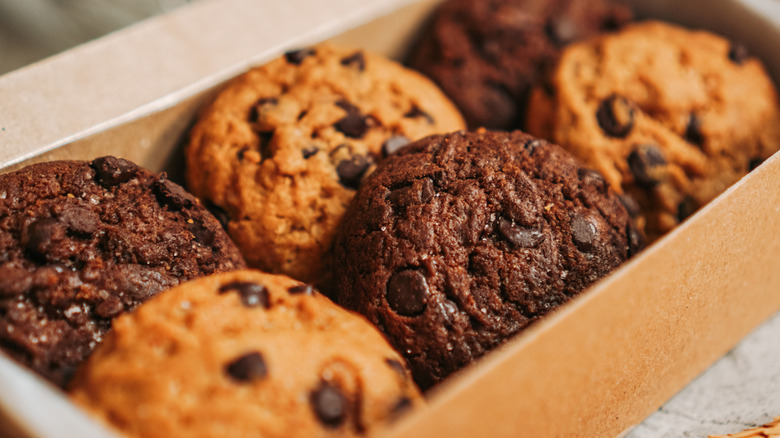
Not all cookies are made the same. However, for a warmer and richer nutty kick, you should start incorporating brown butter into your recipe. Brown butter is the end product of what is referred to as the Maillard reaction. Since butter is composed of milk solids, heating said milk solids gently — up to about 280 degrees Fahrenheit — will caramelize those sugars, creating tons of new flavor compounds. Think of it the same way that toasting bread or searing a steak creates those deep, delicious flavors that you love. With cookies, it becomes a game changer.
Brown butter is a staple of the restaurant world, and one of the things we love the most about this simple baking technique is how it connects us to some pretty classic culinary traditions, including French cuisine. In fact, the French have known about and used this technique for many generations — referring to it as beurre noisette, or "hazelnut butter" due to brown butter's distinct nutty smell.
Steps to browning butter at home
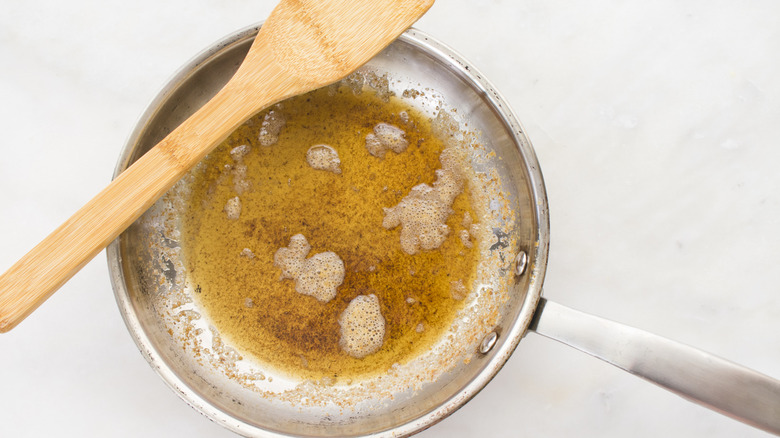
Browning butter is a relatively straightforward technique. However, the most important thing you need to know is when brown butter is done cooking before it burns. The trick here is to listen for the initial fizzling start to dull as the water evaporates. This is then replaced with some foaming, which disappears quickly, and is followed by the color shift from pale gold to deep gold.
Ultimately, your nose and eyes will be your best friend throughout this process. The moment the smell shifts from melted milky butter to a nutty scent, it's time to take the heat off the pan. And remember: The butter will keep cooking once you remove it from the heat, so try to take it off just before you spot the color you are aiming for.
Additionally, good brown butter is also dependent on temperature, and how you manage the heat determines whether you get brown butter or burnt butter. At a medium-low level, the milk solids will brown evenly, and you won't have any burnt patches of butter that will make the finished product taste bitter. A light, heavy-bottomed pan is also helpful since you'll get to see the color changes clearly, and the heavy bottom will aid in an even heat distribution.
Complementary flavors for your next batch of cookies
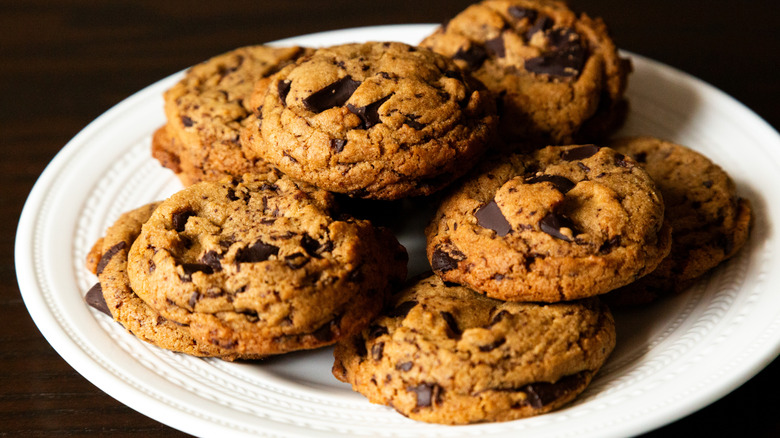
It's no surprise that a great way to use your brown butter is to help make your chocolate chip cookies more exciting. Here, your brown butter creates a flavor bridge between vanilla and chocolate that you probably didn't know existed. Additionally, the nutty notes complement good-quality chocolate without overwhelming it — adding a touch of sophistication that will make people wonder what your secret ingredient is. Best of all, you can also infuse the butter with complementary flavors while it's still warm by scraping vanilla bean seeds into the mix, or by throwing in some fresh thyme leaves that will crisp up when they hit the butter to release their oils.
However, there's just one caveat to keep in mind: Brown butter has a much lower moisture content than regular butter because you have cooked out the water. This means that some folks prefer to add a tablespoon of milk or cream back into the dough to keep things nice and supple. And, if you just so happen to burn your butter, or it looks grainy or separates, don't panic. Just whisk it back together, or simply start over. Even seasoned cooks burn butter; it's part of the process!