

How To Soften Coconut Butter For A Smooth, Spreadable Texture
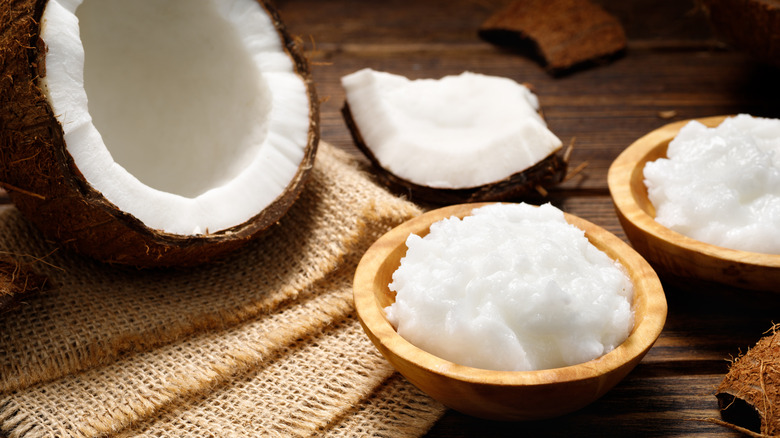
Coconut butter may appear similar to coconut oil; however, it acts quite differently. While the debate between refined and virgin coconut oil lives on, its buttery counterpart is often overlooked. The thing is, coconut butter solidifies and can become too hard to scoop or spread — especially if it is kept in the cold pantry. After all, coconut butter is more than just oil — it is also the coconut meat, which can become fibrous and turn into a hard paste when chilled. That's why merely trying to scoop out some coconut butter with a spoon will have you feeling like you are chiseling on a brick. Thankfully, there's no need to add anything to it to regain that creamy feel. You simply need to heat it up slowly.
The most popular method to soften coconut butter is to put the sealed jar in a bowl of warm water and let it sit for 10 to 20 minutes, stirring or swirling occasionally. The gentle heat will soften the fats and make the texture easier to move. This method works well if you are about to extract coconut oil from the butter, perhaps to crisp up some grilled cheese or give your hot tea a silky, sweet boost. If the jar has completely solidified and it won't budge, running the lid under warm water for a minute or two will help it twist open so you can give it a vigorous stir while warming.
Other ways to soften your coconut butter
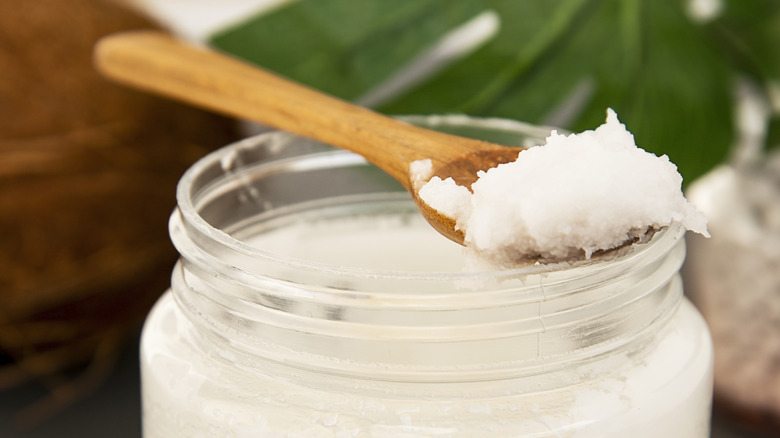
If warm water won't work, or if you want to soften the whole jar completely, a food dehydrator can do the job as well. Just set it to a low heat, ideally around 115 degrees Fahrenheit, and place the jar inside with the lid off. Around 30 to 60 minutes later, the butter should be soft enough to stir. This method still ensures that the temperature is low enough to maintain its raw quality.
Meanwhile, a second hands-on option — though a bit less traditional — is to mash the solidified coconut butter with a fine mesh strainer. This takes some elbow grease, sure, but works well if you only need a small amount. Pushing it through the sieve breaks up the heavy clumps and gives the butter a more even texture. A whole jar might not be the best choice for this, but if you just need a tablespoon or two for a quick snack or recipe, it's a perfectly reasonable solution.
Ultimately, no matter the method you select, you'll want to be sure not to microwave coconut butter in the jar, as high heat can separate oil from the solids unevenly and lead to a grainy texture. Instead, gentle and steady warmth is the best way to keep coconut butter soft, creamy, and usable as intended. A quick stir here and there occasionally will make sure it stays like that. If it does happen to firm back up, all it takes is a little warmth to bring it back to its silky, spreadable self.