

Remove Even The Toughest Of Burnt-On Messes With A Splash Of Club Soda. Here's How It Works

A great alternative to sugary sodas and an even better mixer for both alcoholic and non-alcoholic drinks, club soda is fizzy, refreshing, infused with many minerals and salts, and is everything you are looking for on a hot summer day. Whether you need it for a sweet-and-sour Tom Collins, a bubbly and citrusy Mojito, or a light and bittersweet Aperol spritz, there's a reason why you should keep club soda around during a dinner party.
However, your guests' cocktail preferences aren't the only excuse to stash club soda in your kitchen. There are another 11 ways to use club soda beyond beverages, and, as strange as it sounds, one of them includes tackling the toughest and most stubborn burnt-on messes. As it turns out, club soda has some serious cleaning power, and that's all thanks to its carbonic acid.
This particular chemical compound is what gives club soda its distinct, slightly acidic kick. Considered a weak acid and perfectly safe to consume, carbonic acid forms when a small amount of carbon dioxide dissolves in water. When even a splash of hits burnt food stuck to pots and pans, it loosens the grime, making it much easier to scrub away without damaging the surface. That even applies to delicate nonstick cookware. So yes, club soda works. But how do you apply it, and what's the smartest way to use it? Well, it might surprise you, but it's much easier than you might think.
Sit back and let the bubbles do all the heavy lifting
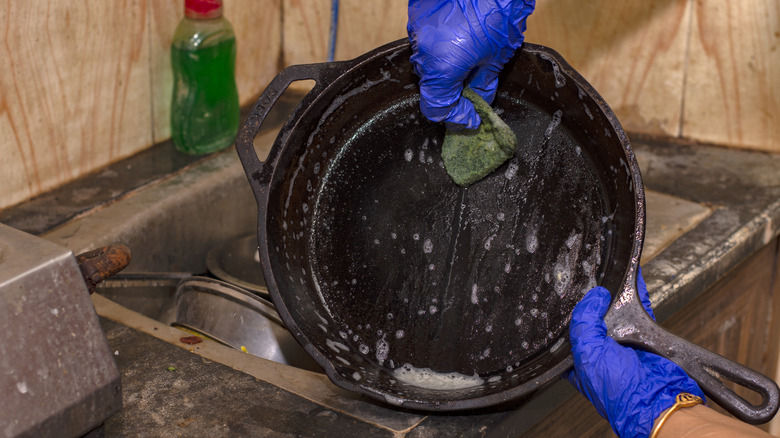
Now that it's clear club soda is the secret to cleaning your prized cast iron (or any pan, for that matter), the next step is learning how to use it correctly. Start by pouring club soda into the pan while it's still hot, coating the entire bottom evenly. Let the carbonic acid do its magic for at least 15 minutes. That's usually enough time for the food particles to loosen, but if they don't, let it sit a little longer to soften and lift the stubborn grime from the cookware's bottom.
Once that's done, carefully scrub the cookware with a small brush, washcloth, or non-abrasive sponge to avoid damage, and make sure to give it a proper wash with warm water and dish soap. If, however, there are still food particles left in the pan, don't rinse them down the drain. Instead, scoop them out and toss them in the trash to avoid clogging your pipes and then having to spend hundreds of dollars on plumbing repairs. Finally, once your cookware is sparkling clean, take a dry cloth and thoroughly wipe them to remove any remaining moisture. Then simply store them in a cool, dry place to keep them in top shape until you're ready to use them again.