

Don't Be Afraid Of Using This Ratio For Your Homemade Salad Dressing — It Gives You Way More Flavor
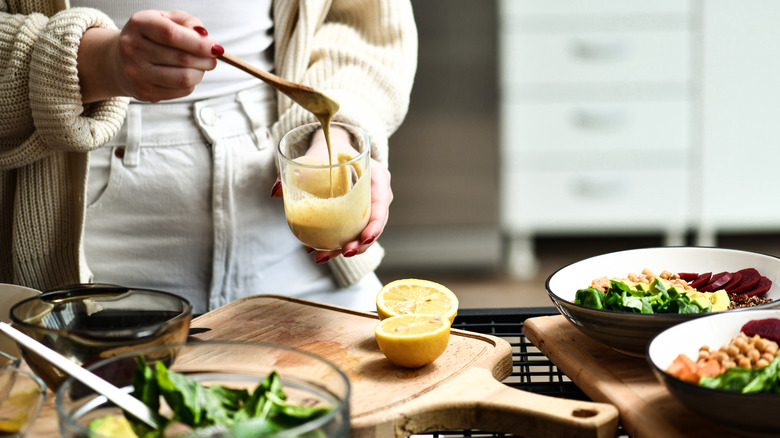
Spend enough time in the kitchen, and you'll make your fair share of salad dressings. They're a brilliant thing to have on hand, and a super easy way to add a bit of zing to a healthy, delicious side for anything from a perfect roast chicken, to a Greek-style mezze feast. But though you may think you've got this basic but flavor-packed dish down, you might want to try a simple upgrade that'll take your dressings to the next level.
Conventional wisdom dictates a three to one oil-to-vinegar ratio (i.e. three parts oil, to one part acid) — but a more balanced one to one ratio can deliver a much brighter flavor and a silky, smooth texture. The higher acid content doesn't just coat the greens: It lifts their flavors, cuts through the heaviness of the oil, and gives a lively bite without the harshness you might assume would come hand-in-hand with a more acidic dressing. It'll give you a result that's tangy, well-integrated, and sparklingly fresh.
You'll notice your veggies staying crisper, as the acid helps to preserve their freshness, while the ample oil still remaining provides a rich mouthfeel. The more even emulsion will really wake up your tastebuds, bringing your dressings from "meh" to "zing!" If you find things getting too acidic, just add some sugar to the proceedings via some honey or maple syrup, which will work to round out the acid without diluting the flavors of the dressing (and adding a little welcome complexity).
How to make a stable emulsion using the one to one ratio
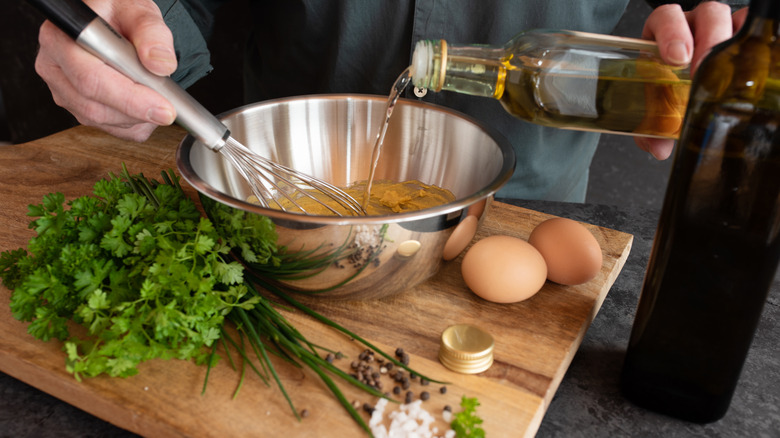
When it comes to a good salad dressing, stability is everything — and an emulsion of equal parts oil and acid can separate faster if it isn't handled properly, leading to an uneven distribution of flavor. For the best, most stable emulsion, whisk the oil slowly into the acid, starting with a small drizzle and then increasing the amount bit by bit while vigorously whisking. That agitation will help to bind the oil and acid molecules together, creating a more stable emulsion.
You could also add a small amount of a binder — like mustard, or even a pinch of salt — which will help the mixture stabilize by giving both the oil and vinegar molecules something to cling to. If that fails, try giving your dressing a brief blitz with a hand blender for an ultra-smooth vinaigrette that will cling to the leaves in your salad without overpowering their texture.
The temperature of your ingredients matters, too. Using room temperature components can give you a speedier, more stable emulsion — as cold oil slows down the emulsification process. Don't let them get too warm, though — if your vinegar gets too warm, it can cause your dressing to separate quickly. To add a little more emulsifying power, and a boost of flavor, you can also add a minced clove of garlic, or even a small spoonful of miso: They'll add an extra boost of umami, whilst helping to maintain stability.
When (and why) to use the one to one method over traditional dressings
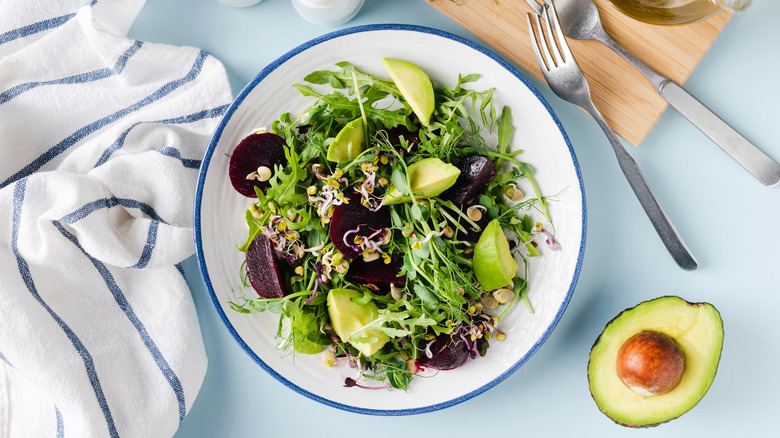
You might be wondering when you should reach for this bold, zingy dressing over a more traditional dressing with a higher quantity of oil. While it works pretty well in most cases, there are certain instances where it's an especially useful upgrade. Use it when you're working with strong greens like arugula, frisée, or even dandelion — leaves with bold flavors that could overwhelm weaker dressings. The stronger acid flavors of the one to one dressings work to tame their bitterness, and highlight the best parts of their natural flavors. Think about more contextual pairings, too: Dishes like a Greek salad, heavy in tomatoes and cucumbers, or smoky grilled vegetables — where a traditional three to one ratio might feel a little weak, or even too oily. It's also great for hot summer days, when you want a dressing that feels clean, refreshing, and light on the palate.
This dressing works because you don't lose flavor — rather you gain clarity. Brightness and zing come without the need for any additions like cheese, sweeteners, or extra seasonings. Because the acid in the dressing dissolves flavor soluble aromatics like garlic and herbs more effectively, you get the benefits of some really intense flavor without adding any fat-heavy ingredients. This ratio isn't a gimmick — rather, it's a smart flavor hack that'll open up a new side to your salads, one with more freshness, and a dynamic profile without sacrificing the ease or control that comes with the traditional three to one dressing ratio.