

The Ideal Oven Temperature For Perfectly Baked Salmon
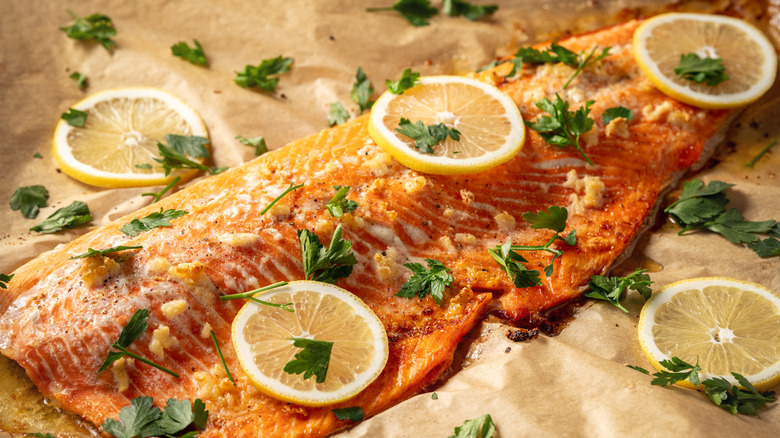
Many would-be chefs are intimidated by fish; it's a delicate thing, prone to overcooking. Ensuring the perfect cook is crucial to making your dish — whether it be a show-stopping grilled fish or a Thai-style coconut fish curry — work. For many a home cook, a starting point is often salmon. Getting a great piece of flawlessly baked salmon just right can be simple, and with a decent understanding of temperature and time, you'll be well on your way.
The temp you bake your salmon at will determine its texture and how well it retains moisture. You can use different temperatures, but your method will have to change depending on which you choose. High heat roasting is the way to go for delicious browning on the outside of your salmon and that characteristic crispy skin. Most recipes recommend using a temperature between 375 and 400 degrees Fahrenheit for around 15 to 20 minutes. Keep a close eye on things, though, as at high temperatures, you risk an uneven — or worse — overcooked fish.
Instead, try baking your fish at a lower temperature. For smaller pieces of salmon, like individual fillets, this is a great option because it removes that overcooking risk. It also allows for gentler, more even cooking and avoids the secretion of albumin, that white protein salmon tends to release when cooked too fast. Anywhere between 250 and 300 degrees will serve you well, so use some trial and error to figure out the best option for you.
How exactly to cook your salmon low and slow
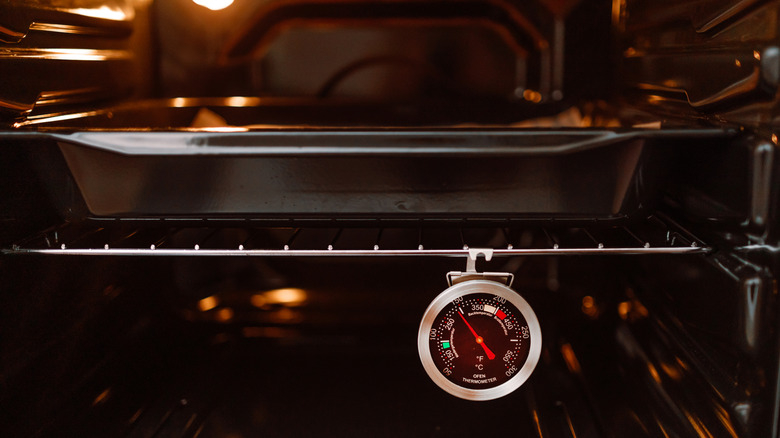
The best barbecue masters will tell you that the key to juicy, tender, flavorful meat is in cooking it low and slow. That's just as true for baking salmon. Cooking it on a low temperature allows for the flesh to stay nice and soft as it bakes. When hit with the intense heat of an oven on full blast, salmon can tighten up and leave you with chewy, dense fish rather than the silky, tender flesh you're after.
To ensure you're not overcooking your salmon, pay close attention to two temperatures: the temperature of your oven and the temperature of the fish. With a probe thermometer, you can get an instant read on your salmon's internal temp and the most accurate idea of how far along your fish is. As a general rule, temperature is a better measure than timing is, and if you're not a seasoned pro, it's the best way to ensure you get a perfect cook on your salmon every time.
So, for the perfect salmon, set your oven to 275 degrees (or even lower at 250, but 275 is a good middle ground). Bake your salmon until the internal temperature reaches 125 degrees, and you'll achieve the tender, rich, blushing pink of a nice medium-rare cook. Perfection.
How to cook your salmon faster — and why resting it matters
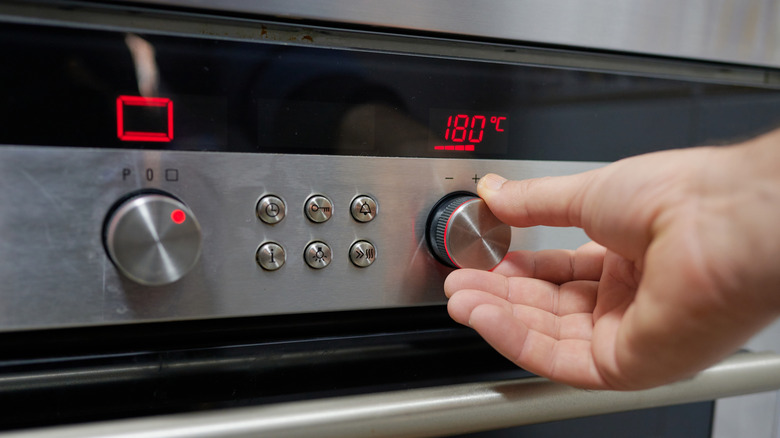
Low and slow cooking isn't just a great way to ensure even doneness and soft, flaky texture; it'll also leave your kitchen smelling better! This is because it slowly renders salmon's fat, which means a more gradual release that keeps all those natural oils inside the fish instead of in the air.
Sometimes, though, you're in a pinch, and you don't have the time (or simply can't be bothered) to let your salmon sit in the oven at a lower temp. Not to worry! You can, of course, still cook your fish at a high temp while getting a great texture — it just takes a little more work. Anywhere between 375 and 400 degrees will work, but watch for color and caramelization developing on the outside of your fish. Once you spot these signs, frequently check your fish's internal temperature. While you'll want to look for 125 to 130 degrees to get a medium-rare cook, if you prefer your fish a little firmer, aim for 135 degrees — 145 at the absolute maximum for a well-done finish.
Remember to remove your fish when it hits five degrees below your target temperature, as it will continue cooking even when it's out of the oven. Then, let it rest and allow the juices to redistribute, and that's it! Perfect fish, in a jiffy. If you want even more advice to guide your baked salmon journey, you can also review these big mistakes to avoid when cooking fish.