

How To Remove Excess Moisture From Zucchini For A Crispier Bite
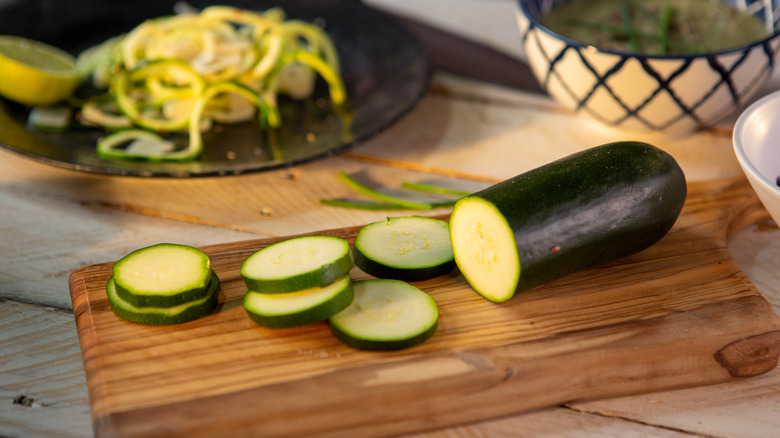
Zucchini is one of those divisive summer veggies that some people loathe and others can't get enough of. While its detractors denounce it as mushy, watery, and tasteless, zucchini die-hards claim that it's deliciously savory, especially grilled to crispy tender perfection. With these wildly different descriptions, it's easy to deduce that the issue may be in the way each group is cooking this delicate summer squash. Odds are, those who find zucchini mushy perhaps haven't tried the secret to perfectly grilled zukes yet — making them sweat.
Sweaty vegetables may not sound appealing, but this technique is worth a try for crisper, firmer roasted zucchini. The idea is to salt the vegetable and let it rest for a while before using it, which leeches out excess moisture that causes sliced zucchini to steam from within and turn to mush when you cook it. This step isn't necessary for dishes like bisques and stews, but if you're making zucchini steaks for a hearty, meat-free dinner, or breading it for veggie fries, sweating the squash first is a crucial step.
There are a few ways to salt and drain zucchini, all of which are dependent on how you intend to use it. If you slice your zucchini vertically for great results on the grill, lay the halves cut-side up on clean tea towels and sprinkle a scant pinch of salt over each one. If slicing or grating, place the chopped vegetable in a colander over a bowl before salting. Once suitably sweaty, pat or squeeze dry before using the zucchini.
The sweet spot for salting and sweating

The key to making this technique work properly is to use the right amount of salt and sweat your zukes for the appropriate duration. Using too much salt can make it taste overly salty, which could ruin your dish. Additionally, zucchini only needs to sweat for 15 to 60 minutes depending on how dry you want it to be. Any longer can cause the squash to dry out too much, making it chewy or difficult to weave into a beautiful lattice to top your zucchini lasagna.
Additionally, you only need a scant teaspoon (or less!) of salt per pound of zucchini for this to work. More than that won't remove more moisture, it'll just make things taste saltier. If you're concerned you may have used too much salt or let things sit too long, just rinse your zucchini in cold water to remove as much salt as possible and add a touch of moisture back to the veg. Otherwise, you can just daub the salted zucchini with a paper towel, and gently squeeze the chopped slices and zoodles to remove any remaining excess liquid.
At this point, you can either use your zucchini right away, or store it in the fridge a couple of hours before cooking it. However, if you choose to store it, just note that refrigerators provide a dry, cold environment that may further dehydrate your zukes. You can also freeze the liquid drained from the zukes in ice cube trays to use in soups, stews, sauces, and even smoothies.