

The Super Easy Step For Removing The Bitter Taste From Bok Choy
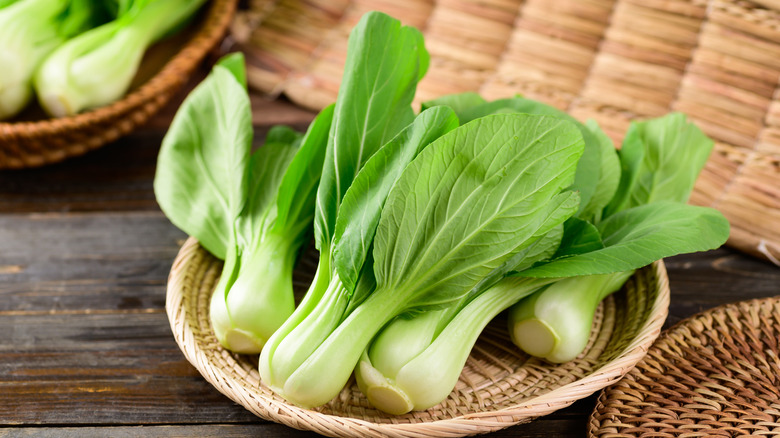
Vegetables simply make life better. They are delicious, nutritious, and full of colors and textures that bring life to our meals. They are also incredibly versatile, as is the case with bok choy, a leafy green member of the mustard family that is popular in many Asian cuisines and is one of the most hydrating foods. While it might look like a weird version of celery, it's actually known as Chinese cabbage. Its appearance isn't the only thing that makes it stand out — it's also known for a subtle bitterness that is part of its characteristic flavor profile. Luckily, there is a simple hack to take that bitterness out so bok choy can be the star of your meal.
The bitterness, which comes from compounds in cruciferous vegetables called glucosinolates, can vary from plant to plant based on things like maturity and growing conditions. But while you can follow some simple rules with selecting the best bok choy at the store, you could still have some bitterness to address. To get rid of it, simply blanch your greens. The process is easy: place them in boiling water for two or three minutes, then immediately place them in an ice water bath. Giving bok choy this special treatment helps remove the bitterness it is known for without overcooking the greens so they maintain their crispy texture and delicate flavor.
Blanching has multiple purposes
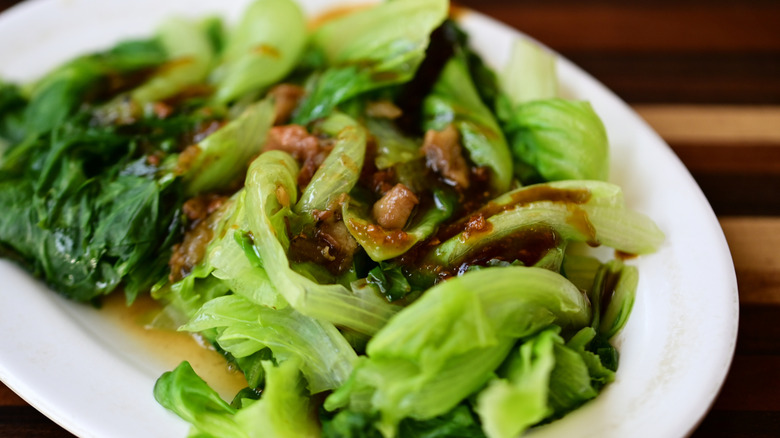
Removing the bitterness from bok choy (and other greens like mustard greens, kale, and chard) makes it easier to enjoy the flavors, nutrients, and vibrant colors in dishes like salads and stir fries — you can even add it to your favorite instant ramen along with some leftover chicken for a quick and delicious meal. But blanching does more than just allow the natural flavor of the greens shine through. There are still more benefits to using this cooking technique, especially when it comes to bok choy. The process also helps to ensure the cleanliness of your greens before you consume them — if you've ever worked with bok choy then you've probably learned firsthand how important this is since dirt and pests like to hide in between the stalks and among the leaves.
Other benefits may be a little more surprising, such as the fact that blanching also helps preserve some essential nutrients (cooking foods like vegetables can reduce the presence of naturally occurring vitamins), thanks to the short cooking time, and it improves the digestibility of the greens by helping to break down the cell walls of the plant matter. This helps with both chewing and digestion. You can even use the technique to bring life back to canned vegetables by making the colors more vibrant and reviving the natural flavors, making it a helpful kitchen hack that goes far beyond bok choy.