

How To Remove The Bitter Taste From Swiss Chard
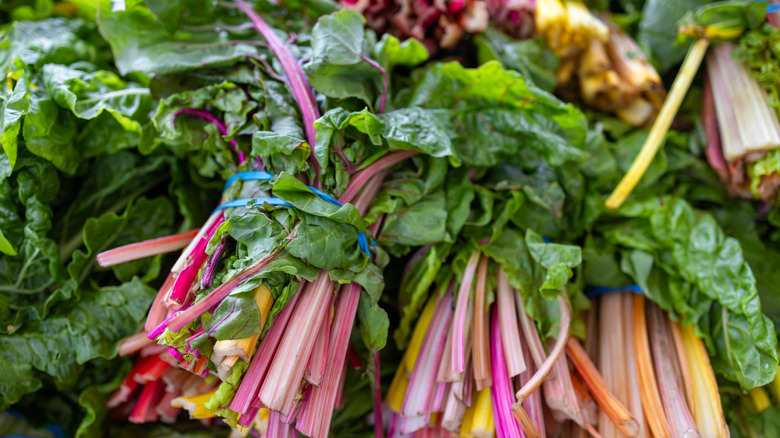
Spinach and kale have had their day in the sun — now it's time to show Swiss chard some love. Though this dark, leafy green is just as nutrient-dense and delicious as its more well-known counterparts, Swiss chard can't seem to make it into the spotlight. While this may be due to the fact that kale simply has a better PR team, the more likely reason is chard's off-putting bitterness. Fortunately, there are a handful of very simple ways to counteract or soften this flavor to help this green shine in as the centerpiece of dishes like classic pasta e fagioli with chard.
To make the most of your chard and its flavor, it's important to know that most of the bitterness is actually located in the brightly-colored stems rather than in the leaves themselves. That means if you're making a chorizo chickpea salad with feta and you want to add a green hearty enough to stand up to those strong flavors, removing the central rib from the chard should remove most of the bitter flavor.
You can then chiffonade the chard leaves and toss them in some oil and vinegar to help soften them a bit, as chard can be a little tough. Heating the leaves also breaks down some of the compounds that cause bitterness, including sautéing or braising in a little fat and acid which add bright, luscious flavor that tames the astringency and makes chard taste earthy and nutty by bringing forward its subtle sweetness.
Using chard stems to their full potential
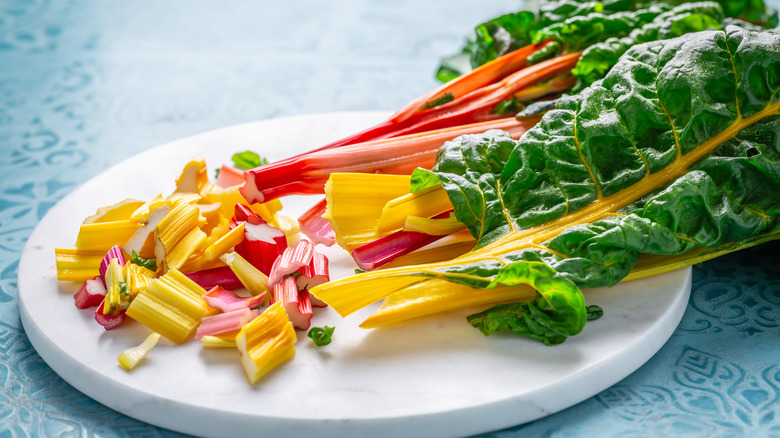
Though the chard ribs contain the bulk of the bitterness, that doesn't mean you should discard these beauties. Available in various shades of burgundy, sun yellow, and bright orange, this part of the chard is every bit as nutritious as the leaves, infusing your recipes with gorgeous color in addition to vitamins and flavor. Unlike the leaves, the bitterness in the stems is too strong for them to be enjoyed raw, so it's best to add them to cooked dishes, but don't worry — they retain their bright color even after they've been heated.
Since sautéing them in oil and vinegar is a great way to burn the bitterness out of the stems, it stands to reason that pickling them has a similar result. The combination of acid with strong seasonings leaches the bitterness from the chard stems and turns them into a colorful, briny addition to salads, sandwiches, and pasta dishes. Just be sure to use the expert-approved technique for achieving super-crunchy pickles by cutting them into bite-size pieces instead of mincing them. After all, no one wants a soggy pickle, no matter what veggie it comes from.
If you want to use the leaves and stems in the same cold dish, like a salad or slaw, and don't have time for the pickling process, you can also quickly blanch the stems in boiling water and shock them in an ice bath to remove bitterness while retaining some of their crunchy texture.