

This Chemical Found In Duck Feathers Is Also In Your Food, But You Shouldn't Panic

While it may sound wild that duck feathers are in your fast food, there's a kernel of truth in that claim. The offending chemical here is called L-cysteine, and yes, it can be derived from duck feathers. But before swearing off buns forever, we'll tell you what it is and why it's there. As fast food continues to become more expensive, some more "creative" shortcuts are being taken.
L-cysteine is a natural amino acid. Your body makes it naturally, and it's found in most protein foods like eggs, poultry, and dairy. So no, it's not this weird artificial lab product. What gives people a raised eyebrow is how it's sometimes obtained. To make it for industrial food processing, L-cysteine is usually derived from duck feathers, or, on occasion, even human hair. But don't panic: it goes through serious processing and purification before ending up in your food. By the time it makes it into your fast food bun or frozen pizza dough, it doesn't contain feathers or hair parts, just the amino acid.
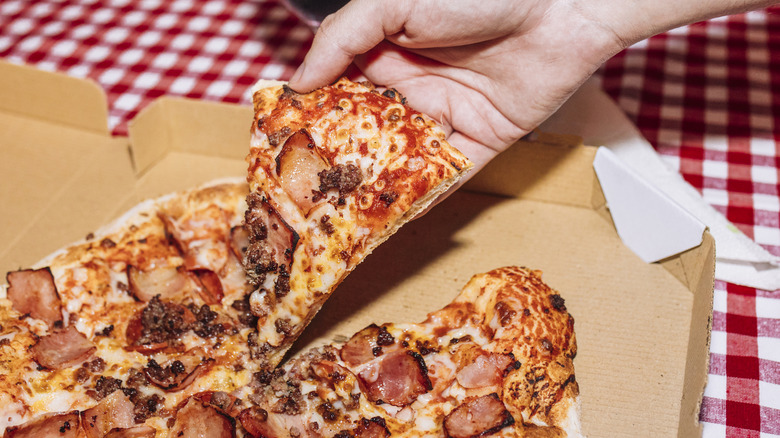
So why is it in your food to begin with? L-cysteine softens dough, making it easier to handle, especially in mass baking where consistency is key. That means your burger bun stays light, pizza crust can be stretched, and machines will be able to handle the dough without ripping it apart. For companies that mass produce bread, or some of those fast food chains that make billions of dollars, that kind of quickness and control is important.
The importance of L-cysteine
It might sound alarming to hear that something extracted from feathers is touching your dinner, but L-cysteine is safe under the FDA's standards when it's being utilized in normal amounts. It's not toxic or addictive, and not something to fear on a chemical level. In fact, it's been used in food production for many years. From a chemical perspective, L-cysteine is a reducing agent. It hydrolyzes the gluten bonds in the flour, and the dough is stretchier and requires less rest time to mix. On a small bakery scale, that process can be done with elbow grease and by kneading for some time. But for fast food chains baking thousands of buns a day? A shortcut like L-cysteine can be a game-changer.
However, just because it sounds odd doesn't automatically mean it's dangerous or unnatural. Several everyday food additives have unusual origins. Take rennet, which goes into cheese. It can be produced from a calf's stomach lining. Or shellac, which makes jelly beans shiny, being made from insect secretion.
Still, L-cysteine, for many, is a fast food ingredient to steer clear of, as the idea of eating something derived from duck feathers turns some stomachs. Some people opt for more transparent, less-processed options when it comes to their bread and baked goods. But while this ingredient might sound like science fiction, it's really just food science.