

Precut Fruits And Veggies Come With A Potential Hazard
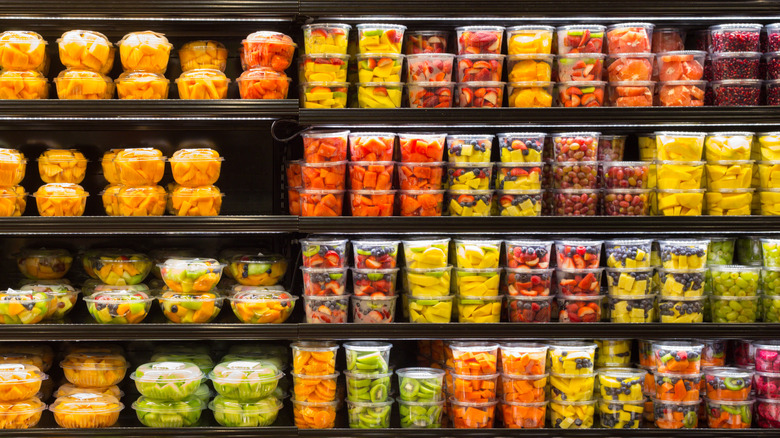
We have all grabbed those ready-to-eat fruit cups or bags of chopped veggies in the name of saving time. After all, who has the energy to peel, chop, and dice after a long day? But while precut produce wins big on convenience, it might be hiding a not-so-fresh secret: a higher risk of contamination.
Here's the deal. Every time a fruit or vegetable is cut, its natural protective barrier, the skin, is broken. This exposes the juicy, nutrient-rich interior to air, hands, tools, and surfaces, all of which can carry bacteria. Cutting produce increases the chance for pathogens to settle in and multiply, especially if the items aren't stored or handled correctly.
And the risk isn't just hypothetical. Several foodborne illness outbreaks have been linked to precut produce over the years. One 2018 outbreak, for instance, saw dozens fall ill from prepackaged melon products sold at major retailers across the U.S.
To be fair, most grocery stores and supermarkets follow rigorous food safety protocols. But the sheer number of touchpoints—washing, peeling, slicing, packaging, transporting, refrigerating — means more chances for things to go wrong. And because precut produce is often sold in throw-away plastic containers that trap moisture, it can become a breeding ground for bacteria if not kept cold enough.
Better safe than sorry with precut fruits and veggies
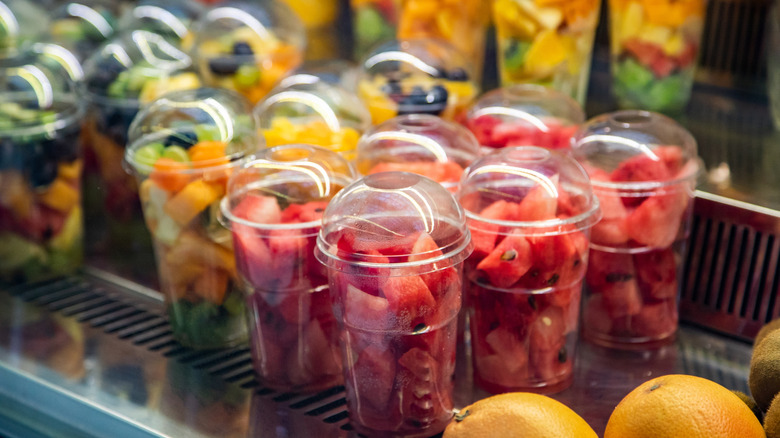
So what can you do if you still want your time-saving snack without the stress? First, always buy precut produce from reputable retailers that keep items refrigerated. Look for sell-by or use-by dates and avoid anything that looks slimy or has excess liquid pooling at the bottom.
Once you get it home, store it in the fridge immediately and consume it within a couple of days. When in doubt, give it a rinse, even if the label says "pre-washed." While it won't remove all bacteria, a quick rinse under cold water can help reduce surface germs. And if you are meal prepping, consider slicing produce yourself and storing it in airtight containers. It's a small step that can pay off big.
Precut produce isn't inherently dangerous, but it does ask for a little extra vigilance, as there is a huge contamination risk. Whether you are grabbing diced onions for soup or pineapple chunks for snacking, just remember: the more convenient the food, the more important it is to handle it safely.
Because when it comes to your health, a few extra minutes with a cutting board beats spending a weekend with food poisoning. Keep your fridge stocked, your eyes peeled, and your produce fresh in every sense of the word.