

The 3 Essential Types Of Oil Mary Berry Always Keeps On Hand

Longtime TV personality, cookbook author, and doyenne of the British food world Mary Berry knows her way around a kitchen. When it comes to ingredients to keep on hand, she has some wisdom to impart on the topic of must-have cooking oils. Rather than stocking her pantry with endless bottles of oil that may ultimately spoil, she suggests narrowing it down to three staple types — a high-quality olive oil, a more affordable olive oil, and sunflower oil.
You might be thinking: why all of the fuss? Oil is oil. Selecting the right type of oil for your cooking application can make a huge difference. A great deal comes down to the smoking point (also called the burning point), which is the temperature at which a particular oil starts to break down. For situations like making salad dressing or even sautéing, an oil with a low smoking point works well. However, for frying, especially with the goal of a light and crispy finish for things like tempura, an oil with a higher smoking point will be imperative. Another factor to consider in oil choice is the flavor that it lends to a particular dish.
Different olive oils for different uses
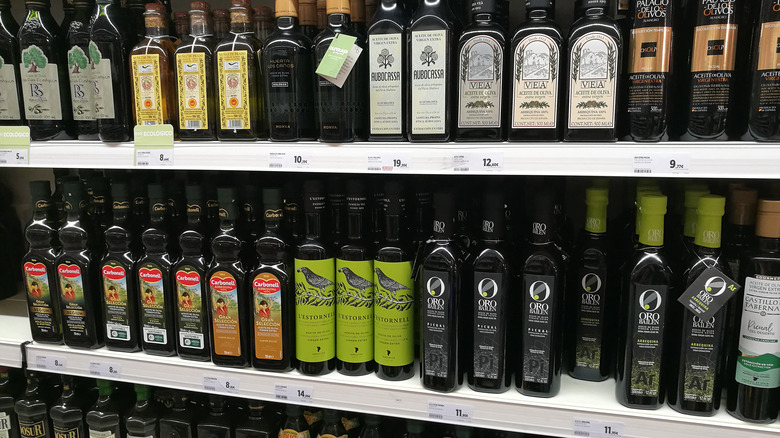
So, why does Mary Berry recommend two types of olive oil? The reasoning behind having two olive oils on hand is essentially because high-quality (and thus more expensive) olive oil is such a premium ingredient. For the same reason you wouldn't wear an evening dress or tux to the grocery store, you wouldn't waste your best olive oil on just any old dish.
Save that fancy oil for where it will shine, and you will taste each drop. Think luxurious salads that perk up under the gloss of the grassiest olive oil, finishing a perfectly broiled piece of fish, or drizzling it over freshly made hummus. On the other hand, well-made but more affordable olive oil can be used when you are mixing it with other ingredients, such as for a marinade, roasting, or sauces. Regardless, you still want to pick the best olive oil by factoring in taste, packaging, country of origin, price, and the amount of heat used in its production.
How to decide on the third oil; sunflower
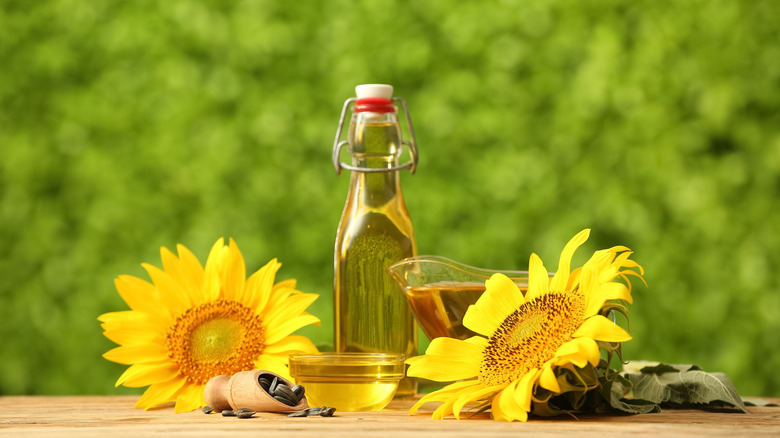
Mary Berry, an original judge on "The Great British Bake Off," is an expert on all things baked, and sunflower oil is her neutral oil of choice. It works just as well in a cake as it does in a muffin, or even a Yorkshire pudding, without muddling any flavors. That's why sunflower oil, yes, the kind made from sunflower seeds, reigns supreme as a third oil to keep in the kitchen.
This is not only because of its high smoking point, but also because it imparts little to no flavor. Why is this important? You want a neutral oil for uses such as frying, but you also want a neutral oil for baking. Like olive oil, there are different grades of sunflower oil, categorized by the amount of oleic oil in them, which can affect their "healthiness," but doesn't affect flavor. With these three oils on the shelf, you'll have every recipe calling for some ready to taste its best.