

How To Make French Press Coffee Without Any Sludge In Your Cup
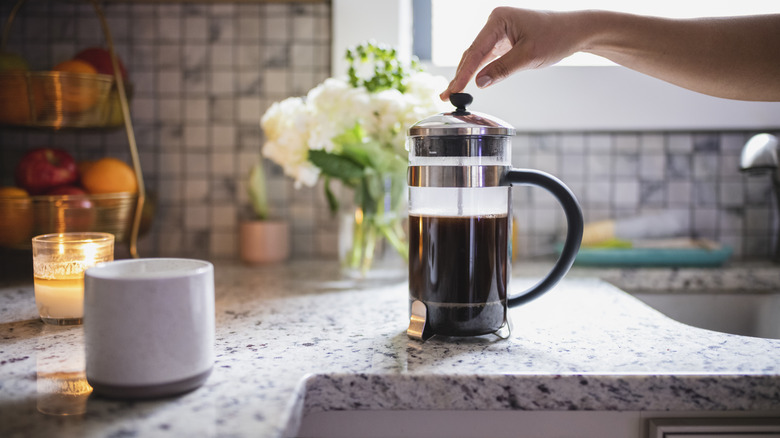
Coffee from a French press feels fancier than getting a cup from a drip coffee machine — French press and drip coffee are different after all, even if they both produce black brews. A French press on the table sets a vibe as it brews, and it has that added interactive element of pushing down the plunger before pouring. The elegance of the French press underwrites the whole coffee hour — until you get to a thick layer of sludge in the bottom of your cup. That sludge is one of the few issues you can run into with a French press, and we got expert advice on how to avoid it from Andrea Allen, co-founder of Onyx Coffee Lab (@onyxcoffeelab on Instagram), 2020 U.S. Barista Champ, and 2021 World Barista Runner-Up.
Allen pointed out the upside to the French press is a cup of coffee with fuller flavor and lower acid. But, you can get a grainy brew if coffee grounds pass through the metal filter and into your cup as you pour. That's what creates the unpleasant sludge you sometimes get with French press coffee. She suggests that the best way to avoid this sludge is to focus on the grind. "My advice is to make sure the grind size is evenly ground and on the coarser side," Allen says. To be extra sure that there is no sludge in your cup, "You could also have an additional small sieve you could pour the coffee through as well."
Pitfalls to avoid when you're brewing French press coffee
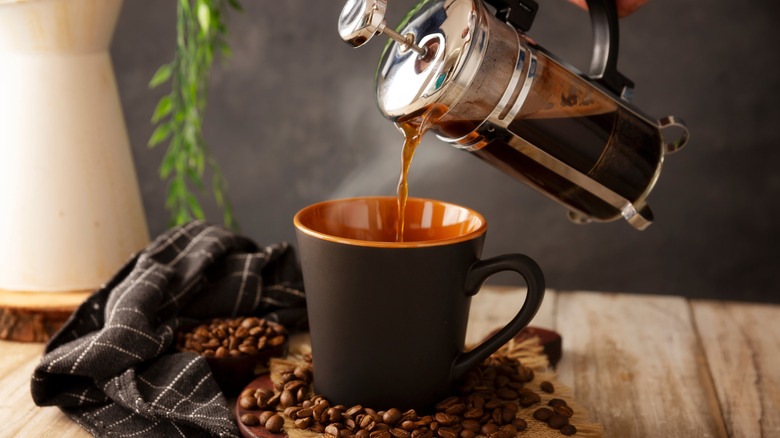
Sometimes, coffee from a French press can be bitter or way too weak, with a flat flavor profile that gets a little boring. But most of that is because you're doing it wrong. Your water needs to be at the optimal brewing temperature, your coffee needs to be put through a burr grinder for full-bodied flavor and an even, coarse grind, and your French press has to steep for the right amount of time. And don't forget to stir the coffee and water together in the French Press before you place the plunger on top. Andrea Allen says it's easy to skip the stirring step before you let your coffee sit to brew, but it's important — just as important as how you push down the plunger. "This can make it where it's very difficult to press the plunger down and also the coffee will not extract properly if it's not fully integrated with the water," Allen says, going on to add that, "I think also plunging slowly and evenly is a great habit to have when making French Press."
Before you grind, stir, or brew anything, though, you should select the right coffee. Any kind of beans will work, but for the perfect French press, look for more high-quality, robust options. According to Allen, "French Press is designed to be heavy bodied, so utilizing a coffee that has more prevalent natural flavors of sugar browning — chocolate, caramel, nuts, I think works really well in a French Press." Though it ultimately boils down to personal preference, it's a good idea to pick such beans to begin with.